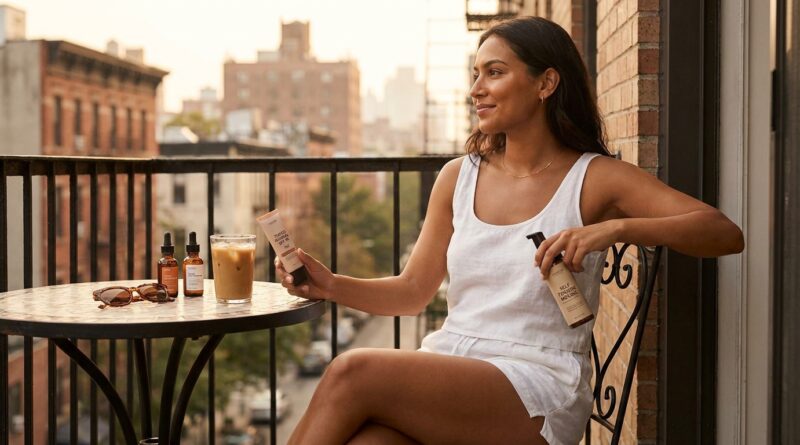
New ‘Sunscreen-Skeptic Tan’ Rule: How To Keep Loving Self-Tanner When You Don’t Fully Trust SPF
You are not weird for feeling pulled in two directions right now. One scroll tells you sunscreen is full of scary ingredients and basically a scam. The next tells you any skipped SPF is a fast track to sun damage. If you love self-tanner, that mixed messaging gets especially annoying, because the whole point of a fake tan is usually to get the glow without baking your skin in UV. So let’s answer the question clearly: is sunscreen safe if I use self tanner? Yes. For most people, sunscreen and self-tanner can absolutely live in the same routine. In fact, they should. Self-tanner does not protect your skin from the sun, and wearing SPF does not cancel out your bronzed look if you apply both the smart way. You do not need to choose between looking tan and protecting your skin. You just need a routine that makes sense in real life.
⚡ In a Hurry? Key Takeaways
- Yes. Sunscreen is safe to use with self-tanner, and self-tanner does not replace SPF.
- Apply self-tanner to clean skin, let it fully develop, then use a broad-spectrum SPF 30 or higher during the day.
- If your skin is sensitive, patch test both products and pick formulas you will actually wear consistently.
First, the short answer to the big question
If you are asking, “is sunscreen safe if I use self tanner,” the practical answer is yes.
Self-tanner works by coloring the top layer of your skin. Sunscreen works by helping protect your skin from UV rays. They do different jobs. One gives color. One helps lower damage risk.
That means using self-tanner is not a reason to skip SPF. If anything, self-tanner is the better partner to SPF than sunbathing ever was, because it gives you the bronzed look without asking your skin to absorb UV for the aesthetic.
Why social media has people so confused
A lot of the sunscreen panic online comes from half-true claims, context-free ingredient talk, and creators who are very confident but not very careful.
You will see people say sunscreen is “toxic,” that it blocks vitamin D, that it causes more harm than sunlight, or that darker or already-tanned skin does not need it. Those claims spread because they are dramatic, easy to repeat, and feel rebellious.
The problem is that drama is not the same thing as evidence.
Major dermatology groups and cancer organizations keep repeating the same basic point because the data keeps pointing the same way. UV exposure raises the risk of skin damage, premature aging, and skin cancer, including melanoma. Sunscreen is not perfect, but it is one of several useful tools that help reduce that risk when you are outside.
What self-tanner does, and what it definitely does not do
What it does
Self-tanner darkens the outermost layer of skin. That is why you can rinse it, maintain it, and watch it fade over several days.
What it does not do
It does not create meaningful sun protection. It does not act like SPF 30. It does not give you a free pass for a beach day. And it does not make your skin “used to the sun.”
This is the part people quietly blur together. A tan look is not the same thing as protected skin.
So, is sunscreen safe if I use self tanner?
For most people, yes. Using sunscreen with self-tanner is considered safe and sensible.
There are really two separate questions hidden inside this one:
1. Is sunscreen safe on skin that has self-tanner on it?
Yes. Once your self-tanner has developed, you can use sunscreen on top of it.
2. Can sunscreen mess up your tan?
Sometimes it can affect wear a little, but usually not in a dramatic way if you apply things in the right order. Greasy formulas, heavy rubbing, exfoliating cleansers, and frequent reapplication can make any self-tan fade faster. But that is still a much better trade-off than skipping protection.
The goal is not to preserve your fake tan at all costs. The goal is to keep both your glow and your skin health in a workable balance.
How to layer self-tanner and sunscreen without making a mess
On self-tan day
Apply self-tanner to clean, dry skin, usually at night or well before sun exposure. Let it develop fully based on the product directions.
If you are heading outside that same day, give the tan enough time to set first. Then apply sunscreen gently rather than aggressively rubbing it in like you are scrubbing a countertop.
On regular daytime wear
Use your sunscreen as the final daytime skin step on exposed areas. Face, neck, chest, shoulders, arms, hands, legs if they are out. Broad-spectrum SPF 30 or higher is the usual baseline most derms recommend.
If you are worried about patchiness
Pick a sunscreen texture that plays nicely with your skin. Lightweight lotions, milky fluids, and clear gels often disturb self-tan less than very thick, chalky formulas that need lots of rubbing.
And be honest about your habits. The best sunscreen is the one you will actually put on enough of and reapply.
Mineral vs chemical sunscreen. Do you have to pick a side?
No. You do not need to turn this into a team sport.
Mineral sunscreens use filters like zinc oxide or titanium dioxide. Chemical sunscreens use filters that absorb UV in a different way. Both categories can be effective when properly formulated and properly used.
Some people prefer mineral formulas because they want fewer stinging issues around the eyes, or they feel better about the ingredient profile. Others prefer chemical formulas because they are easier to spread, leave less cast, and are more likely to get worn consistently.
Consistency matters a lot. A theoretically perfect sunscreen that you hate using is less helpful than a good sunscreen you wear every day.
When sunscreen concerns are actually worth paying attention to
There are reasonable concerns, and then there is internet panic. They are not the same thing.
Reasonable concerns include skin irritation, fragrance sensitivity, breakouts, eye stinging, and trouble finding a formula that works on deeper skin tones without leaving a cast.
If that is your issue, the answer is not “forget SPF forever.” The answer is to switch formulas, patch test, or ask a dermatologist for help. If your skin is touchy in general, you may also like New ‘Sensitive-Skin Glow’ Rule: How To Self‑Tan Safely When Your Barrier Is Freaking Out, which gets into how to tan when your skin is already acting up.
Real-world sunscreen habits that make sense if you love self-tanner
Use SPF where UV hits
You do not need to live in fear indoors by a closed curtain. But if you are outside, driving a lot, sitting by a bright window for long periods, or spending time near water or reflective surfaces, sunscreen makes sense.
Do not save SPF only for beach days
A lot of cumulative sun exposure happens on regular days. School pickup. Dog walks. Lunch outside. Commuting. Errands.
Wear the right amount
Most people under-apply sunscreen. If you use half of what you need, you are not getting the protection on the label.
Reapply when it actually matters
If you are outdoors for a while, sweating, swimming, or towel drying, reapply. Yes, it can be annoying with self-tanner. It is still the better call.
Use hats and shade too
SPF is not the only tool. A hat, sunglasses, cover-up, and strategic shade do a lot. This is good news for tan lovers, because fabric does not make your self-tanner streak.
Common myths that need to go
“I have a fake tan, so I’m protected.”
No. A cosmetic tan is just color.
“I only need SPF if I burn easily.”
No. People with deeper skin tones can still get UV damage, hyperpigmentation, photoaging, and skin cancer.
“If sunscreen has ingredients I cannot pronounce, it must be dangerous.”
No. Chemistry names sounding complicated is not proof of harm.
“Sunscreen is more dangerous than the sun.”
That is not what mainstream medical evidence supports. The bigger, clearer risk remains UV exposure.
What to do if sunscreen seems to break down your tan
If you notice your tan fading faster, do not panic. Tweak the routine.
- Use a gentler sunscreen texture
- Rub less aggressively
- Let self-tanner fully develop before layering products
- Moisturize daily so the tan fades more evenly
- Top up your self-tanner more lightly and more often
Usually the answer is adjustment, not abandoning SPF.
At a Glance: Comparison
| Feature/Aspect | Details | Verdict |
|---|---|---|
| Self-tanner vs sun protection | Self-tanner gives cosmetic color but does not offer meaningful UV protection. | Use SPF anyway |
| Using sunscreen over self-tanner | Most people can safely apply sunscreen once the self-tan has developed. | Safe and recommended |
| Fear from social media | Online claims often exaggerate ingredient fears while ignoring the well-known risks of UV exposure. | Trust evidence, not hot takes |
Conclusion
If you love a bronzed look, self-tanner is still one of the smartest ways to get it. You do not have to break up with SPF to keep that glow. Right now there really is a gap between what social media says about sunscreen danger and what dermatology and cancer experts keep saying about UV damage and melanoma risk. That tension is real, and it leaves a lot of people quietly skipping protection on so-called safe tanning days. The calmer, more useful answer is this: use self-tanner for color, use sunscreen for protection, and stop asking one product to do the other product’s job. That is how you keep your skin cancer risk lower without giving up the look you like. No drama. No purity contest. Just grounded habits that let you enjoy your glow and feel protected, not paranoid.