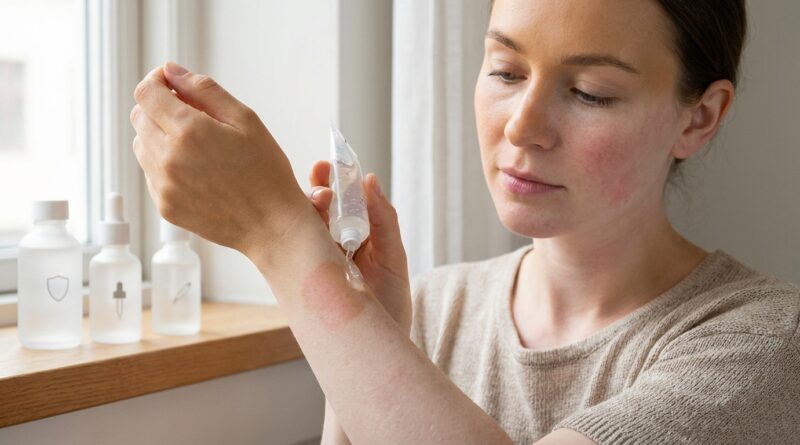
New ‘Sensitive-Skin Glow’ Rule: How To Self‑Tan Safely When Your Barrier Is Freaking Out
If you have eczema, rosacea, or skin that throws a fit over seemingly nothing, being told to “just skip self tanner” is maddening. You want the safer glow, not a lecture. The problem is that “sunless” does not always mean “gentle,” especially when your skin barrier is already stressed. In the last few months, more dermatologists, allergy researchers, and everyday users have been talking about reactions that go way beyond a little dryness. Think stinging that keeps building, red welts, blotchy flare-ups, even blisters. The most useful rule to follow is simple. Do not self-tan on angry skin. Wait until your barrier is calm, then test slowly, with boring products and a strict stop-at-the-first-burn mindset. If your skin is reactive, the safest glow is the one you earn patiently. A rushed application can cost you weeks of healing, and that is never worth a slightly bronzed Tuesday.
⚡ In a Hurry? Key Takeaways
- If your skin is stinging, cracked, hot, weeping, or actively flaring, skip self tanner until your barrier is calm.
- For a self tanner for sensitive skin and eczema safe routine, patch test for several days, choose fragrance-free formulas, and avoid applying right after shaving, exfoliating, or a hot shower.
- “Tingling” is not something to push through. If it burns, gets hotter, or keeps worsening, wash it off right away and treat it like a possible irritation or allergy.
The new rule is barrier first, color second
Official advice is still broadly true. Self tanner is safer than UV tanning. But that does not help much if your skin barrier is already hanging on by a thread.
That is where people get stuck. They hear that sunless tanning is the “safe” option, buy a mousse or lotion, and then end up with a face or body that feels like it has been sandpapered. The missing piece is that safer than the sun does not mean safe for every skin condition, every formula, or every day.
If your skin is reactive, you need a barrier-centric approach. Not a “hope for the best” approach.
First, decide if your skin is calm enough to tan
This is the part most beauty guides skip. Before you even look at ingredients, check the state of your skin.
Green light signs
Your skin is more likely ready if it is:
- Not stinging with your usual moisturizer
- Not visibly cracked, peeling, or weeping
- Not unusually hot, tight, or flushed
- Stable for at least several days
- Free of open cuts from scratching or shaving
Red light signs
Do not tan right now if you have:
- An eczema flare
- Rosacea burning or flushing that is active
- Mystery rash you have not sorted out yet
- Recent over-exfoliation
- Skin that burns when plain lotion touches it
- Fresh shaving nicks, wax irritation, or sunburn
If your barrier is already “freaking out,” adding a tanning formula on top is like pouring lemon soda on a paper cut. You might get away with it. You also might really, really not.
What in self tanner actually causes trouble?
Many people blame DHA alone. DHA is the active tanning ingredient in most sunless tanners, and yes, it can irritate some users. But in real life, the bigger troublemakers are often the supporting cast.
Common trigger ingredients to watch
Look closely for these:
- Fragrance and parfum. A huge one for sensitive skin.
- Essential oils. “Natural” does not mean soothing.
- Botanical extracts. Nice in theory, irritating in practice for some people.
- Preservatives. Especially if you already know you react to certain ones.
- High alcohol content. Can sting and dry out an already weak barrier.
- Color guides and dyes. Helpful for application, but another possible trigger.
- Added exfoliating acids. Not what reactive skin needs during tanning.
The frustrating part is that a product can be marketed as “for sensitive skin” and still contain ingredients your skin personally hates. That is why patch testing beats promises on the bottle.
Your safest self tanner for sensitive skin and eczema safe routine
If you want the short version, here it is. Calm skin. Simple formula. Slow testing. Immediate wash-off if there is real discomfort.
Step 1: Strip your routine back for a few days
Before tanning, go boring on purpose. Use your usual gentle cleanser and a moisturizer you already trust. Skip retinoids, exfoliating acids, scrubs, peels, and strong actives on the area you plan to tan for a few days before and after.
If you are also trying to protect your glow once it develops, your sunscreen matters too. A lot of people do not realize SPF can bother both reactive skin and a fresh tan. This guide on New ‘Allergy-Safe SPF’ Rule: How To Choose Sunscreens That Won’t Quietly Trash Your Sunless Tan (Or Your Skin) is worth reading before you layer anything on top.
Step 2: Patch test like you mean it
Do not do one tiny dab for ten minutes and call it good. For reactive skin, patch testing should be more realistic.
- Choose a small area like the inner forearm or outer jawline if it is a face product.
- Apply exactly how you would use it normally.
- Wait the full development time.
- Rinse if the instructions say to rinse.
- Watch the area for 24 to 72 hours.
- If you are very reactive, repeat the patch test on the same spot for 2 to 3 days.
This matters because some reactions are immediate and stingy. Others show up later as itching, tiny bumps, heat, or a worsening rash.
Step 3: Prep gently, not aggressively
You do not need to buff yourself raw for self tanner to work.
Avoid rough mitt exfoliation, acid pads, and body scrubs if your barrier is touchy. If you have flaky spots, use a soft washcloth and light pressure, or skip that area entirely until it heals. The old advice to exfoliate hard before tanning is exactly backwards for some sensitive skin types.
Step 4: Time the application carefully
When you apply matters almost as much as what you apply.
- Do not apply right after shaving.
- Do not apply after a hot shower.
- Do not apply after exercise, sauna, or sweating.
- Do apply when skin is cool, dry, and calm.
Heat and freshly opened pores can turn a maybe-fine product into an instant regret.
Step 5: Buffer the danger zones
If you have specific dry or reactive areas, put a thin layer of your plain moisturizer there first. Think around ankles, knees, elbows, hands, or any eczema-prone patches that are healed but still delicate.
Important note. Do not use moisturizer to “force” a self tanner over skin that is actively inflamed. Buffering is for healthy-but-dry skin, not damaged skin.
Step 6: Use less than you think
A thin, even layer is kinder than a heavy one. More product does not equal safer color. It often just means more ingredients sitting on your skin for longer.
Step 7: Watch for the difference between mild dryness and a bad reaction
A little tightness can happen. Burning that keeps building is different.
Stop and wash it off if you notice:
- Sharp stinging
- Rising heat
- Intense itching
- Hives or welts
- Blisters
- Swelling
- Shortness of breath or facial swelling, which needs urgent medical help
You are not being dramatic. “Beauty is pain” is nonsense when your skin barrier is involved.
What “tingling” should really mean to you
Some users are told a little tingling is normal. For reactive skin, that advice can be risky.
If a product gives you a fleeting, barely-there sensation for a few seconds and nothing else happens, that is one thing. If your skin keeps prickling, warms up, turns red, or feels more uncomfortable with each minute, take it seriously.
Your skin is giving feedback. Listen.
Best formula type for reactive skin
There is no universal winner, but there are patterns.
Usually easier to tolerate
- Fragrance-free lotions
- Shorter ingredient lists
- Products with fewer plant extracts
- Lower-commitment gradual tanners
More likely to be tricky
- Strongly fragranced mousses
- Products packed with “glow boosting” extras
- Fast-developing formulas
- Anything with a heavy cosmetic guide color if you know dyes bother you
Gradual tanners can be a smart starting point because the dose per application is lower. The tradeoff is that repeated daily exposure can still irritate some people. Again, your patch test decides.
If you have eczema, rosacea, or “mystery sensitive skin,” here is the practical advice
Eczema-prone skin
Do not tan over active patches. Do not tan over broken skin. Choose the calmest areas first, and keep your rescue moisturizer nearby. If a product works on your legs, that does not mean it belongs on your inner arms or neck.
Rosacea-prone skin
The face is often the hardest place to tan safely. Heat, fragrance, alcohol, and rubbing can all set it off. Many rosacea-prone users do better avoiding facial self tanner entirely or testing a separate face-specific formula very cautiously.
Mystery rash or ultra-reactive skin
If you keep reacting to random products, this may be the moment to pause the experiments and ask a dermatologist about patch testing for contact allergies. Guessing gets expensive fast, and your skin pays the bill.
What to do if you react
First, wash the product off with lukewarm water and a gentle cleanser if needed. Do not scrub. Pat dry. Apply a bland moisturizer you know you tolerate.
Then simplify everything. No acids. No retinoids. No fragrance. No trying to “fix” the patchiness with another tan layer.
If you get severe redness, swelling, blistering, pain, oozing, or symptoms beyond the skin, get medical advice promptly. If breathing or facial swelling is involved, seek urgent care.
The mental health side matters too
People do not talk enough about how upsetting these reactions can be. A bad self-tan on sensitive skin is not just cosmetic. It can mean pain, lost sleep, canceling plans, spiraling over ingredients, and that familiar feeling that your skin has betrayed you again.
So yes, it is okay to be cautious. It is okay to decide that your skin is not in a tanning season right now. The goal is not to prove toughness. The goal is to keep your skin and your peace intact.
At a Glance: Comparison
| Feature/Aspect | Details | Verdict |
|---|---|---|
| Skin barrier status | Calm, intact, non-stinging skin is a better candidate than skin that is red, cracked, hot, or flaring. | If in doubt, wait. |
| Formula choice | Fragrance-free, simpler lotions or gradual tanners are often easier to tolerate than heavily fragranced fast mousses. | Simpler is safer. |
| Patch testing and warning signs | Test for 24 to 72 hours and stop immediately for burning, worsening heat, welts, or blisters. | Never push through a burn. |
Conclusion
There has been a real surge lately in conversations about contact allergens in self tanners, “tingling” being brushed off as normal, and painful flare-ups in people with eczema, rosacea, and very reactive skin. That is why a barrier-first approach matters so much. Yes, sunless tanning is still generally safer than UV exposure. But if your skin is compromised, the safest move is to decide whether it is calm enough to tan at all, look beyond DHA to the whole ingredient list, and build a slow test routine that protects both your skin and your sanity. You do not need more vague beauty advice. You need a practical playbook. If your skin says no, listen early. If it says maybe, go slowly. And if you find a routine your skin can truly handle, that glow will feel a lot better because you did not have to fight your face or body to get it.