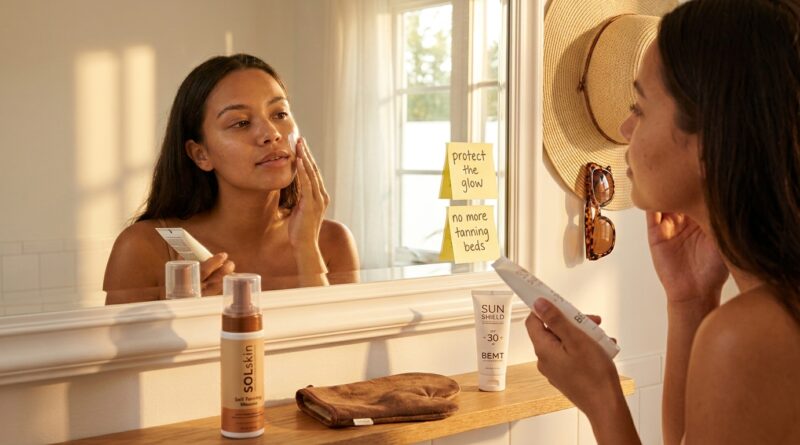
New ‘Safe Tan Routine’ Rule: How To Pair Self‑Tanner With The Just‑Approved BEMT Sunscreens For Stronger Skin (Not Just Color)
You finally broke up with tanning beds, got comfortable with self-tanner, and now sunscreen is confusing all over again. That is frustrating. One headline says a new filter is a big win. Another says ingredients are scary. Then TikTok piles on with rules about “clean” formulas, body oils, and what supposedly ruins your glow. If you are wondering how to use bemotrizinol sunscreen with self tanner, the good news is this is simpler than the internet makes it sound. Bemotrizinol, also called BEMT, is a modern UV filter used in broad-spectrum sunscreens. It does not cancel out your self-tanner, and your self-tanner does not replace sunscreen. The smart move is to let your tan develop fully, then use a gentle, even layer of sunscreen every day on top. Done right, you protect your color, your skin barrier, and most important, your actual skin.
⚡ In a Hurry? Key Takeaways
- Yes, you can use bemotrizinol sunscreen with self tanner. Apply self-tanner first, let it fully develop, then put sunscreen on top during the day.
- Pick a broad-spectrum sunscreen with a comfortable finish, and apply enough. A patchy or tiny amount protects neither your tan nor your skin.
- BEMT is about UV protection, not deeper tanning. It helps support a safer routine so you can skip tanning beds and still keep an even glow.
First, what bemotrizinol actually is
Bemotrizinol, often listed as BEMT, is a UV filter used in sunscreen formulas to help cover both UVA and UVB rays. For most people, the useful takeaway is not the chemistry lesson. It is this. A sunscreen with BEMT is meant to give broad, stable protection.
That matters if you use self-tanner, because sunless tan only colors the top layer of skin. It does not protect you from UV damage. A fake tan can look healthy, but it is not a shield.
If you want the bigger picture on why this filter is getting so much attention, New ‘BEMT Glow’ Rule: How The FDA’s First New Sunscreen Filter In 20+ Years Changes Safe Sunless Tanning Forever lays out why this sunscreen news matters for anyone who switched to sunless tanning.
Does bemotrizinol sunscreen mess up self-tanner?
Usually, no. The bigger issue is not the BEMT itself. It is the formula around it and how you apply it.
Self-tanner develops through a surface reaction in the outermost skin layer. Once it has fully developed, sunscreen can sit on top of it just fine. What tends to cause streaks or patchiness is rubbing too hard, applying sunscreen before the self-tanner has set, or using a very oily formula on fresh tan.
The simple rule
Apply self-tanner at night or whenever you have several hours to let it develop. Then use sunscreen later, after the tan has finished developing and your skin is dry.
If your self-tanner says “rinse after 4 to 8 hours,” do that first. After the rinse and a gentle pat dry, sunscreen is fair game.
How to use bemotrizinol sunscreen with self tanner, step by step
1. Prep your skin gently
Before self-tanner, exfoliate lightly and moisturize dry spots like elbows, knees, ankles, and wrists. Do not go overboard. Harsh scrubbing can weaken your skin barrier and make both tanner and sunscreen sit unevenly.
2. Apply self-tanner to clean, dry skin
Use your usual mousse, lotion, drops, or spray. Blend carefully. Let it dry fully before getting dressed.
3. Leave it alone while it develops
This is where people sabotage the result. Do not layer sunscreen, body oil, or heavy lotion on top right away unless the product specifically tells you to. Give the self-tanner time to do its job.
4. Rinse if your product tells you to
Some self-tanners have a guide color that should be rinsed off after a set number of hours. Use lukewarm water and avoid aggressive scrubbing.
5. Apply bemotrizinol sunscreen as your daytime top layer
Once your tan has developed, put sunscreen on as the last step of your morning body or face routine. Smooth it on rather than rubbing like you are trying to erase a stain.
6. Reapply like normal
If you are outside, sweating, swimming, or toweling off, reapply sunscreen. This is where many people underdo it because they are afraid of ruining the tan. A faded self-tan is fixable. Sun damage is not.
What kind of sunscreen works best over self-tanner?
The best sunscreen is the one you will actually apply in the right amount and reapply without dreading it. For self-tanner users, these features help:
Look for these traits
Broad-spectrum protection. You want UVA and UVB coverage.
A comfortable finish. Lightweight lotions, milk textures, and elegant creams often layer better over self-tan than greasy oils.
Good spread without heavy rubbing. This helps keep your color even.
Water resistance if you will sweat or swim. Important for real-world use.
Be cautious with these
Very oily sunscreen formulas right after tanning. They can break down a fresh tan faster or make it look uneven.
Strong exfoliating acids in daytime body products. These fade self-tan more quickly, whether or not your sunscreen contains BEMT.
DIY “SPF boosters.” Mixing sunscreen with moisturizer, bronzing drops, or body makeup can dilute protection.
Face and body need slightly different routines
For the face
If you use facial tanning drops or a gradual tan, wait until that layer is dry and set. In the morning, apply your regular moisturizer if needed, then sunscreen. If makeup goes on top, let sunscreen settle for a minute or two first.
For the body
If your skin feels dry after rinsing off self-tanner, use a light, fragrance-free moisturizer first if you need it, then sunscreen once that has soaked in. Dry skin holds self-tan poorly, so barrier care matters here.
What about “clean beauty” sunscreen claims?
This is where the noise gets loud. “Clean” is not a medical or scientific rating for sunscreen performance. It is mostly a marketing word. A sunscreen is useful if it protects well, feels good enough to wear, and fits your skin’s needs.
Do not let fear-based ingredient talk push you into skipping sunscreen because your fake tan already looks bronzed. That is exactly how people drift back toward risky tanning habits.
Common mistakes that make your tan look worse
Putting sunscreen on too soon after self-tanner. Let the tan develop first.
Using too little sunscreen. This is the classic mistake. A tiny amount protects almost nothing.
Scrubbing sunscreen in aggressively. Smooth it on evenly instead.
Using tanning oil instead of sunscreen. Oil can make you shiny. It does not replace SPF.
Skipping patch tests on sensitive skin. If your skin reacts easily, test new self-tanners and new sunscreens separately.
If you have sensitive or acne-prone skin
Keep the routine boring. That is a compliment. Use a simple self-tanner, a simple moisturizer, and a broad-spectrum sunscreen you already know your skin likes, or patch test a new one first. Fragrance, lots of added botanicals, or too many active ingredients are more likely to annoy your skin than the fact that the sunscreen contains BEMT.
If your barrier is irritated, focus on calming that down. A damaged barrier can make self-tanner cling in weird patches and can make sunscreen sting.
The safest glow routine right now
If your goal is color plus healthy skin, the winning formula is still the same. Use self-tanner for the glow. Use sunscreen for UV protection. Use moisturizer to keep the barrier in good shape.
That is why the BEMT news matters. It gives people one more solid sunscreen option at a time when a lot of shoppers feel overwhelmed and suspicious of every label they read.
At a Glance: Comparison
| Feature/Aspect | Details | Verdict |
|---|---|---|
| Application order | Self-tanner first. Let it develop fully. Then apply bemotrizinol sunscreen during the day. | Best practice |
| Effect on glow | BEMT sunscreen does not remove a developed self-tan by itself. Rough rubbing and oily formulas can make fading more obvious. | Usually compatible |
| Safety value | Self-tanner gives color only. Broad-spectrum sunscreen with BEMT helps protect against UVA and UVB exposure. | Important for skin health |
Conclusion
The calm, practical answer is this. If you want to know how to use bemotrizinol sunscreen with self tanner, treat them as partners, not substitutes. Let your self-tanner create the color. Let your sunscreen handle the UV protection. Apply them in the right order, choose comfortable formulas, and do not let ingredient panic talk you out of daily SPF. That gives you a clear, up-to-the-minute game plan while sunscreen news is noisy and confusing. More important, it helps you stay out of tanning beds, protect your skin barrier, and keep a safer, more even glow as UV season ramps up.