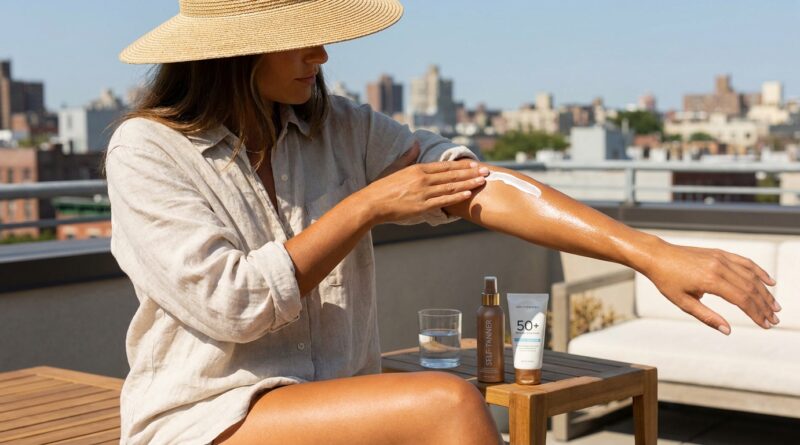
New ‘SPF-Backup Tan’ Rule: Why Your Fake Tan Still Needs Real Sun Protection In 2026
You finally got the fake tan right. No orange wrists. No streaky ankles. No weird patch on one shoulder. So it is completely understandable if part of you thinks, “My skin looks tan now. Maybe I do not need to be quite so intense about sunscreen.” That little shortcut is tempting, especially before a beach day, a sunny brunch, or a winter escape. It is also where people get burned, literally. The short answer to “does self tanner protect your skin from the sun” is no. Sunless color changes how your skin looks, not how much UV damage it can take. That bronze glow from DHA is cosmetic. It does not work like melanin, and it definitely does not replace SPF, shade, hats, or a cover-up. The good news is you do not have to choose between protecting your skin and keeping your glow looking good. You can absolutely do both with a few smart tweaks.
⚡ In a Hurry? Key Takeaways
- Self-tanner does not protect your skin from the sun. A fake tan has no reliable SPF.
- Use a broad-spectrum SPF 30 or higher every day on exposed skin, then reapply as directed, especially outdoors.
- If you want your glow to last, add UPF clothing, shade, and gentle sunscreen removal instead of skipping protection.
The big myth: looking tan is not the same as being protected
This is the part TikTok and casual beauty chatter often blur together. A real tan from the sun is your skin responding to UV injury by making more melanin. That does not make tanning “healthy,” and even a real tan offers only very limited protection.
A fake tan is different. Most self-tanners use DHA, short for dihydroxyacetone. DHA reacts with the very top layer of dead skin cells and creates a temporary brown color. That is it. It is a surface-level stain, not a UV shield.
So if you are asking, does self tanner protect your skin from the sun, the practical answer is simple. No. It does not act like sunscreen, and it does not give you a safe buffer for extra time in the sun.
Why the confusion keeps spreading
Part of the confusion comes from the word “tan” itself. We are used to connecting tanned skin with the idea of being “used to the sun.” Add in influencer chatter about “base tans,” “healthy glow,” and sunscreen debates, and it gets messy fast.
Here is the cleaner version. Color is not coverage. Bronze is not protection. And a fake tan can make it harder to notice early pinkness, which means some people stay out too long before realizing they are burning.
What the new SPF-backup mindset should be in 2026
Think of self-tanner as cosmetic color only. Think of SPF as your actual safety layer. The smartest routine is not self-tanner instead of sunscreen. It is self-tanner plus sunscreen, plus a few other basics when UV is strong.
That is the whole “SPF-backup tan” rule in plain English. Your tan is not the backup. Your sun protection is.
How to pair self-tanner with sunscreen without wrecking your glow
1. Let the self-tanner fully develop first
If you apply self-tanner at night, give it the recommended development time before showering or layering on other products. Rushing this step can lead to patchiness.
2. Use broad-spectrum SPF 30 or higher
Broad-spectrum means it covers both UVA and UVB. UVB is the main burn culprit. UVA contributes heavily to skin aging and also plays a role in skin cancer risk.
If you are outdoors for more than a quick errand, SPF 50 is often a smarter choice, especially on the face, chest, shoulders, and tops of feet, which people miss all the time.
3. Pick a sunscreen formula that plays nicely with your tan
If your sunscreen pills, gets chalky, or leaves streaks, you are less likely to use enough. Look for formulas labeled lotion, milk, gel-cream, or invisible fluid if you want less drag over self-tanned skin.
Mineral sunscreen can be great for some people, especially sensitive skin. Chemical sunscreen can also be great. The best one is the one you will actually apply generously and reapply. That is the boring answer, but it is the useful one.
4. Rub gently, do not scrub
Sunscreen itself will not usually “remove” your tan. Aggressive exfoliating while applying or removing products is more likely to fade it early. Smooth it on. Do not buff like you are polishing a countertop.
5. Reapply without panic
Yes, reapplication matters even if you are wearing self-tanner. Use enough product, and reapply after swimming, sweating, or towel drying. A slightly faded tan is better than a very real burn.
Will sunscreen make my fake tan fade faster?
Sometimes a little, but not in the way people fear. The real tan-faders are long swims, friction, harsh exfoliants, hot baths, shaving, and dry flaky skin. Sunscreen is not the villain here.
In fact, wearing sunscreen can help your skin stay calmer and less dried out from sun exposure. That can make your overall glow look better, not worse.
Clothing still matters, especially on high-UV days
If you are trying to protect your skin and preserve your color, clothing is your friend. A lightweight button-down, a rash guard, a wide-brim hat, or a simple cover-up can do more than people think.
UPF-rated clothing is even better for long beach days, pool days, hikes, boat trips, and ski trips at altitude where UV can still be intense. It is one of the easiest ways to reduce how much sunscreen you need to fuss with on large areas.
Sunny weekends and winter getaways are where people get caught out
This is where the fake-tan trap tends to show up. You leave for a sunny vacation already bronzed, feel less “pale and vulnerable,” then accidentally treat your skin like it has more natural resilience than it does.
It does not.
Snow reflects UV. Water reflects UV. Sand reflects UV. Cool weather can hide how much sun you are getting because you do not feel hot. A fake tan can make all of that easier to underestimate.
Quick routine: how to stay burn-free and keep the glow
Here is the low-drama version:
- Apply self-tanner on clean, dry skin and let it fully develop.
- The next day, use broad-spectrum SPF 30 or higher on all exposed skin.
- Use extra on shoulders, nose, ears, chest, hands, scalp part, and feet.
- Reapply every two hours when outdoors, or after swimming and sweating.
- Wear sunglasses, a hat, and light protective clothing when you can.
- Moisturize at night to help the self-tan fade more evenly.
What about “base tans” and other popular claims?
This is one of those ideas that refuses to die. A so-called base tan is not a good sun-safety strategy. It is still skin damage. And if we are talking about a fake tan, it is not even a tiny bit protective in the first place.
So no, self-tanner is not a substitute for sunscreen. No, it does not count as built-in SPF. And no, it is not safer to stay out longer just because you look bronzed already.
If you are pregnant, be extra careful about product choices and sun protection
If that applies to you, it is worth reading New ‘Sunless Pregnancy Glow’ Rule: How To Use Self‑Tanner Safely When You’re Expecting In 2026. It is a helpful guide for choosing and using self-tanner more carefully during pregnancy, when ingredient worries can suddenly feel a lot bigger.
At a Glance: Comparison
| Feature/Aspect | Details | Verdict |
|---|---|---|
| Self-tanner and sun protection | DHA darkens the top layer of skin for cosmetic color only. It does not block UV like sunscreen. | Not protective |
| Best sunscreen pairing | Use broad-spectrum SPF 30 or higher, ideally a formula you can apply generously without streaking or pilling. | Essential |
| Keeping the glow looking good | Moisturize, avoid harsh scrubbing, reapply SPF gently, and add hats, shade, and UPF clothing. | Best long-term strategy |
Conclusion
If you remember one thing, make it this. A fake tan changes your color, not your risk. Right now there is a lot of noise about “healthy tans,” mineral versus chemical sunscreen, and quick-hit social videos that make sun safety sound more confusing than it is. It really is not. DHA color does not equal SPF. Your best move is to pair self-tanner with a sunscreen you will actually use, plus a hat, shade, and sensible clothing when the sun is strong. That way you keep the glow you worked for and avoid the part nobody wants, which is the burn, the peeling, and the long-term skin damage that can sneak up on you. For sunny weekends and winter getaways alike, that simple shift can help you make safer choices right away.