New ‘Spray-Mist Safe Zone’ Rule: How To Protect Your Lungs When You Love A Sunless Tan In 2026
You are not being dramatic if a spray tan leaves you coughing, swallowing weirdly, or feeling like your chest is a little tight. A lot of people hear “sunless” and assume “totally harmless,” but that skips one very real issue. The mist has to go somewhere, and if it ends up in your nose, mouth, eyes, or lungs, your body may complain. That does not mean every spray tan is dangerous. It means technique, ventilation, and basic protection matter more than most ads admit. The new spray-mist safe zone rule people are talking about in 2026 is really a simple idea. Keep the tan on your skin, not in your airways or on sensitive tissues. If you love a booth or airbrush glow, you do not need to panic or quit. You do need a smarter routine, a few better questions, and a salon that takes spray tan inhalation safety 2026 seriously.
⚡ In a Hurry? Key Takeaways
- Spray tans are safer than UV tanning for skin damage, but inhaling the mist is still not ideal and should be avoided.
- Use nose filters or hold your breath during passes, wear eye protection, seal your lips, and ask about booth ventilation before you tan.
- If you have asthma, allergies, pregnancy concerns, or a history of breathing trouble, lotions or mousses may be the better pick.
Why people are suddenly talking about this in 2026
Spray tans have gone from special-occasion luxury to everyday beauty maintenance. Fast booths, heated add-ons, express formulas, and cheap deals have made them incredibly easy to book. The problem is that the safety conversation has not kept up.
Most people know to protect their skin from UV rays. Far fewer have been told how to protect their lungs during a spray tan. Yet the fine mist used in booths and airbrush sessions can drift into the nose and mouth if you are not careful.
The “safe zone” idea is straightforward. The solution belongs on the outer skin only. It should stay away from your lungs, eyes, lips, and other mucous membranes as much as possible.
What is actually in the mist?
The main active ingredient in most sunless tanning formulas is DHA, short for dihydroxyacetone. It reacts with proteins in the top layer of your skin to create that bronzed look. On skin, this is widely used and generally considered the better option compared with tanning beds or baking in the sun.
But skin is one thing. Breathing a cloud of cosmetic mist is another.
Spray tan formulas can also include bronzers, fragrances, preservatives, botanical extracts, and drying agents. Even if the ingredients are common in cosmetics, your lungs and eyes are much more sensitive than the outer layer of your skin.
What happens if you inhale spray tan mist?
For some people, not much. For others, symptoms show up right away.
Possible short-term effects
You might notice:
- Scratchy throat
- Coughing during or after the session
- Stinging eyes
- Dry mouth or irritated lips
- Chest tightness
- Wheezing, especially if you already have asthma
- Headache from strong fragrance or poor ventilation
These reactions do not always mean something severe happened. Sometimes they simply mean too much mist hung in the air, the room was stuffy, or your face was not protected well enough. Still, they are a sign to change how you tan next time.
Long-term safety is still a fair question
This is the part that frustrates people. There is not one neat answer. We have more confidence about spray tan use on skin than we do about repeated inhalation over many years. That uncertainty is exactly why it makes sense to reduce exposure instead of brushing it off.
If a salon acts like this question is silly, that is your cue to leave.
The new “spray-mist safe zone” rule in plain English
Think of it as a target map.
Safe zone: outer skin on the body.
Use caution zones: face, neck, and chest area where mist can drift upward.
Avoid zones: nose, mouth, eyes, lips, and inside the lungs.
That means every session should be set up to limit floating mist and protect the openings where the product does not belong.
How to protect your lungs during a spray tan
1. Ask what kind of tanning setup they use
Booths vary. So do airbrush rooms. Ask these questions before you undress:
- Do you have active ventilation or extraction?
- How often are filters changed?
- Do you offer nose plugs or filters?
- Do clients get eye protection and lip balm?
- How long do you wait between clients to let the air clear?
A good salon should answer calmly and clearly. If they look annoyed, that is information too.
2. Protect your nose and mouth
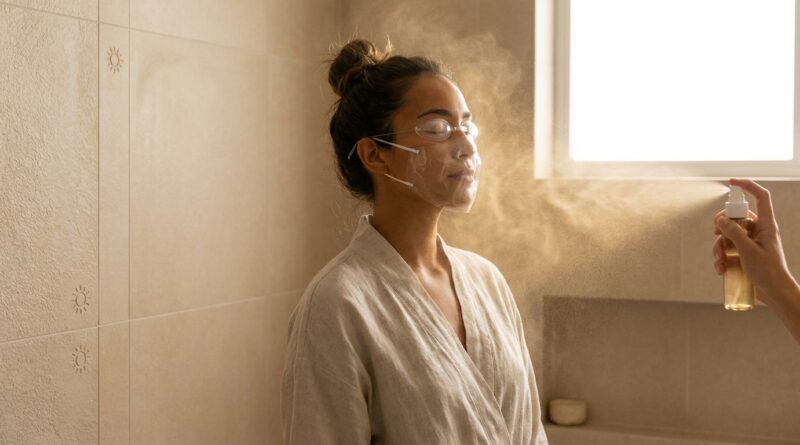
This is one of the biggest steps for spray tan inhalation safety 2026. Use disposable nose filters, plugs made for spray tanning, or at the very least follow the tech’s breathing instructions carefully during facial passes.
If you are in a booth, ask whether you should hold your breath briefly when the face mist cycles. If you are getting an airbrush tan, tell the tech you want warning before they spray near your face.
Do not chat through the face pass. Mouth closed. Short breath hold. Then step back into clearer air.
3. Wear eye protection
Your eyes are easy to forget until they sting. Tiny tanning eyewear or disposable eye shields can help reduce irritation. If the salon does not provide them, ask why.
4. Seal your lips
A thin layer of balm creates a barrier and helps stop your lips from drying out or catching extra solution. It is simple, cheap, and worth doing every time.
5. Use good posture in the booth or during airbrush passes
Stand as instructed. Keep your chin slightly up or as directed. Avoid inhaling when the mist is aimed near your face and upper chest. Good positioning helps the solution land where it should instead of bouncing back into your breathing zone.
6. Do not tan in a stuffy room
If the air already smells heavy when you walk in, speak up. A salon should not feel foggy from the last client. You should not be standing inside a cloud.
How long should a room be ventilated?
There is not one magic number that fits every machine and every room size, but here is the practical rule. The air should be visibly and comfortably clear before the next person walks in.
For many setups, that may mean several minutes of active ventilation between clients. In smaller spaces or after heavy spraying, it may need longer. If you enter and can still smell a strong suspended mist or feel residue in the air, it has not cleared enough.
When in doubt, ask the tech to ventilate the room a bit longer. A decent salon will not make this awkward.
Who should be extra careful?
Some people should take a more cautious approach or skip spray sessions altogether when symptoms are active.
Use extra care if you have:
- Asthma
- Chronic bronchitis
- Seasonal allergies that already irritate your airways
- A recent cold, cough, or sinus infection
- Sensitive eyes
- Fragrance sensitivity
If you are pregnant and trying to sort through conflicting salon advice, this guide on New ‘Pregnancy-Safe Glow’ Rule: What Expecting Moms Must Know Before Booking A Spray Tan In 2026 is worth reading before you book.
Booth tan or lotion mousse. Which is better for safety?
If your main concern is inhalation, lotions, mousses, and tanning drops usually win. They are messier at home, yes, but they do not create an airborne cloud.
Booth and airbrush pros
- Fast
- Even coverage when done well
- Great for events
Booth and airbrush cons
- Possible mist inhalation
- More exposure around eyes, lips, and nose
- Ventilation quality varies a lot by salon
Lotions and mousses pros
- No airborne mist
- Easy to use in a ventilated bathroom or bedroom
- Better for people with breathing concerns
Lotions and mousses cons
- Can streak if rushed
- Takes practice
- Harder to reach your back
Questions to ask before your appointment
If you want one quick script, use this:
- “How do you reduce inhalation during face spraying?”
- “Do you provide nose filters, eye protection, and lip balm?”
- “How is the room ventilated between clients?”
- “Can you avoid direct spray toward my face and give me a cue to hold my breath?”
- “I have sensitive lungs. Would you recommend a lotion or mousse instead?”
These are normal questions. You are not being difficult.
Red flags that should make you reschedule
- The room is visibly hazy
- The tech rushes your concerns
- No protective options are offered
- You are told to keep eyes open or talk during facial spraying
- You leave every time with coughing, throat irritation, or chest tightness
If the same salon keeps causing symptoms, stop giving them chances. Your body is giving you a review.
What to do if you feel irritated after a spray tan
Move into fresh air right away. Sip water. Rinse your eyes gently if they sting. Wash off residue around the lips and nostrils. If your chest feels tight, your breathing is noisy, or you feel wheezy, treat that seriously, especially if you have asthma.
If symptoms are strong, unusual, or do not settle, contact a medical professional. Beauty convenience is not worth guessing with your lungs.
At a Glance: Comparison
| Feature/Aspect | Details | Verdict |
|---|---|---|
| Spray booth or airbrush mist | Quick and even, but can drift into the nose, mouth, eyes, and lungs if ventilation and protection are poor. | Fine for many people when done carefully, but not “zero-risk.” |
| Protective steps | Nose filters, eye shields, lip balm, breath timing, and proper room ventilation cut down exposure a lot. | Worth doing every single session. |
| Lotions and mousses | No airborne cloud, better for people with asthma, irritation, or pregnancy-related caution. | Best low-inhalation choice if safety is your top concern. |
Conclusion
You do not need to choose between glowing skin and common sense. The better approach is to stop treating spray tans like they are automatically harmless just because they are sunless. Right now social feeds are packed with heated spray-tan deals and quick bronzing booth promos, while the serious talk about inhaling self-tan mist, mucous-membrane exposure, and long-term safety is buried in medical PDFs. That is why a calm, practical routine matters. Ask the tech how they control airborne mist. Protect your nose, eyes, and lips. Make sure the room has time to clear. And if your lungs are sensitive, give lotions or mousses a real look. A good tan should sit on your skin, not in your throat or chest. That one idea will help you enjoy modern spray tanning much more safely, starting tonight.