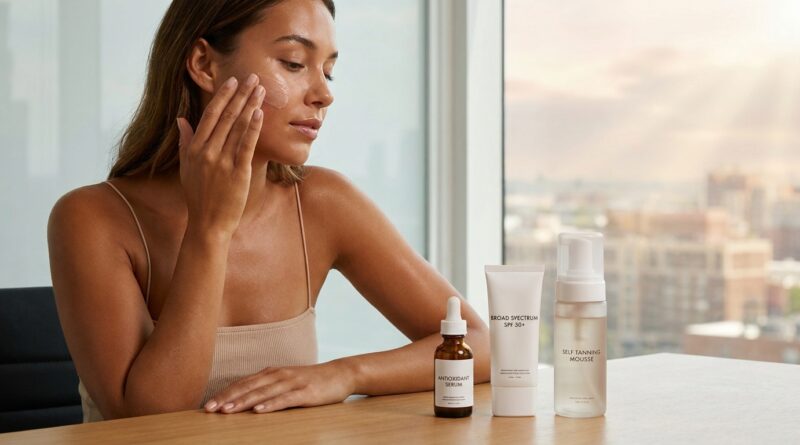
New ‘Blue-Light Tan’ Rule: How To Protect Your Fake Glow From Screens And UV In 2026
You are not imagining the skin panic. You finally get a smooth, believable self tan, then you sit in front of a laptop all day or head outside into that bright, hazy light and start wondering if your glow is quietly turning into a chemistry experiment. That worry has gotten louder in 2026 because the answer is not a simple yes or no. If you are asking, “is self tanner safe with blue light and everyday sun exposure,” the short version is this. Self tanner is still considered a safer cosmetic option than tanning in the sun, but it does not protect your skin, and there are fair questions about whether freshly applied DHA can add to oxidative stress on the skin surface. Add UV, visible light, pollution, and heat, and the real goal becomes smarter protection, not panic. You can keep your fake tan. You just need to treat tanned skin like exposed skin, because it is.
⚡ In a Hurry? Key Takeaways
- Yes, self tanner is generally safer than UV tanning, but it does not shield you from blue light, visible light, pollution, or sun damage.
- Use antioxidant skincare plus a broad-spectrum mineral or hybrid SPF, especially for the first 24 hours after applying DHA self tanner.
- The evidence on long-term DHA and oxidative stress is still incomplete, so the smartest move is simple risk reduction, not fear.
So, is self tanner safe with blue light and everyday sun exposure?
Mostly yes, with an important asterisk.
Sunless tanners that use DHA, short for dihydroxyacetone, color the very top layer of dead skin cells. That is a very different process from lying in the sun and damaging living skin cells with UV radiation. On that point, dermatologists are pretty consistent. Fake tan is safer than getting a real tan.
But “safer than sunbathing” is not the same as “no skin care issues at all.” Some lab and review data suggest DHA on skin may temporarily increase free radical formation, especially soon after application and especially when combined with UV exposure. The research is not settled, and a lot of it is still lower quality than people would like. That is why the new concern is less about self tanner being dangerous on its own, and more about whether it changes how you should protect your skin in modern life.
What blue light, visible light, and UV actually do
This is where a lot of online advice gets muddy.
UV light
UV is still the big player in skin aging and skin cancer risk. UVA drives a lot of photoaging. UVB is more tied to burning. Neither one cares that you have a gorgeous bronze from a bottle.
Visible light, including blue light
Visible light is not the same thing as UV. Blue light sits in the visible range. The sun gives off a huge amount of visible light. Screens give off visible light too, but at much lower intensity than daylight. For most people, your phone and laptop are not hitting your skin anywhere near as hard as walking outside at noon.
That said, visible light can matter, especially for pigmentation-prone skin tones and for people trying to reduce signs of aging and inflammation. It is one more stressor in the pile, not usually the main villain.
Pollution and urban air
Pollution adds oxidative stress. Think of it as background grime plus inflammation. It does not “erase” your self tan, but it can make skin look dull, irritated, and uneven faster. That can make your tan fade less nicely.
Where DHA fits into the picture
DHA reacts with amino acids in the top layer of skin to create that browned effect. This is a surface reaction, which is why the tan fades as skin naturally sheds.
The concern people are talking about now is that this reaction may also create reactive oxygen species, basically unstable molecules that can contribute to oxidative stress. That does not mean self tanner is suddenly bad. It means there is a practical takeaway.
Freshly tanned skin is a good time to be extra careful about sun exposure, and it is a very good time to use supportive skincare. The first day matters most.
The “Blue-Light Tan” rule for 2026
If you want one simple rule, use this.
For 24 hours after applying DHA self tanner
Go easy on direct sun. Use broad-spectrum SPF. Add antioxidants. Do not assume indoor time by a window is nothing. Daylight through glass can still bring UVA into the mix.
After that
Keep protecting your skin as usual. Your self tan is cosmetic color, not armor.
What to do before and after you self tan
Before application
Start with calm skin. If your face is irritated, over-exfoliated, or freshly shaved, self tanner can grab unevenly and make everything look worse.
Try this routine:
- Exfoliate gently the day before, not five minutes before.
- Skip strong acids and retinoids right before tanning if they leave you sensitive.
- Apply self tanner to fully dry skin.
Right after application
This is the window where being a little fussy pays off.
- Avoid direct sun if you can.
- Do not rely on the tan for protection.
- If you must go out, use a broad-spectrum SPF once the tan has developed according to product directions, or use a product schedule that lets you tan the night before.
The next morning
This is where your “screen age” routine comes in.
- Use an antioxidant serum if your skin tolerates one. Vitamin C is the classic. Niacinamide is another good option, especially if your skin gets touchy.
- Apply a broad-spectrum sunscreen. Mineral or hybrid formulas are often the easiest recommendation because tinted iron oxides can also help with visible light protection.
- If you spend long hours near bright windows or outdoors, a tinted sunscreen is often more useful than a plain one.
Why mineral or hybrid SPF makes sense here
Most people hear “wear SPF” and stop there. Fair enough. But the type can matter.
Mineral sunscreens with zinc oxide, and sometimes titanium dioxide, are strong for UV coverage. Tinted versions often include iron oxides, which can help defend against visible light better than untinted formulas. Hybrid sunscreens can also work very well if you prefer the feel.
If your main question is whether screens alone are ruining your tan, probably not. If your question is whether a day that includes screens, window light, a walk at lunch, and city pollution adds up, yes, that combo is worth taking seriously.
Will sunscreen ruin or fade your fake tan?
Usually no, at least not in any dramatic way.
Heavy rubbing, harsh cleansers, acne treatments, and frequent exfoliation are much more likely to break up your tan than sunscreen itself. In fact, protected, moisturized skin often holds a self tan more evenly.
The trick is application style. Pat and smooth. Do not scrub. And reapply with a light hand if you are trying to preserve facial color.
Best routine if you work on a laptop all day
If you are indoors most of the time, this does not need to be complicated.
Simple desk-day routine
- Morning antioxidant.
- Broad-spectrum SPF, especially if you sit by a window.
- Tinted mineral sunscreen if you are worried about visible light and pigmentation.
- Moisturizer at night to keep the tan fading evenly.
Your screen is not likely the biggest threat. The daylight coming through the office window is usually the more important piece.
Best routine if you commute, walk outside, or live in a polluted city
This is where people often under-protect themselves because they are not “sunbathing.” But everyday exposure counts.
Outdoor and city routine
- Use self tanner at night when possible.
- The next day, wear SPF 30 or higher.
- Choose a tinted mineral or hybrid sunscreen if pigmentation is a concern.
- Wear sunglasses and a hat for extra help.
- Cleanse gently at night to remove pollution without stripping your tan.
- Moisturize to extend the life of the color.
Ingredients that help, and ingredients to be careful with
Helpful
- Vitamin C for antioxidant support.
- Niacinamide for barrier support and tone.
- Vitamin E in moisturizers.
- Glycerin and hyaluronic acid to reduce patchy fade.
- Iron oxides in tinted SPF for visible light defense.
Use with some caution
- Strong exfoliating acids if you want the tan to last.
- Retinoids right around tanning time if your skin gets irritated.
- Benzoyl peroxide because it can be drying and disruptive.
- Anything that stings on application. Calm skin tans better.
What not to believe
“Fake tan protects me like a real tan”
No. Self tanner adds color, not meaningful sun protection.
“Blue light from screens is basically the same as the sun”
No. Daylight exposure is far more intense. Screens are a smaller piece of the puzzle.
“If DHA research is incomplete, I should stop self tanning”
Not necessarily. It means use common-sense precautions. The current evidence does not put self tanner in the same risk category as intentional UV tanning.
“SPF and self tanner cannot work together”
They absolutely can, and should.
At a Glance: Comparison
| Feature/Aspect | Details | Verdict |
|---|---|---|
| DHA self tanner + sun | Safer than UV tanning, but may temporarily add oxidative stress concerns, especially right after application | Use it, but pair it with SPF and sensible timing |
| Blue light from screens | Much weaker than sunlight, though visible light can still matter for pigmentation and aging over time | Lower risk than daylight, but not zero in a full daily exposure mix |
| Best protection strategy | Antioxidant serum, mineral or hybrid broad-spectrum SPF, tinted formulas for visible light, gentle skincare | Most balanced plan for glow plus skin longevity |
Conclusion
The useful answer here is not “be scared of self tanner,” and it is not “screens do nothing.” It is this. If you love a DHA glow, keep it, but stop treating it like a standalone beauty step. Build a little skin protection around it. The research on long-term DHA safety and oxidant stress is still incomplete, so a dermatologist-aligned middle ground makes the most sense. Use antioxidants. Wear a broad-spectrum mineral or hybrid SPF. Be extra cautious with direct sun in the first 24 hours after tanning. Pay more attention to daylight and windows than to your laptop alone. That way, you get the bronze you want without ignoring the real skin-aging risks that come from UV, visible light, and pollution working together. A good fake tan and good skin habits are not competing goals. In 2026, they belong in the same routine.