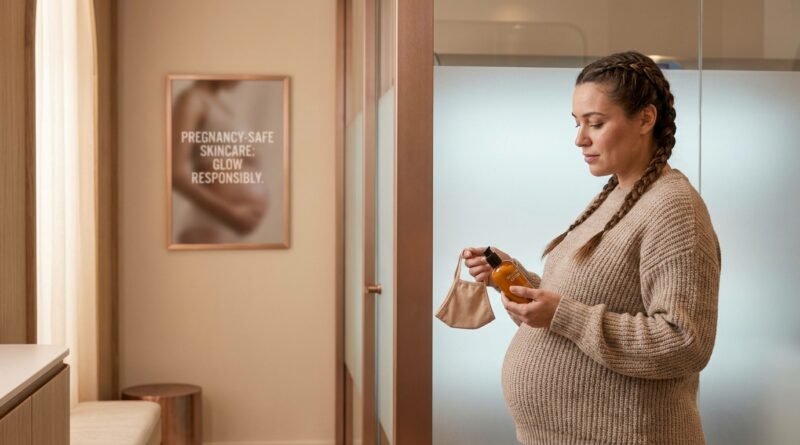
New ‘Pregnancy-Safe Glow’ Rule: What Expecting Moms Must Know Before Booking A Spray Tan In 2026
You are not overthinking this. The spray tan pregnancy question really is confusing right now. One salon says it is completely safe. TikTok says plenty of moms do it. Then you stumble across a newer safety note that says pregnant women should avoid inhaling spray tan mist, and suddenly a simple pre-baby-shower appointment feels stressful. If you are wondering about spray tan pregnancy safe 2026, the honest answer is not a neat yes or no. The biggest concern is not usually the color sitting on your outer skin. It is breathing in DHA mist and other ingredients during a booth or airbrush session. That is why the newest practical advice is more cautious than salon marketing. The good news is you do have safer ways to get color for photos, events, or a baby-moon without turning to UV tanning or making a last-minute panic decision.
⚡ In a Hurry? Key Takeaways
- Spray tanning during pregnancy is not considered clearly risk-free, especially if you may inhale DHA mist during the session.
- If you want color while expecting, skip UV tanning and choose lower-exposure options like lotion, mousse, or a very controlled application with strong ventilation and nose and mouth protection.
- The safest move is to ask your OB or dermatologist, patch test first, and avoid any salon that brushes off your pregnancy questions.
Why this got more confusing in 2026
The disconnect is simple. Salons often focus on one point, that DHA mostly reacts with the top layer of dead skin. Medical caution focuses on a different point, that spray tanning is not just skin contact. It is also an inhalation issue.
That gap matters in pregnancy. Newer dermatology reviews, product safety discussions, and public health bulletins still tend to say the same basic thing. We do not have strong evidence proving harm from occasional spray tans in pregnancy, but we also do not have enough high-quality pregnancy-specific safety data to call it completely fine. So the advice stays cautious.
That is why the phrase “pregnancy-safe glow” can be misleading. It sounds settled. It is not fully settled.
What the concern actually is
It is mostly about breathing the mist
DHA, short for dihydroxyacetone, is the active ingredient in most sunless tanning products. On the skin, it reacts with surface cells to create color. That part is why many people assume spray tans are harmless.
But when DHA is sprayed into the air, tiny particles can be inhaled. Depending on the setup, some may also reach the lips, nose, eyes, or mucous membranes. Pregnancy guidance tends to be more careful here because inhalation exposure is a different issue than lotion sitting on your arms or legs.
Other ingredients can matter too
Spray tan formulas may also include fragrance, preservatives, bronzers, botanical extracts, and sometimes shimmer or cosmetic colorants. Not all of these are dangerous, but pregnancy is not the time to be casual about unknown exposure, especially if you already have asthma, nausea, scent sensitivity, or skin that has become more reactive.
So, is a spray tan pregnancy safe in 2026?
The most honest answer is this: it may be lower risk than lying in the sun or using a tanning bed, but it is still not something experts usually describe as completely risk-free during pregnancy.
If you want the cautious, practical version:
- UV tanning is the bigger no. Avoid tanning beds and intentional sun exposure for color.
- Topical self-tanner lotions, mousses, and drops are usually the more pregnancy-friendly route because there is less chance of inhaling the product.
- Spray tans are the gray area because mist can be inhaled, especially in enclosed booths or poorly ventilated salons.
That does not mean every pregnant woman who got sprayed made a bad choice. It means if you are deciding now, you should make the choice with full information, not with a breezy “girl, it’s totally fine” from a sales page.
A practical safety playbook for expecting moms
Best option: Use a self-tanning lotion or mousse at home
If your main goal is a little warmth for maternity photos or a special event, this is usually the simplest way to lower risk. You avoid the cloud of airborne product. You also control the room, the amount used, and how close it gets to your face.
Apply in a ventilated room. Wear gloves or wash hands well. Keep it away from eyes, inside the nose, and mouth. And patch test first, because pregnancy can make skin more unpredictable.
If you still want a salon spray tan, lower the exposure as much as possible
If you decide the convenience is worth it, stack the odds in your favor:
- Ask if the salon has strong ventilation.
- Ask if they can avoid spraying your face.
- Use nose filters if available.
- Wear protective eyewear.
- Keep your mouth closed during the spray and consider asking your doctor whether a mask before and after facial passes makes sense in your situation.
- Choose a technician who does not rush and who respects pregnancy concerns.
If a salon acts annoyed by these questions, that is your answer. Leave.
Skip it if you have breathing issues
If you have asthma, strong fragrance sensitivity, morning sickness triggered by smells, or any respiratory condition, caution matters even more. In that case, at-home lotion or no tan at all may be the better call.
Questions to ask before you book
Think of this as your five-minute screening list:
- What ingredients are in the solution?
- Can I see the full product label or safety sheet?
- Do you have a well-ventilated room?
- Do you provide nose plugs and eye protection?
- Can you skip my face and let me use a separate face tanner later?
- Have you worked with pregnant clients who wanted reduced exposure steps?
You are not being difficult. You are being sensible.
When to avoid a spray tan completely
Skip the appointment and choose another option if:
- Your OB or midwife specifically told you not to do it.
- You are already anxious enough that the appointment will ruin your peace of mind.
- The salon cannot answer basic safety questions.
- You have open skin, a rash, or pregnancy-related itching.
- You feel sick, short of breath, or smell-sensitive.
Sometimes the best beauty decision in pregnancy is the one that lets you stop spiraling.
Don’t replace one risk with a bigger one
This part is important. If you decide to skip a spray tan, do not “make up for it” with a tanning bed or extra sun. Those choices bring more established risks, including skin damage and overheating concerns.
A little body makeup, a gradual tanning lotion, or even just warmer-toned makeup and a good photographer can go a long way. And if social media has warped what “glowy” is supposed to look like, it is worth reading New ‘AI Tan Trap’ Rule: Why Virtual Filters Are Quietly Wrecking Your Real-World Skin Habits. A lot of women are chasing a filtered look that does not exist in normal daylight.
What to say to your doctor
If you want a fast, useful answer from your OB, skip the vague question “Are spray tans okay?” and try this instead:
“I’m pregnant and have an event coming up. I want to avoid UV tanning. Is a self-tanning lotion okay for me, and if I do a salon spray tan, are you concerned about inhaling DHA mist?”
That wording gets you closer to the real issue.
If you already got a spray tan while pregnant
Take a breath. One past appointment is not a reason to panic. The current concern is based on limited evidence and caution around inhalation, not proof that a single spray tan caused harm. If you already had one, mention it at your next prenatal visit if it will ease your mind, then move forward with a more careful plan.
Pregnancy has enough guilt traps already. This should not become another one.
At a Glance: Comparison
| Feature/Aspect | Details | Verdict |
|---|---|---|
| Salon spray tan while pregnant | Fast, even color, but possible inhalation of DHA mist and other ingredients is the main concern. | Use caution. Not the first choice if you want the lowest-exposure option. |
| At-home self-tanning lotion or mousse | Color develops without airborne spray, giving you more control and less inhalation risk. | Usually the better pregnancy-friendly option. |
| UV tanning or tanning beds | Brings known skin damage risks and is not a smart substitute for a skipped spray tan. | Avoid. |
Conclusion
The big thing expecting moms need to know in 2026 is this: there is still a real gap between what some salons promise and what newer pregnancy-focused skin safety guidance actually says about inhaling DHA and other spray tan ingredients. That does not mean you have to hide from every photo or settle for feeling washed out. It just means you need a smarter plan. For most women, that means skipping UV tanning, leaning toward lotion or mousse over mist, asking better questions, and treating “totally safe” claims with healthy skepticism. A clear, practical pregnancy-specific playbook helps you protect your baby, avoid late-night panic Googling, and still enjoy a sunless glow for the moments you want to remember.