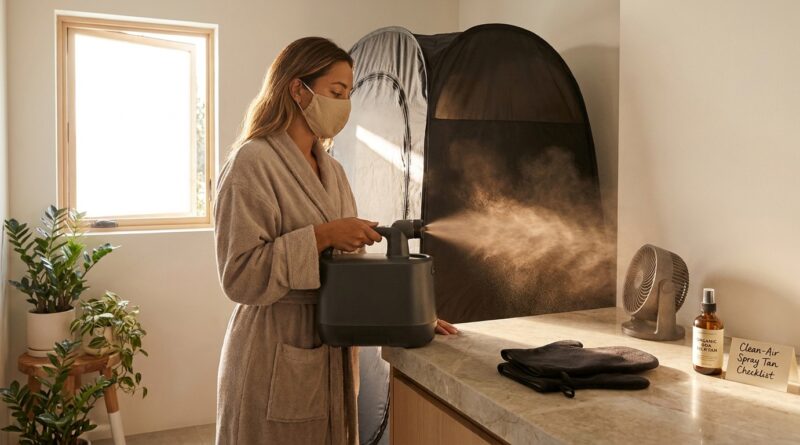
New ‘Spray-Tan Inhalation’ Rule: The 2026 Guide To Breathing Safer Around Your Sunless Tan
If you have ever sat in a spray tan booth or misted your own legs in a tiny bathroom and thought, “Wait, am I supposed to be breathing this?”, you are asking a very fair question. A lot of people love the color they get from a fast, even tan, but feel uneasy when that fine cloud hangs in the air longer than expected. In late 2026, that concern is getting more attention, not less. Regulators, safety panels, and toxicologists are speaking more clearly about inhalation exposure from cosmetic sprays, especially when droplets are small enough to drift and reach the lungs. The short version is simple. Skin contact is one thing. Breathing in the mist is another. That does not mean you need to panic or give up sunless tanning. It does mean it is smart to use better habits, better airflow, and a little more caution than many salons and at-home setups have treated as normal.
⚡ In a Hurry? Key Takeaways
- Spray tan inhalation safety in 2026 comes down to one core rule: aim for tan on skin, not mist in lungs.
- Use a well-fitted mask, better room ventilation, and extra time between spraying and re-entering the room.
- People with asthma, allergies, pregnancy concerns, or frequent spray exposure should be even more careful.
What changed in 2026?
The biggest shift is not that spray tans suddenly became “newly dangerous.” It is that experts are being more direct about an old weak spot in the category. Fine cosmetic mists can stay airborne. When they do, some of that mist can be inhaled.
That matters because the active ingredient in many sunless tanning products, DHA or dihydroxyacetone, is meant for the outer surface of the skin. Safety discussions have long focused on that use. But inhalation is a different route of exposure, and newer lab work and technical guidance in 2026 have pushed that issue higher up the list.
So the new rule, really, is more of a new mindset. Do not treat spray tan mist like harmless room air just because it is sold as a cosmetic.
What experts are worried about
1. Fine droplets can hang in the air
A good spray tan machine creates a very fine mist. That is great for even coverage. It is less great if the room is small, the exhaust is weak, or you walk straight back into the cloud right after spraying.
The smaller the droplet, the easier it is to breathe in. That does not mean every spray tan session is a major health event. It does mean exposure depends a lot on setup and behavior.
2. Salon workers and frequent tanners have more cumulative exposure
If you get one tan before a wedding, your exposure pattern is very different from a salon tech who sprays clients all week. The same is true for people who top up often at home in enclosed spaces.
Repeated low-level inhalation is one reason occupational safety people have become more vocal. The person doing the spraying may need stronger protection than the client.
3. Sensitive lungs deserve extra caution
If you have asthma, chronic bronchitis, strong fragrance sensitivity, or a history of reacting to aerosols, this topic matters even more. Even if the tanning ingredient itself is not the only issue, fragrances, preservatives, bronzers, and other additives can still irritate the airways.
The practical rule: Tan your skin, not your lungs
If you remember one thing from this whole guide, make it that line.
Spray tan inhalation safety in 2026 is less about chasing perfect zero-risk language and more about reducing preventable exposure. You do not need a hazmat team. You do need common-sense barriers.
Your step-by-step breathe-safer routine
Before the spray
Ask how the room is ventilated. If you are in a salon, it is okay to speak up. Look for active airflow, not just a closed room with a fan somewhere in the building. If the air feels still and heavy, that is a clue.
If you are tanning at home, avoid tiny bathrooms with the door shut and no exhaust. Pick the largest, best-ventilated area you can manage. Open windows if possible. Use a fan that helps move air out, not one that just swirls product around your face.
Have your mask ready before any mist starts. A snug mask is better than trying to hold your breath, which most people cannot do consistently during a full session anyway.
During the spray
Keep your mouth closed when possible and breathe shallowly through your nose if you are not wearing a mask for a brief facial pass. Better yet, use protective nose filters or a mask whenever the product and salon setup allow it.
Close your eyes during facial spraying and use the provided eye protection if available. Lip balm can also help create a small barrier on the lips, which many salons already suggest.
If the technician is spraying your face, ask whether they can reduce overspray, adjust the nozzle, or use a contour brush or mitt for part of that area instead of a full mist pass. A good tech will not be offended.
After the spray
Do not linger in the room if the mist is still visible. Give the space time to clear. If you are at home, leave the area and let ventilation do its job before going back in to clean up.
If you coughed during the session, felt chest tightness, or noticed throat irritation, pay attention. That does not automatically mean something serious happened. But it is a sign your setup may need work before the next round.
What kind of mask makes sense?
For basic consumer use, a well-fitted high-filtration mask offers more protection than a loose cloth face covering. Fit matters a lot. Gaps around the nose and cheeks let airborne mist sneak in.
If you are a salon worker or someone who sprays often, stronger respiratory protection may be worth discussing with an occupational safety professional. Especially if you are exposed daily.
The simple version is this. A decorative face covering is not enough. A properly fitted filtration mask is the better move.
Salon clients: what to ask without sounding dramatic
You do not need to walk in with a clipboard. Just ask a few calm questions:
- Do you have ventilation or an extraction system in the spray area?
- Do you offer nose filters, eye protection, or masks?
- How long do you wait between clients to let the air clear?
- Can my face be done with less mist or with a different method?
If a salon brushes off the question completely, that is useful information. A good salon should already expect it.
At-home tanners: your biggest risk is usually the room
Most home users are not dealing with industrial-level exposure. But they often make one very avoidable mistake. They spray in a cramped, poorly ventilated room because it feels convenient.
That is where the mist builds up. That is where floors, towels, and walls keep giving off residue. And that is where your lungs get a much bigger share of the session than they should.
If you self-tan often, try pump lotions, mousses, or mitt-applied formulas for at least some sessions. They usually create far less airborne product than spray mists. If you still prefer a mist for your back or hard-to-reach areas, use it sparingly and only with airflow.
Who should be extra cautious?
Some groups should treat inhalation exposure as a bigger deal:
- People with asthma or reactive airways
- Salon workers and mobile tanners
- Frequent at-home sprayers
- Anyone using spray tans in small enclosed rooms
- Pregnant users who want a more conservative approach
If pregnancy is part of your concern, this is a good time to read New ‘Pregnancy-Safe Fake Tan’ Rule: What OB‑GYNs Quietly Wish Every Mom‑To‑Be Knew In 2026. It helps sort through the kind of practical questions people really have, not just the vague label talk.
What about booths versus airbrush versus self-tan mists?
Automated booths
Fast and convenient, but they can create a broad cloud of mist. The main question is how well the booth handles extraction and how carefully the user follows instructions for breath control and protective gear.
Professional airbrush tanning
This can be more controlled, especially with a skilled technician who limits overspray and avoids drenching the face. But control varies a lot by operator and room setup.
At-home self-tan mists
These are often underestimated because they seem lighter and more casual. But repeated use in a small bedroom or bathroom can still create inhalation exposure. “Smaller product” does not always mean “smaller risk.”
Signs your setup is not good enough
Here are a few red flags:
- You can still see or smell the mist hanging in the air minutes later.
- You cough during or right after application.
- Your throat feels scratchy after tanning.
- You spray in a room with no open window or active vent.
- You use a loose cloth mask and call it good.
If any of those sound familiar, your current routine could use a cleanup.
At a Glance: Comparison
| Feature/Aspect | Details | Verdict |
|---|---|---|
| Ventilation | Strong airflow and time for mist to clear lower the chance of breathing in lingering droplets. | Very important. Poor ventilation is one of the biggest avoidable problems. |
| Protective masking | A snug, high-filtration mask works better than a loose cloth covering or simply holding your breath. | Worth using, especially for frequent sessions or sensitive lungs. |
| Application method | Booths and fine mists can create more airborne spray than mitt-applied lotions or mousses. | Lower-mist options are usually the safer pick for inhalation concerns. |
Conclusion
You are not overthinking this. In the last stretch of 2026, regulators and toxicologists have sharpened their language on inhalation exposure from cosmetic sprays, pushing brands and safety panels to better flag potential respiratory risks when fine mists hang in the air. At the same time, new lab data on DHA inhalation and updated guidance on how to assess airborne droplets in cosmetics have landed in technical circles, while salon clients and at-home tanners are mostly left guessing. The good news is that the fix is often practical, not complicated. Better masking. Better spacing. Better timing. Better airflow. If you enjoy spray tans and self-tan mists, you do not have to quit. You just need a routine that respects your lungs as much as your glow. That is the real heart of spray tan inhalation safety in 2026.