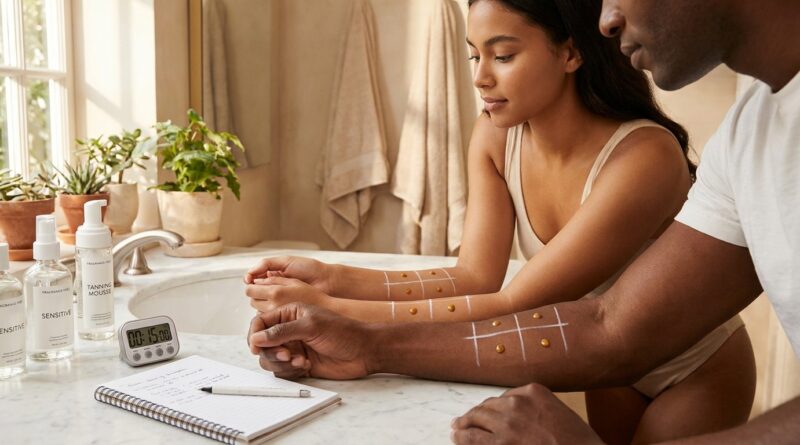
New ‘Patch-Test Tan’ Rule: The 24‑Hour Allergy Check Every Self‑Tanner Should Do In 2026
You do everything “right,” apply a self-tanner you were told was gentle, then wake up itchy, blotchy, or covered in tiny angry bumps. It is frustrating, and honestly, a little unfair. A lot of people assume fake tan reactions only happen to people with very sensitive skin. That is not what dermatologists are seeing now. Fragrance mixes, preservatives, botanical extracts, and even products labeled clean or natural can still trigger contact irritation or a true allergy. That is why the new patch-test tan rule is simple. Give every new self-tanner 24 hours on a small area before you put it everywhere. If you want the short version of how to patch test self tanner for allergies, here it is: test a small hidden spot, wait a full day, and do not use the product all over if you get redness, itching, stinging, swelling, or a rash.
⚡ In a Hurry? Key Takeaways
- Patch test every new self-tanner on a small hidden area and wait 24 hours before full-body use.
- Use the exact product the exact way you plan to wear it, including mousse, drops, or spray, so the test is realistic.
- If you notice itching, burning, hives, swelling, or a spreading rash, wash it off and skip the tan. If symptoms are strong, contact a doctor.
Why this 24-hour rule matters now
The big problem is not just “sensitive skin.” It is hidden triggers.
Many self-tanners contain long fragrance blends, preservatives, color guides, plant extracts, and added skincare ingredients. Any one of those can bother skin. Sometimes the reaction is immediate. Sometimes it shows up hours later, which is why a five-minute wrist test right before a wedding or vacation does not tell you much.
Dermatologists are also pointing out something people forget. You can react to a product even if you have used similar ones before. A new formula, a new scent, or a new preservative system can be enough to tip your skin over the edge.
If you are also trying to shop smarter before you even get to the patch test stage, it helps to read ingredient lists with a little more caution. Our guide to New ‘Ingredient-Swap Tan’ Rule: The 2026 Guide To Choosing Safer Self-Tanner Formulas For Your Skin, Not Just Your Shade breaks down what to watch for.
How to patch test self tanner for allergies
Step 1: Pick the right test spot
Choose a small, hidden area where skin is easy to check.
Good options include:
- Behind the ear
- Along the jawline if you plan to use facial tanning drops
- Inner elbow
- Inner forearm
- Side of the neck or near the collarbone
- Inner thigh for body tanner
If the product is for your face, test near the face. If it is for your body, test body skin. The skin on your shin is not always going to react the same way your cheeks do.
Step 2: Start with clean, dry skin
Wash the area with a gentle cleanser. Dry it well. Do not apply lotion, oils, deodorant, acids, retinoids, or perfume on that spot first.
You want to know how your skin reacts to the self-tanner, not to a weird mix of products sitting on top of each other.
Step 3: Apply a small amount exactly as directed
This part matters more than people think.
If it is a mousse, use a tiny dab. If it is tanning drops, mix them the same way you plan to use them on your face. If it is a mist or spray, spray the amount you would normally apply to that size area. Let it dry as directed.
Do not dilute a product for the test unless the instructions say to. And do not test one layer if you plan to wear two layers for your event.
Step 4: Leave it alone for 24 hours
This is the new rule in one line. Wait a full 24 hours.
Do not scrub the area. Do not cover it with a tight bandage unless a doctor specifically told you to do that. A simple patch test for consumers is usually just a small amount on skin, left exposed, then monitored.
Check the area at these times if you can:
- 15 to 30 minutes after application
- At 2 to 4 hours
- At 24 hours
Some reactions show up fast as stinging or burning. Others build slowly into redness, itching, bumps, or dry scaly patches by the next day.
Step 5: Know what counts as a bad sign
Skip the full application if you get any of these:
- Itching
- Burning or stinging that does not settle quickly
- Redness that grows instead of fades
- Swelling
- Raised bumps or hives
- Blistering
- Dry, angry, eczema-like patches
A little color development is normal. Irritation is not.
Patch test vs irritation. What is the difference?
This is where people get confused.
Irritation often feels like burning, stinging, tightness, or rawness. It can happen because the formula is strong, the skin barrier is damaged, or you applied it after shaving, exfoliating, or using active skincare.
Allergic contact dermatitis is your immune system reacting to an ingredient. It may look more like itchy rashy patches, swelling, or hives, and it can appear hours later.
You do not need to diagnose the exact type at home. If the spot gets angry, the practical answer is the same. Wash it off and do not use it all over.
The biggest patch-test mistakes people make
Testing too close to the event
The night before prom is not the time to experiment. Give yourself at least two to three days if possible. That way, if your skin reacts, you have time to calm it down.
Testing on skin that is already irritated
If you just shaved, used a scrub, or had a retinol night, your test is less useful. You may blame the tanner when your skin barrier was already upset.
Using one product in the test, then layering three more on event day
If you plan to use prep spray, mousse, setting powder, and body shimmer, each one can add a trigger. Test the products you actually plan to wear.
Ignoring mild itching
People talk themselves into this all the time. “It is probably nothing.” Sometimes it is not nothing. Mild itching during a test is exactly the kind of warning you want before a full-body application.
What ingredients most often cause trouble?
Not every reaction comes from the tanning active itself.
Common problem spots include:
- Fragrance or parfum blends
- Essential oils
- Preservatives like methylisothiazolinone or related systems
- Botanical extracts
- Added colorants or bronzers
- Harsh alcohol-heavy formulas, especially in sprays
DHA, the ingredient that creates the tan color, can also bother some people, but fragrance and preservative systems often get more of the blame in real-world reactions.
If you react, what should you do?
First, wash the area with lukewarm water and a gentle cleanser.
Then keep the routine boring. Use a plain moisturizer. Skip acids, scrubs, retinoids, and heavily scented products.
If you have strong itching, swelling, hives, or a spreading rash, contact a doctor or dermatologist. If you have trouble breathing, lip or tongue swelling, or feel faint, get urgent medical care right away.
Also, take a photo of the reaction and save the ingredient list. That makes future shopping much easier.
A simple screenshot-able patch-test protocol
Here is the no-fuss version.
- Pick a hidden spot that matches where you will use the product.
- Clean and dry the skin.
- Apply a small amount exactly as directed.
- Do not add other products on top.
- Wait 24 hours.
- Watch for redness, itching, burning, swelling, bumps, or hives.
- If the skin stays calm, move ahead with more confidence.
- If the skin reacts, wash it off and skip that formula.
Who should be extra careful?
Everyone should patch test, but especially if you:
- Have eczema, rosacea, or psoriasis
- React to fragrance in skincare
- Have had mystery rashes from beauty products before
- Use retinoids, acids, or acne treatments
- Recently shaved, waxed, or exfoliated
- Are trying a new brand before a trip, wedding, or party
Even if your skin is usually easygoing, self-tanner is still worth testing. “Never had sensitive skin” is not a guarantee.
At a Glance: Comparison
| Feature/Aspect | Details | Verdict |
|---|---|---|
| Test timing | A full 24-hour wait catches delayed itching, redness, and rash better than a quick same-day check. | Best practice |
| Test area | Use a small hidden area that matches where you will apply the tanner, like jawline for face drops or inner arm for body mousse. | More accurate |
| Reaction signs | Itching, burning, swelling, hives, or spreading redness mean stop and wash it off. | Do not use full-body |
Conclusion
The smartest self-tan habit in 2026 is not a new mitt or a darker shade. It is patience. Allergy and sensitivity chatter around self tanners is rising for a reason, and newer dermatology data keeps pointing to common troublemakers like fragrance and preservatives, even in people who never saw themselves as “sensitive.” A simple 24-hour patch test gives you a low-drama way to spot problems before they ruin a weekend or send you into panic mode before an event. Think of it as cheap insurance for your skin. Test first, wait the full day, and then tan with a lot more confidence that your glow will look good and feel calm.