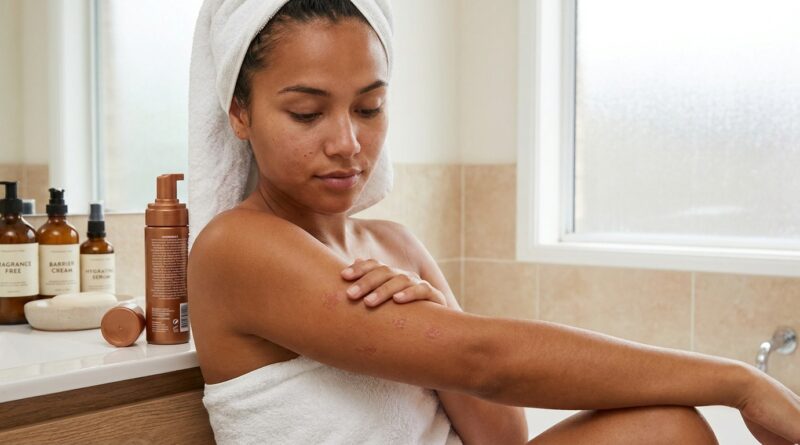
New ‘Post-Fake-Tan Rash’ Rule: How To Calm Skin Fast When Your Sunless Glow Backfires In 2026
You did the “safe” thing. You skipped the tanning bed, used a trusted self-tanner, and still woke up with stinging skin, itchy bumps, or rough angry patches. That is frustrating, and honestly a little confusing. A lot of people are now finding that stronger DHA formulas, heavy fragrance, and all those pre-tan acids and scrubs can push skin past its limit. If you are searching for self tanner rash how to treat safely, the first step is simple. Stop adding more products. Then work out whether you are dealing with a mild irritant reaction, a true allergy, or a more serious burn-like response that needs the tan washed off right away. The good news is that many mild reactions calm down fast when you strip your routine back to the basics. The not-so-good news is that trying to “fix” the patchiness with more tan, more exfoliation, or TikTok hacks usually makes it worse.
⚡ In a Hurry? Key Takeaways
- If your self-tan causes burning, itching, hives, or a spreading rash, stop using it immediately and pause active skincare for at least 48 hours.
- Use cool water, a gentle cleanser only if needed, and a bland fragrance-free barrier cream to calm skin without scrubbing off all your color.
- Wash the tan off right away and get medical help if you have facial swelling, blistering, trouble breathing, or a rash that keeps spreading.
Why fake tan can suddenly start causing a rash
Self-tanner is still generally seen as safer than UV tanning. That part has not changed. But “safer than sunbeds” does not mean “risk-free for skin.”
Most self-tanners use DHA, short for dihydroxyacetone. It reacts with proteins in the top dead layer of skin to create that bronzed look. In many people, that is fine. In some, especially when the formula is extra-dark or paired with fragrance, preservatives, or essential oils, it can irritate the skin barrier.
The bigger issue in 2026 is what many people put on their skin before and after tanning. Think glycolic acid pads, retinol, benzoyl peroxide, salicylic acid body sprays, strong scrubs, shaving, and perfumed moisturizers. Each one can chip away at your skin barrier. Add self-tanner on top and your skin may say, “Nope.”
First, figure out what kind of reaction you have
Likely mild irritant reaction
This is the most common one. Signs include:
- Stinging or burning soon after application
- Dry, tight, rough, or sandpapery patches
- Mild redness
- Itch that stays mostly where you applied the tan
This often happens when the skin barrier is already stressed.
Possible allergy-style reaction
This is more serious and may show up hours later, or even a day or two later. Signs include:
- Raised itchy bumps or hives
- Swelling
- Rash spreading beyond the exact application area
- Reaction every time you use the same product
The trigger may be DHA, but it is often another ingredient like fragrance, preservatives, dyes, or botanical extracts.
Treat it like a chemical exposure if you have:
- Intense burning
- Blistering
- Raw, weeping, or very inflamed skin
- Eye, lip, or airway irritation
In that case, wash it off right away and seek medical advice quickly.
Self tanner rash how to treat safely, step by step
1. Stop the self-tanner and stop the “fixing”
Do not layer more tan over the rash. Do not scrub it. Do not use lemon juice, micellar hacks, exfoliating mitts, or harsh tan removers. Those can make inflamed skin much angrier.
2. Pause active skincare for 48 hours
This is the part people skip. For the next two days, stop using:
- Retinoids or retinol
- AHAs like glycolic or lactic acid
- BHAs like salicylic acid
- Benzoyl peroxide
- Vitamin C if it stings
- Fragranced body lotions
- Physical scrubs and exfoliating gloves
Your goal is not perfect color. Your goal is a calmer skin barrier.
3. Rinse with cool or lukewarm water
If the reaction is mild and the tan is settled, you may not need a full wash-off. But if your skin is burning, getting more red, or clearly reacting to the product, rinse the area with cool or lukewarm water. Use a very gentle, fragrance-free cleanser only if needed.
Skip hot water. It can increase stinging and redness.
4. Apply a bland barrier cream
Look for simple, fragrance-free moisturizers or ointments. Good options often include:
- Ceramides
- Petrolatum
- Glycerin
- Colloidal oatmeal
Use a thin layer. You are trying to seal in moisture and calm inflammation, not suffocate the skin with ten products at once.
5. Use a cool compress for sting and heat
A clean, cool damp cloth for 10 to 15 minutes can help with burning and itch. Be gentle. Press, do not rub.
6. Think twice before using steroid creams
A low-strength hydrocortisone cream may help some itchy rashes, but it is not right for every case, especially on the face or broken skin. If you are pregnant, have eczema, or are not sure whether this is irritation or allergy, it is best to ask a pharmacist or clinician first.
7. Protect skin from the sun
Freshly irritated skin can be more reactive to UV. Some safety reviews have also pointed out that DHA use may increase short-term UV sensitivity. So if you have to go outside, cover up and use a sunscreen your skin already tolerates well.
When you should wash the tan off immediately
Try not to panic-remove every streak. But wash it off now if you have:
- Strong burning or pain
- A rapidly spreading rash
- Hives
- Swelling
- Blistering
- Face, eye, lip, or throat symptoms
That is no longer a “wait and see if the color settles” moment.
When to get medical help
Get urgent help if you have trouble breathing, facial swelling, dizziness, or signs of a severe allergic reaction.
Book a doctor or dermatologist visit if:
- The rash lasts more than a few days
- It keeps getting worse
- Your skin is cracked, weeping, or infected
- You get the same reaction with multiple tanning products
- You are dealing with eczema, psoriasis, pregnancy concerns, or cancer treatment-related skin issues
What to avoid while your skin calms down
This part matters almost as much as what you use.
- No scrubbing mitts
- No body acids
- No shaving over the rash
- No fragranced oils
- No “extra-dark” reapplication
- No spray tan booths if your skin is already inflamed
Spray booths are still a special case. They are not FDA-approved for inhalation or mucous-membrane exposure, so if your skin or airways are already irritated, adding airborne mist is not a smart next step.
How to calm skin without fully ruining the tan
If the rash is mild and you are trying to save what is left of the color, keep your routine boring.
- Use cool showers, not hot ones
- Pat skin dry, do not rub
- Moisturize with a plain cream
- Wear loose cotton clothing
- Avoid sweaty workouts for a day if sweat makes the rash sting
You may lose a little color. That is fine. Healthy skin always wins.
How to prevent the next fake tan rash
Patch test like you mean it
Test the product on a small area for 24 to 48 hours before doing your full body. Not just for color. For itch, redness, bumps, and sting.
Do not stack actives around tanning day
A smart rule is to skip strong exfoliating acids and retinoids before and after self-tan. If your barrier is fragile, even one “glow” product too many can tip it over.
Keep pre-tan prep simple
You do not need a seven-step routine. A gentle cleanse and light moisturizing on dry zones is often enough. If you have been following social-media tricks, it is worth reading New ‘TikTok Tan-Hack’ Rule: How To Tell If Viral Sunless Tanning Tricks Are Actually Safe For Your Skin In 2026. A lot of those hacks look harmless but can irritate skin fast.
Be extra careful with stronger formulas
“Ultra dark,” “express,” and “long-wear” can sound great before a party or holiday. They can also mean a stronger hit to sensitive skin, especially when mixed with fragrance or active skincare.
Keep a simple skin diary
If you react, note the product name, DHA percentage if listed, and other products you used that day. Sometimes the real trigger is not the tan itself. It is the acid scrub, shaving gel, or perfumed lotion underneath it.
At a Glance: Comparison
| Feature/Aspect | Details | Verdict |
|---|---|---|
| Mild irritant reaction | Stinging, dryness, rough patches, light redness where tan was applied | Pause actives, cool rinse if needed, use bland barrier cream |
| Possible allergy-style reaction | Hives, swelling, intense itch, rash spreading beyond the main application area | Stop product, wash off, seek medical advice if symptoms continue or worsen |
| Aftercare products | Fragrance-free ceramide creams and simple ointments help. Acids, scrubs, and perfumed lotions often make things worse. | Keep the routine plain for at least 48 hours |
Conclusion
Self-tanner is still generally considered a better option than UV tanning for cancer prevention, and that is important. But the skin irritation side of fake tan is real, and it often gets brushed off as “just sensitivity” when it is really your barrier asking for a break. Recent reviews and safety statements have made two things clearer. DHA mostly stays in the top dead layer of skin, but stronger formulas and combo routines can still trigger irritation, free-radical stress, and short-term UV sensitivity. At the same time, many consumer tanning products are not rigorously pre-tested in the way people assume, and brands carry much of the safety burden themselves. So if your glow backfires, do not tough it out. Treat mild reactions early, pause active skincare, use plain barrier support, and know when to wash the tan off and call for help. That way you can keep sunless tanning in the “safer than UV” lane without ignoring what your skin is trying to tell you.