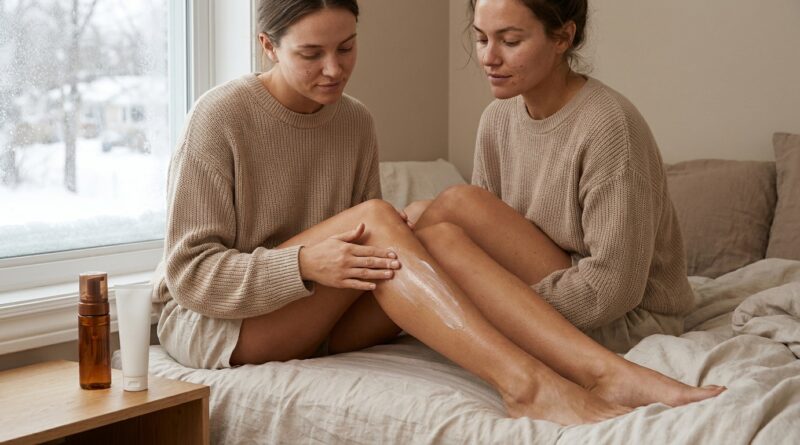
New ‘Cold-Weather Fake Tan’ Rule: How To Stop Winter-Dry Skin From Ruining Your Sunless Glow In 2026
If your self tan suddenly looks worse the minute the heat comes on, you are not imagining it. Winter self tanner dry skin is a very real problem, and it is why legs that looked smooth in summer can turn patchy, dusty, and oddly dark around the knees by late fall. The issue is not just your tan formula. It is your skin barrier. When cold air outside meets dry indoor heating, your skin loses water faster, rough spots build up, and DHA in self tanner latches onto those thirsty areas like Velcro. That is why your ankles, elbows, knees, and even random flaky patches can go several shades darker than the rest of you. Bondi Sands recently pushed a cold-weather self tan advisory for exactly this reason. The fix is not scrubbing harder. It is changing how you prep, moisturize, and time your tan so dry skin does not ruin the finish.
⚡ In a Hurry? Key Takeaways
- Winter-dry skin makes self tanner grab unevenly, so patchiness is often a skin barrier problem, not a bad product.
- Use gentle exfoliation, then add barrier-friendly hydration like glycerin and ceramides, with a tiny amount of petrolatum on extra-dry spots before tanning.
- If your skin feels tight, stingy, flaky, or visibly cracked, pause tanning for a day or two and repair your barrier first.
Why your usual tan routine stops working in cold weather
Most people blame the bottle. Fair enough. If your mousse suddenly develops dark dots on your shins or fades in weird chunks, it feels like the formula changed.
But winter changes the surface you are applying it to. DHA, the ingredient that creates the sunless tan color, reacts with proteins in the top layer of skin. When that top layer is smooth and balanced, you get a more even result. When it is dry, scaly, or rough, the color grabs harder in some places and barely develops in others.
That is why winter self tanner dry skin can create all the classics at once. Dark knees. Dirty-looking ankles. Patchy fade around the calves. Speckled elbows. It is less about your skills and more about what your skin is doing underneath.
How to tell if your skin barrier is too dry for a normal tan
Here is the simple test. Right after a shower, before applying anything, look closely at your skin in bright light.
Warning signs to watch for
If you notice any of these, your usual tanning routine probably needs a winter update:
- Skin feels tight within minutes of drying off
- You see tiny flakes on shins, knees, or forearms
- Lotion stings when you apply it
- Your legs look dull or ashy even after moisturizer
- There are rough little islands of skin around pores or hair follicles
- Past self tan faded in dots, cracks, or tiger-strip patches
If that sounds familiar, do not reach for a harsh scrub. That can make the problem worse by creating even more uneven texture for pigment to cling to.
The big myth: “Just exfoliate more”
This is where a lot of beauty advice goes off track. Yes, you want old tan and loose flakes gone. No, you do not want to sandpaper your barrier.
Over-exfoliating dry winter skin can leave behind a surface that looks smooth at first but is actually irritated, dehydrated, and full of tiny rough spots. Those micro-patches are exactly where DHA can go darker.
A better goal is controlled smoothing, not aggressive stripping.
What to do instead
Use a soft washcloth, gentle mitt, or mild body exfoliant once, not repeatedly for days. Keep pressure light. If your skin turns red or feels hot afterward, you went too far.
Then stop. Let your skin calm down and rehydrate before tanning.
The ingredients that play nicely with DHA
You do not need a 12-step lab experiment. You need hydration that supports the barrier without turning your tan into a streaky mess.
Best pre-tan helpers
Glycerin: A great humectant. It helps pull water into the top layer of skin and can reduce that dry, papery look that makes tan catch unevenly.
Ceramides: Think of these as skin barrier support. They help the outer layer stay more sealed and comfortable, which can improve how evenly self tanner sits and fades.
Petrolatum-based spot moisturizer: Best used sparingly on problem areas like ankles, knees, heels, elbows, and knuckles. This acts like a buffer so those spots do not drink up all the DHA.
Use caution with
Highly fragranced lotions, strong acids, and rough physical scrubs right before tanning. If your skin is already irritated, these can make the barrier more reactive. If you are dealing with itchiness, blotchiness, or tightness as well as dryness, this guide on New ‘Hypoallergenic Tan Routine’ Rule: How To Build A Fragrance‑Light, Sensitive‑Skin Safe Glow In 2026 is worth reading too.
The best cold-weather tanning schedule
Timing matters more in winter because skin moisture swings more dramatically from morning to night.
Best routine for most people
Shower earlier in the day or early evening. Gently exfoliate only if needed. Pat dry. Apply a plain, barrier-friendly moisturizer and give it time to sink in. Wait until skin feels comfortable, not sticky. Then apply a tiny bit of richer product only to rough zones. After that, put on your self tanner.
A lot of people do best waiting a few hours after moisturizing, or tanning the next day after a repair-focused evening routine. The point is to avoid applying tan onto freshly irritated, water-starved skin.
Avoid this winter mistake
Do not slap on self tanner right after a scorching hot shower in a bathroom that feels like a sauna. Heat can temporarily make skin look softer than it really is. Once you cool off and the air dries you out again, the tan can settle unevenly.
A simple winter self tanner dry skin routine that actually works
Step 1: Reduce buildup gently
Use one mild exfoliation session. Focus on obvious roughness, not your entire body like you are polishing furniture.
Step 2: Rehydrate the barrier
Apply a basic moisturizer with glycerin, ceramides, or both. Let it absorb well.
Step 3: Buffer the danger zones
Dab a very thin layer of petrolatum-based ointment or richer cream on knees, ankles, heels, elbows, and knuckles.
Step 4: Apply less tanner than you use in summer
Start with a lighter layer than usual. In winter, more product often makes dryness show up faster, not better.
Step 5: Watch the fade, not just the first day
A tan that looks good for 12 hours but breaks apart by day two is usually a barrier clue. Add more skin repair between applications rather than reapplying over flaky patches.
What if your skin is already patchy from a bad tan?
Do not keep layering fresh tanner over scales and dark spots. That almost always creates a muddier result.
Instead, spend 24 to 48 hours on recovery. Gentle cleanse. Moisturize morning and night. Spot-soften the darkest rough areas. Once the skin feels more flexible and looks less chalky, then do a lighter reapplication.
This is slower, yes. But it is the difference between “healthy glow” and “why are my knees the color of toast?”
At a Glance: Comparison
| Feature/Aspect | Details | Verdict |
|---|---|---|
| Heavy exfoliation | Can strip winter-dry skin, increase flakes, and create uneven DHA grab | Skip aggressive scrubbing |
| Barrier-friendly prep | Glycerin and ceramides help skin hold moisture and support smoother application | Best winter approach |
| Petrolatum on dry zones | Creates a light buffer on knees, ankles, elbows, and heels so they do not over-darken | Very useful in small amounts |
Conclusion
Bondi Sands is right to flag this now. Cold-weather skin changes the rules. A self tan routine that looked flawless in July can suddenly look dirty, patchy, and uneven in November because winter-dry skin changes how DHA grabs and fades. The smartest move is not to punish your skin with more scrubbing. It is to protect the barrier first. When you watch for tightness and flakes, use simple helpers like glycerin, ceramides, and petrolatum on problem spots, and time your application away from peak dryness, your tan has a much better shot at looking natural. That is the real cold-weather fake tan rule for 2026. Treat the skin first, then tan the skin. Your glow will look better, last better, and feel a lot less like a seasonal battle.