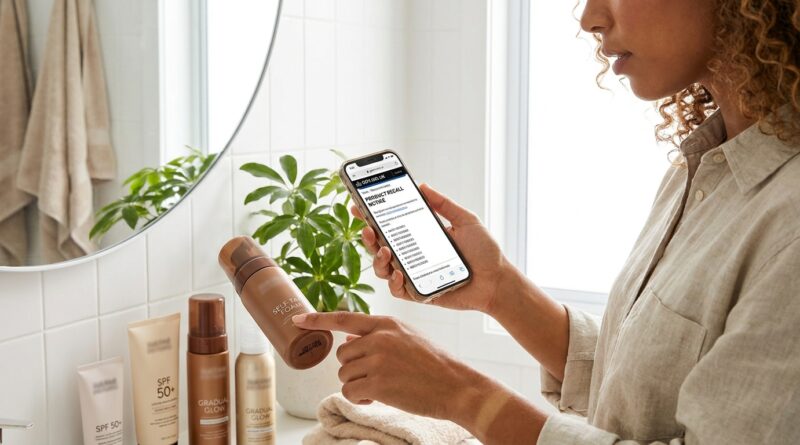
New ‘Recall-Smart Glow’ Rule: How To Check Your Self Tan And SPF For Hidden Safety Alerts Before You Spray
You are not overreacting if the sunscreen or self tanner on your shelf suddenly feels suspicious. Recall stories have been everywhere, especially with mineral SPFs and spray products, and most bottles do not exactly make it easy to tell whether yours is part of the problem. That is the frustrating part. You can do everything right, wear SPF, choose a sunless tan instead of baking in the sun, and still end up with a product that is expired, separated, mislabeled, or tied to a safety alert. The good news is you do not need a chemistry degree to check. A quick bathroom-cabinet audit can help you figure out if your product is still safe to use, whether the SPF claim looks trustworthy, and when it is time to stop spraying and replace it. Think of this as your calm, no-panic checklist for safer glow maintenance.
⚡ In a Hurry? Key Takeaways
- To check if your sunscreen or self tanner is recalled, match the brand, product name, lot number, and expiration date against official FDA, brand, or retailer recall notices.
- If a product smells off, has separated, changed color, sprays unevenly, or has missing batch details, stop using it until you verify it.
- Recall panic is real, but a simple label check and formula inspection can catch many problems before they affect your skin or UV protection.
Start With the Label, Not Social Media
If you are wondering how to check if my sunscreen or self tanner is recalled, start with the bottle in your hand. Not TikTok. Not a random Facebook post.
Look for four things first:
- Brand name
- Exact product name
- Lot number or batch code
- Expiration date
These details are what recall notices use. A post that says “all spray sunscreens are dangerous” is not useful. A real alert will usually name the exact item, size, lot code, and reason for the recall.
If your bottle is rubbed off, missing the code, or impossible to read, treat that as a warning sign. It does not always mean the product is unsafe, but it does mean you cannot properly verify it.
Where to Check for Real Safety Alerts
You do not have to guess. Check the sources that actually publish recall information.
1. FDA recall pages
If the product is sold in the U.S., search the FDA enforcement reports or recall announcements. This is especially useful for sunscreens with contamination concerns, incorrect labeling, or manufacturing issues.
2. The brand’s own website or social pages
Many companies post recall or “voluntary withdrawal” notices in their news section before people hear about them elsewhere.
3. Major retailer alerts
Stores like Target, Ulta, Walmart, Amazon, and CVS sometimes post product safety notices or email customers if they bought an affected item.
4. Your order history
If you bought online, check your email for terms like “recall,” “safety notice,” “stop use,” or “important product update.”
If you are also worried about products that claim protection but may not perform well, this guide on New ‘SPF Scam Check’ Rule: How To Stop Fake-Protection Products From Quietly Sabotaging Your Sunless Glow is worth reading too.
The Recall-Smart Glow Rule
Here is the simple rule. Do not trust the front of the bottle. Verify the back, the bottom, and the batch code.
That matters because two bottles that look almost identical can be treated very differently in a recall. One lot may be fine. Another may have a packaging issue, contamination problem, or wrong SPF labeling.
What a batch code usually looks like
It may be printed or stamped on the bottom, crimp, neck, or back label. It might look like a short mix of letters and numbers, such as L4021, 23A11, or 071524B.
No batch code at all? That is not ideal. If a product cannot be tracked, it is much harder to trust when recall news is spreading.
How to Inspect the Product Itself
Even if a product is not officially recalled, it can still be too old or too unstable to use.
Check for separation
This is a big one with mineral sunscreen and some mousse or mist self tanners. If the formula has split into layers and does not remix properly with shaking, protection or color can become uneven.
Check the smell
If it smells sour, chemical-heavy in a weird new way, or just “off,” do not ignore that. Old or damaged products often smell different before they visibly fail.
Check the color and texture
A self tanner that went from bronze to greenish brown, or a sunscreen that turned grainy, watery, or chalky, deserves a second look.
Check the spray pattern
If a mist suddenly sputters, shoots a stream, or leaves patchy coverage, you may not be getting even SPF or even tan application.
When SPF Claims Deserve Extra Scrutiny
Some products blur the line between self tanner and sun protection. That is where people get tripped up.
A self tanner does not protect you from UV unless it clearly includes SPF and is labeled for that use. And even then, SPF formulas can degrade over time or fail if the bottle has been stored badly.
Be extra careful if:
- The product is old but “still seems fine”
- The packaging says broad spectrum, but the print is faded or outdated
- The formula has clearly separated
- You bought it from a third-party marketplace or discount reseller
- The bottle makes vague sun-protection claims without standard SPF labeling
If anything feels sketchy, replace it. Skin is not where you want to gamble.
A 5-Minute Bathroom Audit You Can Do Today
Step 1: Pull out every SPF and self tanner
Sprays, mousses, drops, face mists, body SPFs, all of it.
Step 2: Group them by type
Put mineral sunscreens together, chemical sunscreens together, and self tanners together. Combo products go in their own pile.
Step 3: Read the dates and lot numbers
Take photos if the print is tiny. It is easier than squinting later.
Step 4: Search official recall notices
Use the exact product name plus “recall” and “lot number.” Check the FDA and the brand website.
Step 5: Inspect each formula
Shake it. Open it. Smell it. Look for separation, clogging, unusual color, or texture changes.
Step 6: Toss or pause questionable products
If you cannot verify it, or it looks unstable, stop using it until you confirm. Better to lose one bottle than trust a bad one on your skin.
Products That Need the Most Caution Right Now
Not all products carry the same level of concern.
Spray mists
These can be hard to apply evenly, and they are often involved in confusion because people cannot tell how much product actually reached the skin.
Mineral sunscreens
They are popular, but separation and poor mixing can make protection less reliable if the formula has aged or been stored in heat.
Old travel bottles
The half-used beach bag sunscreen from last summer is a classic troublemaker.
SPF built into tanning products
These can create false confidence if the product is expired or if the SPF part has degraded.
Storage Matters More Than Most People Think
Heat, sunlight, humidity, and a steamy bathroom can wear products down faster. That does not automatically trigger a recall, but it can make a once-good formula act like a bad one.
Try to store sunscreen and self tanner:
- Out of direct sunlight
- In a cool, dry place
- With lids tightly closed
- Not in a hot car for days
If a bottle has lived in your beach tote, glove box, or windowsill, inspect it with extra suspicion.
What To Do If Your Product Is Affected
First, stop using it. Then follow the recall instructions. Companies usually tell you whether to discard it, return it, or contact customer service for a refund or replacement.
If you had a skin reaction, document it. Take pictures, note when you used the product, and keep the bottle if safe to do so. That can help if you need to talk to a doctor or file a report.
If the issue involves sunscreen failure and you got burned, do not shrug it off. Sunburn is skin damage, even if it happened while you were trying to be careful.
At a Glance: Comparison
| Feature/Aspect | Details | Verdict |
|---|---|---|
| Official recall check | Match brand, exact product name, lot code, and expiration date with FDA or brand notices. | Most reliable way to confirm if your bottle is affected. |
| Visual and smell inspection | Look for separation, odd odor, color changes, graininess, or weak spray performance. | Great early warning sign, even without a formal recall. |
| Old or poorly stored products | Heat, humidity, and age can weaken formulas and make SPF or tanning results less reliable. | Replace if you cannot verify freshness or stability. |
Conclusion
You do not need to panic every time a sunscreen or tanning recall hits the news, but you also do not want to ignore it and hope for the best. A calm, step-by-step check of your labels, lot numbers, expiration dates, and formula condition can tell you a lot in just a few minutes. That is what makes this so useful right now. Recall stories are popping up fast, especially around mineral sunscreens and spray mists, and people who rely on sunless tanning as the safer glow option deserve clearer answers than “just be careful.” A quick audit helps you spot outdated labels, separating formulas, and shaky SPF claims before they become a real problem. Better information means better skin protection, less stress, and a glow you can actually trust.