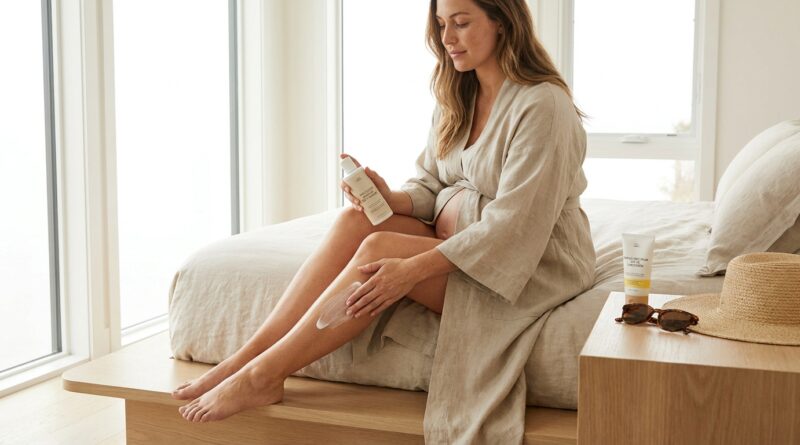
New ‘Pregnancy-Safe Sunless Glow’ Rule: What 2026’s DHA Guidance Really Means For Your Tan
You are not overthinking this. Pregnancy has a way of turning every beauty habit into a mini risk assessment, and the internet is not helping. One TikTok says self tanner is toxic. Another says spray tans are totally fine. Then your dermatologist reminds you that actual UV exposure is still the bigger skin risk. So what is the real answer to the question so many readers are asking, is self tanner safe during pregnancy 2026? The clearest update so far is the new 2026 MotherToBaby guidance. It says classic self-tanning lotions and creams with DHA, when used on intact skin, are not expected to increase pregnancy risks because only a small amount is absorbed. That is the reassuring part. The caution is about inhaling spray mist or getting product on mucous membranes like the nose or mouth, where more could get into your system. So yes, sunless tanning still has a place. It just needs smarter guardrails.
⚡ In a Hurry? Key Takeaways
- Yes. In 2026, self-tanning lotions and creams with DHA are still generally considered safer than tanning in the sun or using tanning beds during pregnancy.
- Use lotion or cream on intact skin, avoid broken or irritated areas, and be extra careful with spray tans so you do not inhale mist or get it in your nose, mouth, or eyes.
- Sunless color does not protect your skin. You still need daily sunscreen, especially during pregnancy when skin can be more sensitive.
What the 2026 guidance actually says
The biggest source of confusion is that people hear “DHA” and assume it acts like a harsh chemical moving through the whole body. That is not what the current evidence suggests for standard self-tanners used correctly.
DHA, short for dihydroxyacetone, works on the outermost layer of dead skin cells. It creates that temporary bronzed look without UV radiation. According to the 2026 MotherToBaby fact sheet, when DHA self-tanner is applied to intact skin, only limited amounts are expected to be absorbed into the body. That is why creams and lotions remain the lower-risk choice compared with sunbathing or tanning beds.
The concern rises when the product is sprayed into the air and can be inhaled, or when it is applied to mucous membranes. Those areas are different from normal skin. They may allow more exposure than a simple lotion on your arms or legs.
If you want a broader breakdown of the updated advice, our guide New ‘Pregnancy-Safe Tan’ Rule: What The 2026 DHA Safety Update Really Means For Your Sunless Glow walks through the shift in plain English.
So, is self tanner safe during pregnancy 2026?
For most people, a cream or lotion self tanner used on healthy, unbroken skin is considered a reasonable option during pregnancy. That is the short answer.
The better answer is this. It is not “anything goes,” but it is also not a reason to panic and throw every bottle away. Dermatologists and public health experts are still very clear that avoiding intentional UV tanning matters more. A sunless tan is cosmetic. UV damage is real, cumulative, and linked to skin cancer, pigmentation issues, and premature aging.
What is considered the safer route
Lotion, cream, mousse, or wipe formulas that you apply carefully at home tend to be the simplest choice. They let you control where the product goes and reduce the chance of breathing it in.
What deserves more caution
Spray booths and airbrush sessions create mist. That mist can be inhaled unless solid precautions are taken. If you do choose a spray tan while pregnant, nose filters, eye protection, lip balm as a barrier, and avoiding inhalation are important steps. Some pregnant people decide that this extra hassle is not worth it and switch to lotion until after delivery. That is a perfectly sensible call.
What about breastfeeding?
The same general logic applies. A self-tanner on intact skin is not expected to create major risk. But you should keep it away from the nipple and areola area so baby does not ingest residue during feeding.
If you are using a lotion self tanner while breastfeeding, apply it after a feed, let it fully dry, wash your hands well, and avoid the chest area if there is any chance of transfer. If you use it on the chest, be very careful and wash the area thoroughly before nursing.
Why doctors still prefer sunless over UV
This is the part that often gets lost online. A “natural tan” from the sun is not safer because it is natural. It is your skin reacting to injury from UV radiation.
Pregnancy can also make skin more reactive. Melasma, dark patches, and stubborn pigmentation can get worse with sun exposure. So if the choice is between a DHA lotion and lying out for a tan, the lotion is still the smarter option for most people.
How to use self tanner more safely during pregnancy
You do not need a hazmat suit. You just need a sensible routine.
1. Stick with lotions, creams, or mousses when possible
These are easier to control than spray mists. Less airborne product means less chance of inhalation.
2. Do a patch test first
Pregnancy can make skin drier, itchier, or more reactive than usual. Test a small area 24 hours before full application, especially if you changed brands.
3. Avoid broken, irritated, or freshly shaved skin
If your skin barrier is compromised, it is smart to wait. The 2026 guidance is most reassuring for intact skin.
4. Keep it away from nose, mouth, eyes, and genitals
This matters more than many people realize. Mucous membranes are not the same as normal outer skin.
5. Wash your hands well after applying
This prevents accidental transfer to your face or mouth and also keeps your palms from turning orange.
6. If you do a spray tan, reduce inhalation as much as possible
Ask for nose plugs or filters. Keep lips closed. Use eye protection. Ask whether the salon has good ventilation. If the setup seems casual about overspray, leave.
7. Still wear sunscreen every day
This is non-negotiable. A fake tan is color, not protection. You can look bronzed and still burn.
Ingredients people often worry about
DHA gets all the attention, but readers also ask about fragrance, essential oils, preservatives, and bronzing additives.
That is fair. During pregnancy, “safe enough in general” can feel different from “I personally want fewer extras.” If fragrance makes you nauseated or your skin is flaring up, a fragrance-free or sensitive-skin formula may simply make life easier. The goal is not perfection. It is reducing avoidable irritation.
Red flags worth skipping
If a self tanner stings, triggers itching, or leaves your skin rashy, stop using it. Pregnancy can shift your tolerance. What was fine last year might suddenly feel awful now.
What not to do
There are a few tanning habits that are still easy noes.
Tanning beds
Skip them. They expose you to UV radiation and can add heat stress. That is not a trade worth making for color.
Sunbathing for a “base tan” before a vacation
Also no. A base tan is not meaningful protection, and pregnancy-related pigmentation can get worse fast.
DIY hacks from social media
If someone is mixing random drops, aerosols, and body oils in a bathroom with no ventilation, keep scrolling. Viral does not mean tested.
Questions to ask if you are still unsure
If you have eczema, psoriasis, severe sensitivity, asthma, or a high-risk pregnancy, check with your OB or dermatologist. Not because lotion self tanner is automatically dangerous, but because your personal situation might change the best choice.
You may also want to ask about timing if you are dealing with a damaged skin barrier, active facial treatments, or melasma management.
At a Glance: Comparison
| Feature/Aspect | Details | Verdict |
|---|---|---|
| DHA lotion or cream on intact skin | 2026 guidance says it is not expected to increase pregnancy risks when used on healthy skin | Best sunless option for most pregnant users |
| Spray tan booth or airbrush mist | Main concern is inhaling airborne DHA or getting product into nose, mouth, or eyes | Use extra caution or choose lotion instead |
| Sun tanning or tanning beds | UV exposure raises skin cancer risk and can worsen pigmentation during pregnancy | Least safe option. Avoid |
Conclusion
If you have been stuck in the middle of scary posts and vague reassurance, here is the grounded version. In 2026, dermatologists and public health experts are still saying sunless tanning is safer than UV tanning. The new MotherToBaby fact sheet adds helpful detail. Classic DHA lotions and creams used on intact skin are not expected to raise pregnancy risks, but inhaling spray mist or applying product to mucous membranes could increase exposure. That means you do not have to give up every bronzed moment to be cautious. You just need better boundaries. Choose lotion over mist when you can, protect your nose and mouth if you use a spray booth, keep product off broken skin and breastfeeding areas that baby may contact, and wear sunscreen every single day. A fake tan can still fit into a careful pregnancy routine. It just cannot replace common sense or SPF.