New ‘Fragrance-Safe Fake Tan’ Rule: How To Avoid Hidden Allergens In Your Sunless Glow In 2026
You buy a self-tanner marked “clean,” “gentle,” or “for sensitive skin,” then a few hours later your skin is stinging, your chest is blotchy, or your legs are suddenly so itchy you want to scrub the whole tan off. It is frustrating, and for a lot of people, it feels completely unfair. The tricky part is that the problem is not always the tanning ingredient itself. More often, it is the extra stuff wrapped around it, like fragrance chemicals, essential oil blends, and preservatives hiding in self-tan mousse, glow lotions, and even the body wash or SPF you use right after. In 2026, new labeling rules are making some of these allergens easier to spot, but only if you know what you are looking for. The good news is that a fragrance-safe tanning routine is possible, and it starts with reading labels a little differently.
⚡ In a Hurry? Key Takeaways
- “Sensitive” and “clean” do not automatically mean allergy-safe. Fragrance allergens and preservatives are common triggers in self-tanners.
- Look for truly fragrance-free formulas, short ingredient lists, and fewer layered products on tan day, especially if you react easily.
- New 2026 labeling rules help, but patch testing is still your best safety step before using a new self-tanner or glow product.
Why people are reacting to “gentle” self-tanners
Self-tanners have become more skincare-heavy. That sounds nice in theory. In real life, it often means one bottle contains tanning agents, scent-masking fragrance, botanical extracts, shimmer, preservatives, and “glow” ingredients all at once.
That is where things go sideways.
DHA, the main tanning ingredient in most sunless tanners, is not always the villain. Many reactions come from the supporting cast. Fragrance mixes are a major one. Preservatives can be another. Add exfoliation, shaving, dry skin, heat, and a tight skin barrier, and even a product marketed as soothing can start burning fast.
What the new 2026 fragrance-safe rule really means
There is not one single worldwide “fake tan law” with a catchy label on it, but cosmetic rules are getting stricter in many markets around fragrance allergens and preservatives. In plain English, brands are being pushed to be more specific about what is inside the bottle, especially when it comes to known fragrance allergens.
That matters because “parfum” or “fragrance” on a label can cover a mix of many scent chemicals. Under newer standards, some allergens may need to be listed separately once they cross certain thresholds. That gives you a better shot at spotting repeat triggers.
For shoppers, the takeaway is simple. Labels may get longer in 2026, not scarier. Longer can actually be more helpful, because hidden allergens are less hidden.
Important catch
Do not assume a product is safer just because the front says:
- Hypoallergenic
- Dermatologist tested
- Clean beauty
- Natural
- Sensitive skin
Those terms are marketing first. The ingredient list is what counts.
The biggest hidden triggers in self-tanners and glow products
1. Fragrance and parfum
This is the big one. If you have ever reacted to perfume, scented lotion, or fragranced laundry products, pay close attention here. Brands often add fragrance to cover the classic self-tan smell.
Watch for:
- Fragrance
- Parfum
- Essential oil blends
- Individual fragrance allergens that may now be listed separately
Even “natural fragrance” can still trigger a reaction.
2. Essential oils and plant extracts
Tea tree, citrus oils, lavender, peppermint, eucalyptus, and other botanicals sound gentle, but they can be irritating or allergenic, especially on freshly shaved or exfoliated skin.
“Botanical” does not mean low-risk.
3. Preservatives
Preservatives are there for a good reason. They stop products from growing mold and bacteria. But some people react to certain preservative systems, especially with repeated use.
Common ones to keep an eye on include:
- Phenoxyethanol
- Benzyl alcohol
- Methylisothiazolinone and methylchloroisothiazolinone, where still used
- Formaldehyde-releasing preservatives in some cosmetic categories
You do not need to fear every preservative. You just want to notice patterns if your skin keeps flaring.
4. Added glow and shimmer ingredients
Bronzing drops, body illuminators, and gradual tan lotions often pile on colorants, mica, silicones, fragrance, and skincare extras. If your skin is reactive, the more “multitasking” a product promises, the more carefully you should read it.
How to shop for self tanner fragrance allergy safe ingredients 2026
If you want the simplest rule, here it is. Start with fewer ingredients and less scent.
Look for these safer signs
- Fragrance-free, not just unscented
- Shorter ingredient list
- No essential oil blend near the middle or top of the list
- No heavy “spa” or “tropical” scent claims
- Products made for face or eczema-prone skin, if your body skin is very reactive
Be careful with these claims
- Odor-free but fragranced
- Natural scent
- Clean formula
- Skin-loving botanicals
- Luxury fragrance blend
Those phrases often mean extra ingredients, not fewer.
Build a lower-risk tanning routine
Most reactions are not just about one bottle. They happen because people layer too much at once.
On tan day, keep it boring
That is a compliment.
- Use a bland, fragrance-free cleanser before tanning
- Avoid harsh scrubs right before application
- Skip scented body oil
- Skip heavily fragranced lotion underneath unless the brand specifically tells you to use it
- Use a simple, fragrance-free moisturizer only on dry spots like elbows, knees, and ankles if needed
After tanning
- Use fragrance-free moisturizer to maintain the tan
- Choose SPF without heavy perfume if you are wearing exposed skin
- Do not pile on shimmer lotion, scented body cream, and tan extender all at once if your skin is already touchy
Patch testing matters more than ever
If your skin has reacted before, make patch testing non-negotiable. A tiny test area can save you from a full-body rash.
A good place to start is this guide: New ‘Patch-Test Tan’ Rule: The 24‑Hour Allergy Check Every Self‑Tanner Should Do In 2026. It breaks down how to test properly before committing to a full application.
Quick version:
- Apply a small amount to a discreet area
- Wait at least 24 hours
- Watch for burning, redness, swelling, rash, or delayed itching
If you react, wash it off and do not try to “push through.”
What if you already had a reaction?
First, stop using the product. Then rinse it off gently with lukewarm water and a mild cleanser if your skin can tolerate that. Do not scrub hard. Do not apply another fragranced product to “cover” the issue.
Seek medical help quickly if you have:
- Face or eye swelling
- Hives spreading quickly
- Blistering
- Trouble breathing
- Severe burning or a widespread rash
For milder reactions, a pharmacist or doctor can help you figure out whether it looks more like irritation or a true allergic contact reaction. If this keeps happening, ask about patch testing through a dermatologist. That can identify specific allergens so you are not guessing every time you shop.
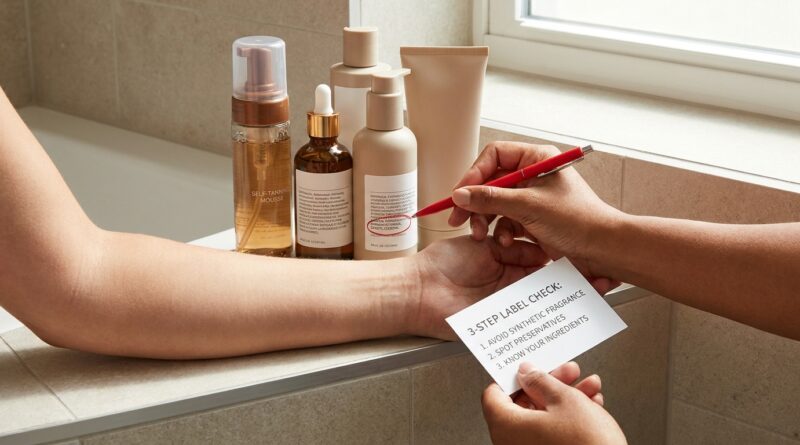
A simple label-reading trick for non-chemists
You do not need to memorize every cosmetic ingredient on Earth.
Try this instead:
- Check the front for “fragrance-free.”
- Flip to the ingredient list and look for fragrance, parfum, and obvious essential oils.
- If the product has a long list of floral, citrus, or aromatic extracts, treat it as higher risk.
- If you have reacted before, take a photo of the ingredient list and compare it with products that also caused trouble.
Patterns show up faster than you think.
At a Glance: Comparison
| Feature/Aspect | Details | Verdict |
|---|---|---|
| Fragrance-free vs unscented | Fragrance-free means no added fragrance. Unscented can still contain scent-masking ingredients. | Fragrance-free is usually the safer pick for reactive skin. |
| “Clean” or “natural” self-tanner | May still contain essential oils, botanical extracts, and known allergens. | Do not trust the front label alone. Read the full ingredient list. |
| Layering tan, glow lotion, and SPF | More layers mean more chances to mix triggers like fragrance and preservatives. | Keep routines simple, especially on application day. |
Conclusion
Skin sensitivity stories are getting louder for a reason. Beauty formulas are complicated, and the rules around fragrance allergens and preservatives are changing at the same time. That leaves a lot of tanners stuck in the middle, trying to keep their glow without gambling on burning, itching, or a miserable rash. The smart move in 2026 is not to panic. It is to simplify. Choose fragrance-free where you can, be cautious with “clean” marketing, patch test every new tan product, and stop layering five scented products on the same day. A little label-reading now can help you avoid urgent care later, keep your color looking good, and protect your skin barrier while the beauty world catches up with clearer labeling.