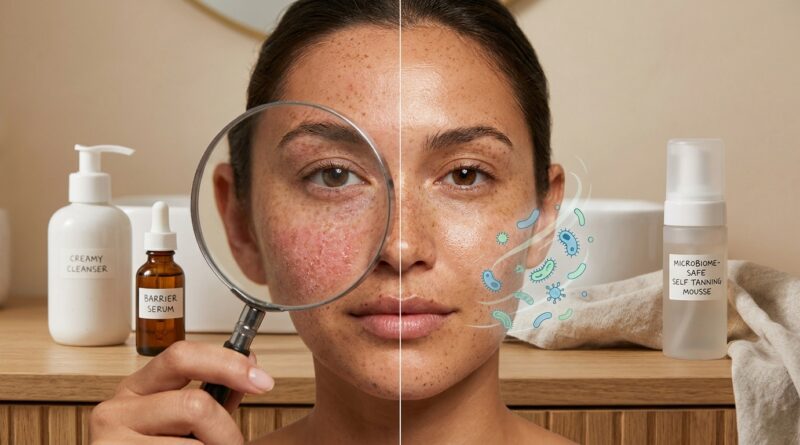
New ‘Microbiome-Safe Tan’ Rule: How To Protect Your Skin’s Good Bacteria When You Self Tan All Summer
If your self tan looks great on day one, then turns patchy, itchy, or weirdly dry by day three, you are not imagining it. A lot of people are scrubbing harder, using more acids, and reapplying tanner more often to keep a constant glow. The problem is that this routine can rough up your skin barrier and throw off the balance of good bacteria living on your skin. That matters more than it sounds. When your skin microbiome gets stressed, you are more likely to deal with redness, bumps, sensitivity, and a tan that fades unevenly. The new rule is simple. Stop treating tanning prep like a deep-clean project. A microbiome-safe approach means gentler exfoliation, fewer harsh actives right before tanning, and more focus on barrier support. The result is usually better skin and a glow that sticks around longer, which is the whole point.
⚡ In a Hurry? Key Takeaways
- Self tanner and skin microbiome health are connected. Over-exfoliating and overusing actives can lead to irritation and a less even tan.
- For a smoother, longer-lasting result, use gentle exfoliation, pause strong acids and retinoids before tanning, and moisturize to support your barrier.
- If your skin burns, stings, or keeps breaking out after self tanning, scale back and patch test. Sensitive skin needs a slower routine.
Why your summer glow routine may be backfiring
Self tanner works on the top layer of skin. Most formulas use DHA, which reacts with amino acids in dead skin cells to create that bronzed look. That part is well known.
What gets talked about less is what happens when you combine frequent tanning with aggressive prep. Think grainy scrubs, strong AHA or BHA toners, retinoids, benzoyl peroxide, hot showers, and shaving all in the same 24 to 48 hours. That can leave your skin surface dry, uneven, and irritated.
Your skin microbiome is part of this story. It is the mix of bacteria and other tiny organisms that live on your skin and help protect it. When that system gets disrupted, skin can become more reactive. You may notice stinging, tightness, flaky patches, or little bumps. And because self tan grabs differently to stressed skin, the color often looks less even too.
That is why the idea behind a microbiome-safe tan is catching on. If you want a deeper breakdown, New ‘Microbiome-Safe Tan’ Rule: The Skin-Bug Friendly Way To Self‑Tan That Dermatologists Are Quietly Getting Excited About lays out why more skin experts are paying attention to this.
What “microbiome-safe” actually means in real life
This is not about buying ten new products with “biome” on the label. It is more basic than that.
A microbiome-safe self tanning routine tries to do three things:
- Keep the skin barrier calm and hydrated
- Avoid stripping away too much of the surface layer
- Reduce irritation from stacking too many strong products at once
In plain English, your skin should feel smooth and comfortable before tanning, not squeaky, raw, or over-polished.
The new rule: prep gently, then leave your skin alone
1. Stop over-exfoliating before every tan
A lot of people still think a harder scrub means a better result. Usually, it just means more irritation. Gentle exfoliation is enough for most skin types.
Try this instead:
- Exfoliate 12 to 24 hours before tanning, not right before
- Use a soft washcloth, mild body polish, or a low-strength acid if your skin tolerates it
- Do not combine a scrub and strong acids on the same day
If your skin feels shiny, tight, or stingy after prep, you probably went too far.
2. Pause strong actives around tanning day
Acids, retinoids, and acne treatments can make self tan fade faster and develop unevenly. They can also stress the skin microbiome when used too close to tanning.
A simple rule is to pause strong leave-on actives on the areas you plan to tan for about 24 hours before and after application, unless your dermatologist has told you otherwise. Face tanning is where this matters most, because people often use the strongest anti-aging or acne products there.
3. Moisturize strategically, not heavily
You do want hydration. You do not want a greasy film everywhere right before applying self tanner.
Use a light, fragrance-free moisturizer on dry zones like elbows, knees, ankles, and around the nose. This helps prevent those areas from going too dark. For the rest of the skin, make sure it is hydrated in the days leading up to tanning, not slathered in a thick cream five minutes before.
4. Give your skin recovery days
One of the biggest mistakes in a constant-glow routine is reapplying too often. If you are tanning, exfoliating, shaving, and using active skincare on repeat with no break, your skin never gets a chance to settle.
Build in recovery days with simple cleanser, moisturizer, and SPF. That can do more for the look of your tan than another layer of color.
How self tanner and skin microbiome health affect how your tan looks
This is the part many people miss. Protecting your skin microbiome is not just about avoiding irritation. It can actually improve your results.
When skin is balanced, the surface is more even. That means:
- Color develops more smoothly
- Tans fade less patchily
- Dry spots grab less pigment
- You may need fewer touch-ups
So if you feel stuck in a cycle of constant prep and constant reapplication, a gentler routine may save you time.
A simple microbiome-safe tanning routine
The day before
- Take a lukewarm shower
- Use a mild cleanser
- Exfoliate lightly
- Skip harsh scrubs and strong actives
- Moisturize well after showering
On tanning day
- Start with clean, dry skin
- Apply a small amount of moisturizer to extra-dry areas only
- Use your self tanner as directed
- Avoid layering lots of fragranced body products on top
The next 48 hours
- Use gentle body wash
- Moisturize daily
- Skip intense exfoliation
- Hold off on strong acids and retinoids on tanned areas if possible
Red flags that your routine is too harsh
If you notice any of these, your skin may be asking for a reset:
- Your face or body feels tight after tanning
- You get random itchy bumps
- Your tan looks blotchy within a day or two
- Dry patches turn much darker than the rest of your skin
- Products that never used to sting suddenly sting
When that happens, go back to basics for a few days. Gentle cleanser. Plain moisturizer. SPF. Then restart with fewer moving parts.
What to look for in products
You do not need a “perfect” formula, but some product choices are easier on the skin than others.
Helpful features
- Fragrance-free or lower-fragrance formulas if you are sensitive
- Hydrating ingredients like glycerin or hyaluronic acid
- Simple moisturizers with ceramides for barrier support
- Gentle cleansers that do not leave skin squeaky
Use extra caution with
- Harsh physical scrubs
- High-strength acid peels before tanning
- Multiple leave-on actives layered at once
- Alcohol-heavy products if they leave your skin dry
At a Glance: Comparison
| Feature/Aspect | Details | Verdict |
|---|---|---|
| Exfoliation style | Gentle prep 12 to 24 hours before tanning works better than aggressive scrubbing right before. | Go gentle |
| Active skincare use | Acids, retinoids, and acne treatments can irritate skin and make tans fade unevenly when used too close to application. | Pause around tanning day |
| Barrier and microbiome support | Daily moisturizing, fewer harsh products, and recovery days help skin stay calm and help color wear more evenly. | Worth it for longer-lasting results |
Conclusion
There is a lot of talk right now about UV safety and anti-aging, which is good. But not enough people are connecting that advice to what happens when you self tan week after week. Self tanner and skin microbiome health are linked more closely than most routines account for. If you cut back on over-exfoliation, stop stacking harsh actives, and give your barrier a little breathing room, you can often get a more even, longer-lasting glow with less irritation. That is the real win. Better color, calmer skin, and a routine you can actually stick with all summer.