New ‘Spray-Tan Safe Breath’ Rule: The One Inhalation Habit Derms Now Want Every Booth Tanner To Change
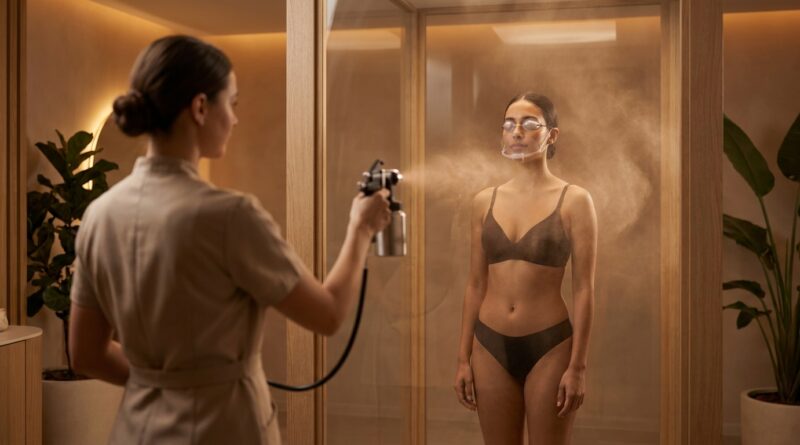
You are not being dramatic if the words “just hold your breath” have never sounded like a real safety plan. A spray tan booth is all about a quick, even mist, but that also means tiny particles floating near your nose, mouth, eyes and chest. Most people worry about orange hands or blotchy knees. Far fewer think about what happens when that cloud gets inhaled. That is the gap dermatologists and safety reviewers keep circling back to. The newer rule of thumb is simple. Stop treating breath-holding as the whole plan. Use a short, repeatable routine that protects your airways before the spray starts, especially if you tan often or have asthma, allergies, sensitive skin, or irritation-prone eyes. You do not need to panic or give up your glow. You just need a better booth habit than crossing your fingers and hoping for the best.
⚡ In a Hurry? Key Takeaways
- The direct answer on spray tan inhalation safety is this: do not rely on “hold your breath” alone when the mist is aimed at your face and chest.
- Ask for nose filters, lip balm, eye protection, and clear timing cues so you can breathe out, pause briefly, and turn away during the heaviest facial spray.
- If you have asthma, allergies, a cough, or irritated skin and eyes, your safest move is to be extra cautious or skip booth exposure that day.
Why this “safe breath” rule is suddenly getting attention
Spray tanning is having another big moment. It makes sense. People want color without UV damage, and booths are fast. The problem is that safety advice has not really kept up with real life.
Most salon instructions are still very basic. Close your eyes. Hold your breath. Turn. Done. That may sound fine until you remember you are standing in a mist of fine droplets, often in a small enclosed space, while trying to follow voice prompts like a game show contestant.
Recent expert reviews still treat inhalation as a gray area. That does not mean every spray tan is dangerous. It means there is enough uncertainty that common-sense protection matters, especially for repeat tanners.
What experts are actually worried about
The main ingredient people ask about is DHA, short for dihydroxyacetone. It is the sugar-based tanning ingredient that reacts with the top layer of your skin to create color. On skin, that is the whole point. In your lungs, eyes, or on your lips, that is not where it is meant to do its job.
The concern is less about one dramatic breath and more about repeated exposure, sensitive airways, and the fact that booth mist can land in places beyond the skin.
Areas that need extra care
Nose and airways. Fine particles can be inhaled before you even realize it, especially during the face and chest pass.
Lips and mouth. If mist settles there, it is easier to accidentally ingest or inhale tiny amounts.
Eyes. Closed eyes help, but they are not the same as proper eye protection if you are sensitive.
Chest exposure. When the booth sprays your upper body, the temptation is to breathe normally too soon.
The new habit dermatologists would rather you use
Here is the practical shift. Think “reduce exposure,” not “perform a breath-holding stunt.”
A better spray tan inhalation safety routine looks like this:
Before the booth starts
Ask what protective items the salon offers. The useful ones are nose filters, disposable lip balm, and eye shields or goggles. Not every salon pushes these unless you ask.
If you have asthma, allergies, a cold, sinus irritation, or feel wheezy that day, say so. That is not being difficult. That is useful information.
During the face spray
Do not take a big “pre-breath” and try to survive the whole cycle. That usually backfires.
Instead, just before the face pass, exhale gently, close your lips, place your tongue lightly on the roof of your mouth if that helps you avoid mouth-breathing, and pause your breathing briefly during the heaviest mist. Then turn away or follow the booth prompt and resume breathing once the cloud has moved past.
Short pause. Better timing. Less panic.
During the chest pass
This is another moment where people inhale more mist than they realize. When the spray is directed at the upper chest, use the same brief pause method, then breathe normally once the direct burst stops.
After the spray
Do not immediately rub your eyes, lick your lips, or take a deep celebratory breath in the booth. Step out, let the air clear, and wipe lips if needed.
What to ask your salon before you step in
You do not need a chemistry degree. You just need a few direct questions.
Ask these:
Do you provide nose filters or plugs?
Do you offer eye protection for booth tanning?
Can you tell me exactly when the face spray starts so I can time my breathing?
Is the booth well ventilated and cleaned between clients?
What should I do if I have asthma or fragrance sensitivity?
If the answer is basically a shrug plus “just hold your breath,” that is useful information too.
Who should be extra careful
Some people have less room for error here.
Higher-caution groups
People with asthma. Even mild airway irritation can be a big deal.
People with allergies or fragrance sensitivity. The tanning ingredient is not the only thing in the mist.
Anyone with a current cough, cold, or sinus flare. Irritated airways are easier to aggravate.
Frequent tanners. Repeated low-level exposure matters more than one-off use.
People who are pregnant. If that is your situation, it is worth reading New ‘Pregnancy-Safe Glow’ Rule: What Today’s Sunless Tanner Science Really Says About Bumps, Babies And DHA, which looks at the added questions that come up when your usual beauty routine suddenly needs a lot more caution.
Common mistakes that sound harmless but are not great
“I just breathe through my mouth less”
That still leaves your lips and mouth exposed to settling mist.
“I only hold my breath for the face”
The chest pass matters too, especially if the booth sprays strongly upward.
“I am only in there for a minute”
Short exposure is better than long exposure, but it does not erase the issue.
“If salons do it, it must be fully settled science”
Not exactly. Booth tanning is common. The inhalation question is still not as neatly answered as people assume.
A simple booth routine you can actually remember
If you want one easy script, use this:
Protect. Pause. Turn. Breathe after the burst.
That means:
1. Protect your nose, lips, and eyes if possible.
2. Pause breathing briefly only during the strongest face or chest spray.
3. Turn with the booth prompts so the mist is not sitting in front of your face.
4. Breathe normally once the direct cloud has passed.
That is much more realistic than trying to go statue mode for the whole session.
At a Glance: Comparison
| Feature/Aspect | Details | Verdict |
|---|---|---|
| “Hold your breath” only | Simple, common salon advice, but easy to mistime and not enough for many frequent or sensitive tanners | Too limited |
| Short timed breath pauses plus protective gear | Uses nose filters, lip balm, eye protection, and brief pauses during face and chest spray | Best practical routine |
| Spray tanning while sick or wheezy | Irritated airways and eyes are more likely to react to mist and fragrance | Skip or reschedule |
Conclusion
Spray tans are booming again, but the safety conversation is still oddly stuck on streaks and shade while the real-life breathing question gets brushed aside. That is why this matters. Spray tan inhalation safety does not have to mean panic, and it does not have to mean giving up the booth forever. It just means replacing one weak instruction with a better routine. Protect your nose, lips and eyes when you can. Time short breath pauses for the face and chest spray. Speak up if you have asthma, allergies or sensitive skin. That small shift closes the gap between formal safety language and what actually happens in a busy booth. And it lets you keep the glow without quietly gambling with your lungs.