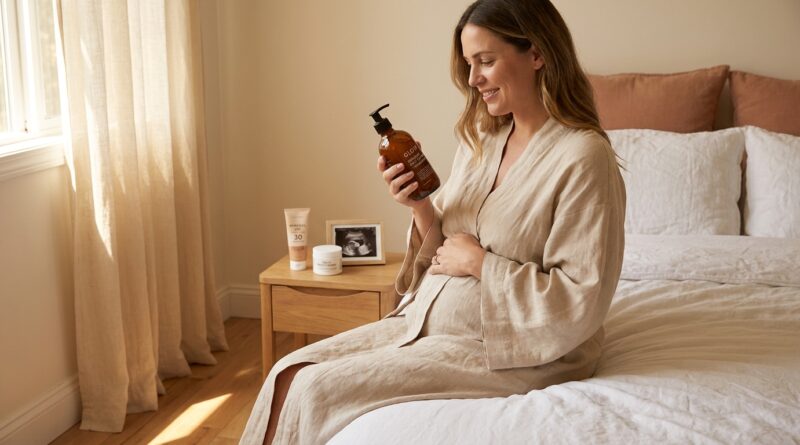
New ‘Baby-Safe Glow’ Rule: How To Choose Pregnancy‑Friendly Self Tanners In 2026 Without Falling For Greenwashing
If you are pregnant, trying to conceive, doing IVF, or breastfeeding, shopping for self tanner can feel weirdly stressful. One bottle says “clean.” Another says “non toxic.” TikTok says one thing, Reddit says the opposite, and your OB may not have a list of favorite mousse brands handy. That leaves a lot of people stuck between anxiety and guesswork. Worse, some give up on sunless tanner and head back to actual UV tanning, which is the riskier choice for skin health by a mile. The good news is that the 2026 version of the “baby-safe glow” conversation is a little clearer than the internet makes it seem. Most experts still focus on the same core idea: the main ingredient in self tanner, DHA, is generally considered low risk when used on intact skin, but inhalation and overspray are the big things to avoid. So the smartest move is not panic. It is choosing the right format, reading labels with a skeptical eye, and using it in a way that cuts down unnecessary exposure.
⚡ In a Hurry? Key Takeaways
- Yes, a pregnancy safe self tanner in 2026 usually means a lotion, cream, or mousse with DHA used on healthy skin, not a spray tan you can inhale.
- Skip vague “clean beauty” claims and check for product type, fragrance strength, added actives, and whether you can apply it in a well-ventilated room with gloves.
- Sunless tanner is generally a better option than tanning in real UV, but patch testing and asking your OB or dermatologist is still smart if you have eczema, broken skin, or a high-risk pregnancy.
Why this got so confusing in the first place
The phrase “pregnancy safe self tanner 2026” sounds like there should be one master-approved list. There is not. What you actually have is a mix of older safety data, cautious medical advice, influencer routines, and marketing language that often means very little.
That is where the greenwashing creeps in. Brands know shoppers are nervous, so they lean hard on words like “natural,” “plant-based,” “pure,” and “clean.” Those words can be fine, but they do not automatically tell you whether a product is better for pregnancy or breastfeeding.
A lavender-scented “botanical glow mist” can still be a bad pick if it is an aerosol you breathe in. Meanwhile, a boring-looking cream from a mainstream brand may be the more sensible choice.
What dermatologists and pregnancy experts usually agree on
The active ingredient in most self tanners is DHA, short for dihydroxyacetone. It reacts with the outer dead layer of skin to create that tanned look. The key point is that it mostly works on the skin surface rather than sinking deeply into the body.
That is why many doctors consider topical self tanner a reasonable option during pregnancy and breastfeeding, especially compared with UV tanning. But there is one important caution that comes up again and again. You do not want to inhale DHA through spray tans, mists, or aerosols.
So what is the practical takeaway?
Use lotions, creams, gels, drops, or mousses that you rub in with your hands or a mitt. Be more cautious with spray booths, spray cans, and salon airbrush sessions, especially in early pregnancy when many people want the most conservative routine possible.
The 2026 “baby-safe glow” rule, in plain English
If a self tanner can be applied to intact skin without creating a cloud you might breathe in, it is usually the safer lane. If it depends on overspray, strong fragrance, or a long list of trendy active ingredients, think twice.
That is the rule. Not sexy, but useful.
How to choose a pregnancy-friendly self tanner without falling for greenwashing
1. Start with the format, not the branding
This matters more than the beige packaging and wellness buzzwords.
Usually better choices: lotions, creams, mousses, tanning drops mixed into moisturizer, and serums that are not aerosolized.
Usually worse choices: spray tans, aerosol foams, fine mists, and salon booths where you can inhale product.
If you already own a spray product, that does not mean instant disaster. It just means it is probably not the one to reach for while pregnant if you are trying to lower risk where you reasonably can.
2. Look for DHA, but do not obsess over “DHA-free” claims
Some brands now market “DHA-free” tanning products as if that alone makes them safer. Often, they use erythrulose or other tanning agents instead. That is not automatically better studied in pregnancy. In many cases, DHA is actually the ingredient we know the most about in self tanners.
So if a label is screaming “No DHA” but cannot clearly explain what replaced it, that is a yellow flag, not a gold star.
3. Be careful with essential oils and heavy fragrance
This is where “natural” can get sneaky. A self tanner packed with fragrant essential oils may sound gentle, but strong fragrance can be miserable during pregnancy nausea, and some plant extracts can irritate sensitive skin.
Fragrance-free or lightly scented products are often the easier choice, especially in the first trimester or if your skin is more reactive than usual.
4. Avoid bonus actives you do not need
A self tanner does not need to double as an exfoliating peel, acne treatment, firming serum, and retinol body lotion. Pregnancy is not the time to chase a kitchen-sink formula.
Be cautious with products that add:
- Retinoids or vitamin A derivatives
- High levels of salicylic acid
- Strong exfoliating acids
- Skin-tightening or “detox” blends that are vague about what is inside
Simple wins here.
5. Check where you will use it
Even a good product can become annoying if the routine is messy. Apply in a ventilated room. Wear gloves or use a mitt. Wash hands well. Let it dry before getting dressed. Keep it away from nipples and the chest area right before breastfeeding, just to avoid baby getting product in their mouth.
What about early pregnancy, IVF, and the two-week wait?
This is where search traffic keeps climbing, and honestly, it makes sense. People in early pregnancy or fertility treatment are often told to avoid anything optional that feels “chemical,” which is emotionally understandable but not always helpful.
If you are in IVF, the two-week wait, or very early pregnancy and want the most cautious approach, here is the middle-ground answer many people are looking for: if using self tanner will calm your mind, choose a topical lotion or mousse and avoid sprays. If using any self tanner at all is going to make you spiral, skip it for now. Stress reduction matters too.
The goal is not perfection. It is a low-drama routine that does not send you into a 40-tab internet panic.
Breastfeeding changes the routine slightly, not completely
Most of the same logic applies while breastfeeding. The bigger issue is direct transfer to baby’s skin or mouth, not some magical change in the self tanner itself.
A few breastfeeding tips
- Do not apply self tanner on or near the nipple area.
- Let the product fully dry before holding baby skin-to-skin.
- Wash hands thoroughly after applying.
- If you use gradual tanning lotion on your chest or shoulders, apply it well after a feed and wear clothing over the area.
Red flags that should make you put the bottle back
Not every bad product is dangerous, but some are just not worth the uncertainty.
- No full ingredient list online or on the packaging
- Big “non toxic” claims with no specifics
- Aerosol or ultra-fine mist format
- Overpowering fragrance
- Claims that it is “doctor approved” without naming who or what kind of doctor
- Loaded with extra actives that do not belong in a basic tanning product
- Directions that are vague about ventilation or contact time
A simple routine that keeps risk low and results decent
The night before
Patch test on a small area. If your skin is acting up, wait. Pregnancy can make old favorite products sting or itch for no obvious reason.
On tanning day
Use a lotion or mousse. Apply in a ventilated bathroom or bedroom with a fan going. Use a mitt. Skip broken, irritated, or freshly shaved skin if it feels sensitive.
After applying
Let it dry fully. Wash palms, nails, wrists, and any area where product might pool. Put on loose clothing. Avoid applying right before bed if you know you will overheat and sweat.
Is “organic” self tanner safer?
Not necessarily. Organic ingredients may be nice. They are not the same thing as proven safer in pregnancy. Poison ivy is natural too. “Organic” tells you something about sourcing. It does not answer the real safety questions you care about, like inhalation, irritation, or whether the formula includes extra ingredients you would rather avoid.
So when brands try to make you feel guilty for choosing a plain dermatologist-friendly mousse over a mystical “earth glow nectar,” ignore the theater.
When you should ask your doctor first
You do not need permission for every bottle of body lotion, but there are times when checking in makes sense.
- You have severe eczema, psoriasis, or broken skin
- You have a history of strong fragrance allergy or contact dermatitis
- You are on prescription skin treatments
- Your pregnancy is high risk and you want a personalized answer
- You are considering salon spray tanning and want to know if your doctor is comfortable with that
The myth that causes the most harm
The most damaging myth is not that self tanner is perfect. It is the idea that if a sunless tanner is not 100 percent proven safe in every imaginable scenario, then real tanning is somehow the simpler or healthier fallback.
It is not. UV exposure carries well-known risks. So if the choice is between a carefully chosen topical self tanner and lying out in the sun to “just get a little color,” the sunless route is usually the smarter one.
At a Glance: Comparison
| Feature/Aspect | Details | Verdict |
|---|---|---|
| Application type | Lotions, creams, mousses, and drops stay mostly on skin. Sprays and aerosols raise inhalation concerns. | Choose rub-on formulas over sprays. |
| Marketing claims | “Clean,” “natural,” and “non toxic” are often vague and not regulated in a useful way. | Ignore buzzwords. Read the ingredient list and product format. |
| Pregnancy and breastfeeding use | Topical DHA self tanners on intact skin are generally seen as lower risk than UV tanning. Avoid nipples, broken skin, and inhaled mist. | Reasonable option with common-sense precautions. |
Conclusion
If you have been bouncing between scary forum threads and breezy “it’s totally fine” comments, your confusion is not silly. The advice online really is all over the place. But the clearest answer for 2026 is also the most practical one. A pregnancy safe self tanner usually is not about chasing the most wholesome-looking label. It is about choosing a simple topical product, avoiding inhaled sprays, keeping the formula boring in the best possible way, and using it thoughtfully. That matters because people searching in early pregnancy, IVF, and breastfeeding are often pushed toward two bad alternatives: giving up entirely and feeling worse in their skin, or going back to UV tanning because at least it feels familiar. A calm, dermatologist-informed middle path protects more than your glow. It protects your skin and your peace of mind, which you frankly need more than another bottle shouting “clean” at you.