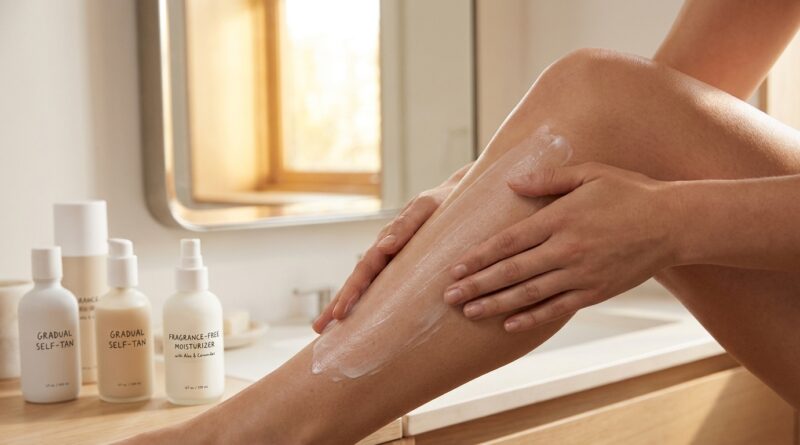
New ‘Micro-Dose Gradual Tan’ Rule: Why Daily Lotion Tanners Are Now The Safest Glow For Sensitive Skin
If you have ever put on a strong self tanner at night and woken up with orange wrists, itchy patches, or a face that looks darker than your neck, you are not alone. A lot of people want that healthy glow, but not the stress that can come with one big weekly tanning session. Sensitive skin does not love surprises. And traditional self tanners can feel like a lot all at once, especially if your skin is dry, reactive, eczema-prone, or dealing with melasma. That is why the new “micro-dose gradual tan” approach matters. Instead of dumping a high level of DHA on your skin in one go, daily lotion tanners spread the color out in smaller steps. Think of it like turning up the dimmer switch instead of slamming on the overhead light. For many people, that slower pace is easier on the skin barrier and much easier to control.
⚡ In a Hurry? Key Takeaways
- A gradual self tanner for sensitive skin is often safer because it gives you smaller amounts of DHA over several days instead of one intense hit.
- Use it like skincare. Patch test first, apply to well-moisturized skin, and build color slowly every 1 to 2 days.
- If you have dryness, eczema tendencies, or melasma, barrier support and fragrance-free formulas matter just as much as the shade.
Why the “micro-dose” idea makes sense
Most self tanners use DHA, short for dihydroxyacetone. It reacts with amino acids in the top layer of your skin to create that tan look. DHA itself is not new. What is new is how brands are packaging it. Instead of a stronger mousse or serum meant for one dramatic application, gradual lotions use lower amounts and pair them with moisturizer ingredients.
That matters because sensitive skin usually struggles with two things. First, irritation from too much product, too fast. Second, a weak skin barrier that is already dry, flaky, or inflamed. When you apply a strong tanner to uneven, thirsty skin, the driest spots grab the most color. That is how you end up with dark ankles, patchy elbows, and random spots on your hands.
A lower-dose lotion can reduce that risk. Not because DHA becomes magical at a lower level, but because the application is more forgiving. You have more room to correct, pause, or stop before the color gets too deep.
Think of gradual tanner like an active, not just body lotion
This is the part beauty marketing often skips. A gradual tanner may look like moisturizer, but it is not just moisturizer. It is an active product that changes how the surface of your skin looks over time.
That means you should treat it with the same respect you would give exfoliating acids or retinoids. Start slow. Watch your skin. Do not pile it on broken, recently shaved, or irritated areas and hope for the best.
Why this matters for sensitive skin
If you have eczema tendencies, rosacea, post-inflammatory marks, or melasma, your skin is more likely to react to friction, fragrance, harsh preservatives, and barrier damage. A gradual tanner is not automatically “safe” just because it says sensitive on the bottle. Formula details still matter.
That is also why it helps to read up on the newer fragrance-first concerns in tanning products. If scent tends to set your skin off, this guide on New ‘Fragrance‑Safe Tan’ Rule: How To Pick Self‑Tanners That Won’t Hijack Sensitive Skin Or Melasma is worth a look before you buy anything.
What makes a gradual self tanner for sensitive skin a smarter pick
1. Lower stakes with every application
A strong weekly tanner is all or nothing. If the shade develops too dark, too orange, or too uneven, you are stuck scrubbing it off while your skin gets angrier. Daily lotion tanners spread the risk out. One application usually creates a small change. That gives beginners and nervous users some breathing room.
2. Better match for dry or flaky skin
Dry skin tends to tan unevenly because rough patches soak up more color. A lotion-based formula helps soften those areas while adding pigment slowly. It is not perfect, but it is usually more forgiving than a fast-developing mousse on skin that has not been prepped well.
3. Easier to maintain, not just to apply
One of the quiet benefits of gradual tanning is maintenance. Instead of going pale, then very tan, then patchy, then pale again, you can hold a more even tone with light touch-ups. That often means less scrubbing, less panic exfoliating, and less barrier damage over time.
Who should be extra careful
Gradual tanning can be a better route, but some skin types still need more caution.
Eczema-prone skin
If your skin barrier is actively flaring, skip tanning until it settles down. DHA on cracked or inflamed skin can sting and develop unevenly. During calm periods, patch testing is your best friend.
Melasma-prone skin
Self tanner does not cause melasma in the way UV exposure does, but heavy fragrance, irritation, and heat can make sensitive pigment-prone skin harder to manage. Also, some people accidentally use self tanner as a reason to skip sunscreen. Big mistake. Faux glow does not protect you from sun-triggered pigmentation.
Recently shaved or exfoliated skin
Freshly shaved skin can be more reactive. Freshly exfoliated skin can be more permeable and easier to irritate. If your skin tends to sting after hair removal, wait and moisturize first before applying tanner.
A dermatologist-aligned playbook for switching from weekly tanner to daily lotion tanner
Step 1: Patch test like you mean it
Try the product on a small area for several days in a row, not just once. That is important because gradual color builds over repeated use. The reaction you care about might not show up on day one.
Step 2: Start below your ideal shade
Do not chase instant bronze. Pick a light or medium formula if you are new to it. Sensitive skin usually does better when you build slowly rather than trying to reach vacation color in two nights.
Step 3: Moisturize first if your skin is very dry
This sounds backwards, but for very dry skin, applying a plain, fragrance-free lotion first can help buffer rough patches. Let it sink in, then apply the gradual tanner. You may get slightly slower color, but often a smoother result.
Step 4: Apply every other day first
Many people do not need daily use right away. Start every other day for a week. Check for irritation, dark buildup around joints, and whether the color is developing evenly.
Step 5: Use less on classic trouble spots
Knuckles, wrists, knees, ankles, elbows, and the sides of feet grab color fast. Use what is left on your hands rather than applying a full extra pump there.
Step 6: Stop exfoliating aggressively
If your old routine involved tanning hard, then scrubbing hard to remove it, this is your chance to calm things down. Gentle washcloth use and a mild body lotion usually work better than rough mitts and acid cocktails.
What to look for on the label
Helpful signs
Look for words like fragrance-free, sensitive skin, dermatologist-tested, and non-drying. Ingredients like glycerin, squalane, ceramides, hyaluronic acid, colloidal oatmeal, and panthenol can help support the barrier.
Things to be cautious about
Strong fragrance, lots of essential oils, heavy shimmer if your skin is reactive, and formulas loaded with exfoliating acids at the same time. Those combos can be too much for already touchy skin.
Face and body are not always interchangeable
Your body may tolerate a formula your face hates. If you have facial redness or melasma, use a separate face-specific gradual tanner or skip the face entirely and use bronzing drops designed for more controlled mixing.
Common mistakes that make gradual tanners seem “unsafe”
Using them on a damaged barrier
If your skin is burning from over-exfoliation, retinoids, shaving, or a flare, any tanning product can feel like the villain. Sometimes the issue is timing, not the category itself.
Applying too much because the first day looked subtle
This one gets people all the time. Day one can look underwhelming, so they apply a thick layer on day two and three. Then the tan catches up all at once. Slow and steady wins here.
Ignoring the formula because “it’s just a lotion”
Again, this is not just body cream. A gradual self tanner for sensitive skin still needs careful ingredient checking, especially if you react to fragrance or certain preservatives.
When a strong self tanner still makes sense
There are cases where a once-a-week tanner works fine. If your skin is resilient, well-moisturized, and you are experienced with application, a traditional formula can be faster. It is not automatically bad. It is just less forgiving.
For people with dryness, eczema tendencies, melasma concerns, or beginner nerves, gradual lotion formulas often offer a calmer path. Less drama. Less guesswork. Fewer mornings spent inspecting your knees under bathroom lighting.
At a Glance: Comparison
| Feature/Aspect | Details | Verdict |
|---|---|---|
| Color intensity | Gradual lotions use smaller amounts of DHA over repeated applications instead of one deep hit. | Safer and easier to control for sensitive skin. |
| Barrier friendliness | Moisturizing bases can help dry skin, but fragrance and irritants still matter a lot. | Good option if you choose a gentle formula and avoid active flares. |
| Beginner risk | Patchiness usually builds more slowly, giving you time to adjust frequency and amount. | Best pick for nervous tanners and anyone tired of streak disasters. |
Conclusion
The biggest shift here is not just choosing a different bottle. It is changing your mindset. A gradual self tanner for sensitive skin works best when you treat it like a low-dose active, not a regular lotion you can slap on without thinking. That simple switch can make tanning feel far less risky for people with dryness, eczema tendencies, or melasma concerns. Instead of one heavy application that can push your skin barrier over the edge, you build color in gentle layers, keep results going longer, and lower the odds of dark patches or irritation. Beauty sites love to rank the “best glow,” but the smarter question is often what your skin can handle week after week. For a lot of people, micro-dosing DHA is the calmer, safer long game. And if you are a beginner, it lets you ease in slowly instead of gambling your skin on one big overnight tan.