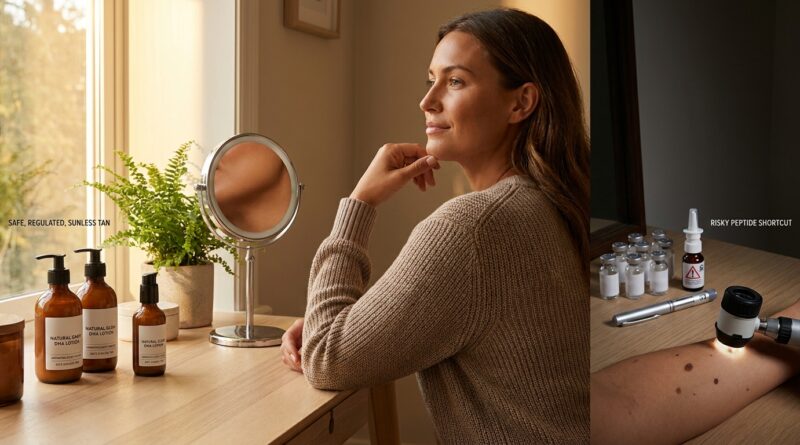
New ‘Melanotan-Free Tan’ Rule: How To Spot Dangerous Peptide Shortcuts And Keep Your Glow Legit
You are not silly for feeling confused right now. One scroll through TikTok or one chat at the gym and suddenly everyone seems to be talking about “tan shots,” “Barbie drug” sprays, and secret peptide hacks that promise a darker glow without the usual fake tan fuss. That sounds tempting, especially if you want color fast and do not want to bake in the sun. But this is exactly where things get risky. The new rule of thumb is simple. If a product claims to change your body from the inside, especially with Melanotan style peptides, treat it very differently from a normal self tanner. One is a cosmetic that colors the top layer of skin. The other may affect your body in ways that are not fully understood, and that is where the Melanotan tanning peptide safety issue gets serious. A nice glow should not come with a side order of mole anxiety, hormone questions, or legal grey areas.
⚡ In a Hurry? Key Takeaways
- Melanotan and similar tanning peptides are not the same as regular self tan, and they are not approved by major regulators for cosmetic tanning use.
- Stick with DHA-based self tanners that sit on the skin, have clear ingredient labels, and are sold through normal retail channels.
- If a tanning product involves injections, nasal sprays, secret “research” wording, or promises an internal tan shortcut, that is a major red flag.
The new “Melanotan-free tan” rule in plain English
Here is the easiest way to think about it. If the tan comes from coloring your skin’s surface, that is one category. If the tan is supposed to come from changing your body chemistry, that is another category entirely.
Traditional self tanners usually use DHA, short for dihydroxyacetone. DHA reacts with the outer dead layer of your skin and creates a temporary darker look. It does not need needles. It does not need nasal sprays. It does not ask your body to produce more pigment from the inside.
Melanotan products are different. They are usually sold as peptides, often as injections or nasal sprays, and are marketed as a shortcut to stimulate tanning. That is why people searching for Melanotan tanning peptide safety should be extra careful. This is not just about beauty. It is about health risk, product quality, and whether what you are buying is even legal to sell for that purpose.
Why people are getting pulled in by peptide tanning hype
The sales pitch is powerful because it targets a real frustration. Fake tan can streak. Prep is annoying. Tan can fade patchy. And lots of people want a deeper glow without spending hours in the sun.
So when a product is pitched as “sunless” and “effortless,” it sounds like the perfect fix. Add TikTok trends, gym culture, and before-and-after videos, and it starts to feel normal.
But “popular” and “safe” are not the same thing. Plenty of these products are being pushed through social media, private message sales, and sketchy websites, not through the kind of channels you would expect for properly regulated cosmetics.
If you want a deeper background on how the hype machine works, this guide on New ‘Peptide Tan’ Safety Rule: What Melanotan Hype Really Means For Your Glow In 2026 lays out why so many people feel like they are missing out on a “secret.”
What makes Melanotan products a safety concern
They are not normal cosmetics
A lotion, mousse, or spray tan that stains the outer layer of skin is not doing the same job as a peptide that claims to increase pigmentation internally. That difference matters.
They may be unregulated or mislabelled
Many peptide tanning products are sold online with vague branding, incomplete ingredient lists, or “for research use only” language. That is not a cute loophole. It is a warning sign that the product may not have gone through proper oversight.
There have been concerns about mole changes
One of the reasons Melanotan tanning peptide safety keeps coming up is concern around changing moles, darkening freckles, and questions about melanoma risk. If something causes existing pigmentation to shift in ways you did not expect, that should not be brushed off as a beauty side effect.
You may not know what you are actually taking
With underground products, purity and dosing can be a real problem. Even if two bottles look similar online, there is no guarantee they contain what the label claims, or that they were made in a controlled way.
How to spot dangerous peptide shortcuts fast
Use this quick filter before you buy anything.
Red flag 1: It is injected or sniffed
If a tanning product comes as a shot, vial, peptide mix, or nasal spray, stop and ask why a cosmetic tan needs to enter your body that way.
Red flag 2: The seller talks like a supplement dealer, not a beauty brand
Phrases like “research peptide,” “not for human consumption,” “lab grade,” or “DM for stock” should make you back away immediately.
Red flag 3: It promises a tan with no topical color product
If the whole point is that you do not need bronzer, mousse, lotion, or DHA, then the product is probably aiming to alter pigmentation from the inside.
Red flag 4: It is sold through private chats or anonymous social accounts
Legit self tan brands do not usually require Telegram, encrypted messages, or a gym locker room introduction.
Red flag 5: There is no normal cosmetic label
A safer self tanner should clearly list ingredients, directions, warnings, batch details, and company information. If the label is thin on basics, do not trust it.
What a safer self tanner usually looks like
You do not need to swear off tanning completely. You just need to choose the boring-looking option over the flashy shortcut. Boring is good here.
Look for DHA on the ingredient list
DHA-based self tanners are widely used because they work at the skin surface level. That is a very different risk profile from an unapproved peptide.
Buy from normal retailers
Think established beauty stores, pharmacies, known brand websites, and salons with proper product details. Not mystery links.
Expect normal claims, not miracle claims
“Buildable glow,” “medium to dark,” and “lasts up to a week” sound realistic. “Permanent tan effect,” “works internally,” or “no sun, no fake tan, no effort” should make you suspicious.
Patch test and check your skin regularly
Even safe topical products can irritate some people. And separate from any self tanner, it is smart to keep an eye on moles and changes in your skin anyway.
What the crackdown on unregistered tanning products means for you
This is where ordinary shoppers get stuck. Authorities are starting to pay more attention not just to underground peptide products, but also to self tan items that may be improperly registered or marketed. So people hear “crackdown” and assume all tanning products are dodgy.
That is not the right takeaway.
The better takeaway is this. A proper self tanner and a risky peptide are not the same thing. Regulators cracking down is often a sign that the market got messy and some sellers pushed too far. Your job is to separate standard cosmetics from products making body-altering claims without proper approval.
Your simple safety checklist before you buy
Run through these questions:
- Is this a topical self tanner, or does it go inside the body?
- Does it list ingredients clearly, including DHA if it is a standard self tan?
- Is it sold by a known retailer or brand with contact details?
- Are the claims cosmetic and temporary, or internal and dramatic?
- Would I feel comfortable showing this label to a pharmacist or dermatologist?
If you are hesitating on that last one, listen to your gut.
If you have already used a peptide tanning product
Do not panic. But do take it seriously.
If you notice new mole changes, darkening of existing moles, unusual side effects, or anything that feels off, book an appointment with a qualified medical professional. It is better to ask an awkward question now than ignore something important for six months.
Also, stop using the product until you get proper advice. “Maybe it is normal” is not a great health strategy when skin changes are involved.
At a Glance: Comparison
| Feature/Aspect | Details | Verdict |
|---|---|---|
| DHA self tanner | Topical cosmetic that darkens the outer layer of skin temporarily, usually sold as mousse, lotion, drops, or spray. | Generally the safer, more legitimate route when bought from reputable brands. |
| Melanotan-style peptide product | Often sold as injections or nasal sprays that claim to stimulate tanning from inside the body, with approval and safety concerns. | High caution. Avoid unless advised and prescribed by a qualified medical professional for a legitimate reason. |
| Seller and label quality | Clear ingredients, normal retail channels, and realistic cosmetic claims are good signs. Secretive sales and vague wording are not. | If it looks underground, treat it as risky. |
Conclusion
The big thing to remember is that not all “sunless tan” products belong in the same bucket. Unregulated tanning peptides like Melanotan are resurfacing in 2026 and being sold as easy shortcuts, even though they are not approved by major regulators and have been linked to worrying mole changes and possible melanoma risk. At the same time, crackdowns on unregistered tanning products are making shoppers wonder what is safe and what is not. The simplest playbook is this. Choose clearly labelled DHA-based self tanners from reputable brands. Skip injections, nasal sprays, and any product sold like a secret hack. You can still get a believable glow, stay sun smart, and avoid turning your tan routine into a health gamble.