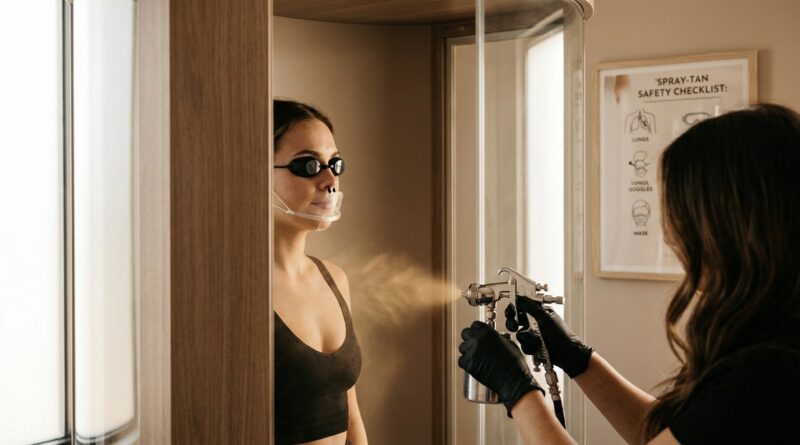
New ‘Spray-Tan Lung’ Safety Rule: The Hidden Inhalation Risk No Booth Is Warning You About Yet
You are not overthinking this. Spray tans are sold as the safer beauty swap because they skip UV damage, but the part nobody explains well is the cloud you breathe while the tan is being applied. If you have ever stood in a booth holding your breath, or had a technician spray close to your face while telling you to “just turn,” your concern is reasonable. New research is raising fresh questions about spray tan inhalation safety, especially around DHA, the main tanning ingredient, when it is breathed in as a fine mist instead of put on skin. That does not mean every appointment is dangerous or that you need to quit sunless tanning. It does mean the old shrug-and-spray approach is no longer good enough. A few simple changes, like nose protection, eye coverage, lip balm, and better booth ventilation, can turn a rushed salon session into something much more controlled and much lower risk.
⚡ In a Hurry? Key Takeaways
- Spray tan solutions are considered safe for skin use, but inhaling DHA mist is a separate question and still not well studied in humans.
- Use nose filters or hold a breathable barrier over your nose, keep lips closed with balm on, wear eye protection, and ask for strong ventilation during every session.
- Fresh animal research and ongoing FDA concern make this a practical safety issue, not a fringe worry, especially for frequent booth users.
Why people are suddenly paying attention to this
For years, the spray tan conversation focused on color. Streaks. Smell. Dry patches. Orange ankles. The lung question barely made it into the room.
That is starting to change. Researchers have looked more closely at what happens when aerosolized DHA, short for dihydroxyacetone, reaches the airways instead of the outer layer of the skin where it is meant to work. Some newer animal data suggests inhaled DHA can irritate or inflame lung tissue. That is not the same as proving long-term harm in humans, but it is enough to make “just breathe normally” sound like very lazy advice.
The FDA has also long drawn a line here. DHA is approved for external application to the skin, not for inhalation, and not for contact with the eyes, lips, or mucous membranes. That distinction matters more than many salons let on.
What DHA actually is, and why inhaling it is a different issue
DHA is the sugar-derived ingredient that reacts with amino acids in the top layer of your skin to create that bronzed look. On skin, that process is well known. In the air, it is a different story.
When a spray gun or automated booth turns solution into a fine mist, some of that mist does not land where it should. It floats. You inhale some. It can also settle on your lips, in your nostrils, and around your eyes.
That is the hidden gap. A product can be fine for skin and still be poorly studied for lungs.
Why overspray matters
The closer the nozzle is to your face, and the finer the spray, the easier it is for tiny particles to stay airborne. That increases the chance that they reach deeper into the respiratory tract. Add fragrance, bronzers, preservatives, or botanical extras, and you have more than one ingredient in the cloud.
Most people are not just breathing in pure DHA. They are breathing in the whole formula.
What the research is really saying, without the scare tactics
Here is the calm version. We do not have strong long-term human data showing that occasional spray tan users are developing serious lung disease from DHA. But we also do not have enough good evidence to say repeated inhalation is clearly harmless.
That middle ground is where smart safety habits belong.
The newer concern comes from lab and animal findings that suggest aerosolized DHA may trigger inflammation in lung tissue. Scientists also keep pointing out the obvious problem. Lungs are delicate, and inhalation exposure is not the same as topical exposure. If something was designed to react on the surface of skin, you do not want to casually assume it is fine in your airways.
Who should be extra careful
Some people need to take this more seriously than others.
If you have asthma, allergies, or sensitive airways
If perfumes, hairspray, cleaning products, or smoke already make you cough or tighten up, spray tan mist may do the same. Even if DHA itself is not the main trigger, the fragrance or preservative system might be.
If you spray tan often
A one-off pre-wedding tan is not the same as weekly booth sessions. Repeated exposure changes the math.
If you use booths over custom hand-sprays
Booths can create a lot of airborne mist fast. Some are well ventilated. Some are not. You usually have less control over the spray pattern than you do with a careful technician.
If you are pregnant or have a lung condition
This is a good moment to ask your doctor instead of guessing. The issue is not panic. It is reducing unnecessary exposure.
How to make a spray tan session safer right now
This is the practical part. You do not need a chemistry degree. You need a short checklist.
1. Protect your nose and mouth
Ask for nose filters. If the salon does not offer them, that is a red flag. At minimum, use a clean barrier over your nose during the face portion if your provider allows it. Keep your lips closed and coated with balm so less solution sticks there.
2. Wear eye protection
Tiny eye shields may look silly. Wear them anyway. The FDA concern has never been just about skin. Eyes and mucous membranes matter.
3. Ask about ventilation before you book
Good salons should be able to tell you how the room or booth clears overspray. If the answer is vague, or they seem annoyed you asked, move on.
4. Time your breathing during facial spraying
Do not hyperventilate and do not try to heroically hold your breath for the whole session. But when the face is being sprayed, a brief pause in breathing can reduce what you take in. Then turn away and breathe once the cloud settles.
5. Choose custom spraying over a rushed booth if you want more control
A careful technician can often reduce face overspray, adjust distance, and avoid unnecessary passes. The best sessions are controlled, not blasted on.
6. Ask for the ingredient list
This is especially smart if you have reactive skin or airways. Fragrance-heavy formulas can be harder on some people. If you are already dealing with stinging, breakouts, or strong formula smell, it is worth reading New ‘DHA‑Free Tan’ Rule: The Sensitive-Skin Safe Glow Trend That Finally Skips The Smell, The Hives And The Guesswork, because skin sensitivity and inhalation comfort often overlap more than people think.
7. Skip the session if you are already coughing or congested
If your airways are irritated, this is the wrong day to stand in a chemical mist. Reschedule.
Questions to ask the salon before they spray your face
You do not need to make it awkward. Just be direct.
- Do you provide nose filters and eye protection?
- How is overspray ventilated out of the room or booth?
- Can you avoid spraying directly over my mouth and nostrils?
- What ingredients are in the solution, including fragrance?
- Do you have a lower-fragrance or sensitive formula?
If the salon treats these questions like you are being difficult, that tells you something useful.
Booth vs hand-spray: which is better for lungs?
There is no universal winner, but there is a common-sense one.
Booths
They are fast and convenient. They can also create a dense cloud, especially around the face, and you usually cannot ask the machine to be more thoughtful.
Hand-sprays
A skilled technician can reduce direct face exposure, pause for you to breathe, and keep the nozzle placement smarter. But a poorly trained technician can still create plenty of overspray.
So the best option is not just booth versus hand-spray. It is controlled application versus careless application.
What not to do
A few habits make the problem worse.
- Do not treat “organic” or “clean” labels as proof that inhalation is fine.
- Do not assume a pleasant smell means a gentler formula.
- Do not let anyone spray inches from your nose without protection.
- Do not ignore coughing, throat irritation, or chest tightness afterward.
- Do not book frequent sessions without thinking about cumulative exposure.
When symptoms after a spray tan deserve attention
A little throat dryness can happen. But some signs should not be brushed off.
Watch for these red flags
Coughing that lasts more than a few hours. Wheezing. Chest tightness. Shortness of breath. Burning eyes. A strong headache in a poorly ventilated room. Lip or throat irritation that keeps coming back after every session.
If that sounds familiar, stop treating it like a random annoyance. Your body may be telling you the setup, or the formula, is not working for you.
At a Glance: Comparison
| Feature/Aspect | Details | Verdict |
|---|---|---|
| DHA on skin vs DHA in air | DHA is intended for the outer skin surface. Inhalation exposure is less studied and treated differently by regulators. | Safe on skin does not automatically mean safe to breathe. |
| Spray booth vs custom hand-spray | Booths are fast but can create dense mist. Hand-sprays allow more control if the technician is skilled. | Choose the setup that gives you better face protection and less overspray. |
| Protective steps | Nose filters, eye shields, lip balm, ventilation, and pausing breath during face spraying all help reduce exposure. | Worth doing every time, especially for frequent users. |
Conclusion
Spray tans are still a useful way to avoid UV damage, but that does not mean the mist deserves a free pass. Fresh research suggesting aerosolized DHA can inflame lung tissue in animals, plus renewed FDA concern about ingredients that are fine on skin but not tested for inhalation, should be enough to retire the old “whatever the salon offers” mindset. The good news is this is fixable. Ask questions. Protect your nose, eyes, and lips. Pick better ventilation. Choose a more controlled application. For anyone booking quick booth sessions before a vacation, wedding, or big event, improving spray tan inhalation safety is one of the easiest and smartest upgrades you can make right now.