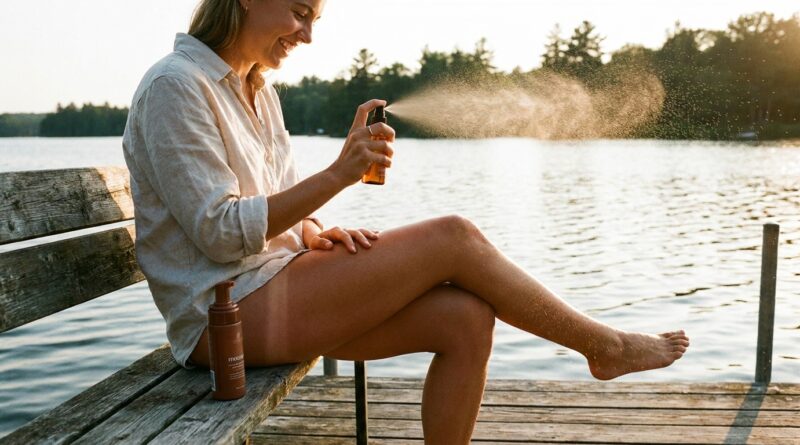
New ‘Bug-Spray Safe Tan’ Rule: How To Protect Your Sunless Glow From Insect Repellent Streaks
You are not imagining it. Yes, bug spray can ruin self tanner, and it is incredibly annoying when your color looks perfect at dinner and streaky by breakfast. This usually shows up as drips on shins, pale fingerprints near ankles, or random patches where repellent sat on the skin too long. It happens a lot on vacations, hikes, backyard parties, and those late-summer evenings when you want both a glow and a mosquito-free life. The good news is you do not have to pick one or the other. A few timing and application tweaks make a big difference. The short version is simple. Fresh self-tanner is the most fragile, heavy bug spray can break it up, and rubbing repellent into the skin is often what causes the worst damage. If you plan ahead, use the right kind of repellent, and know how to fix a streak fast, you can keep your tan looking even and still avoid becoming bug food.
⚡ In a Hurry? Key Takeaways
- Yes. Bug spray can ruin self tanner, especially fresh DHA-based tans and especially if the repellent contains DEET or gets rubbed in hard.
- Wait until your tan has fully developed, spray repellent lightly from a distance, and blot instead of rubbing to cut down on streaks.
- Mosquito protection still matters. It is better to protect your skin and touch up a tan later than skip repellent and get bitten up.
Why bug spray messes with sunless tan
Most self-tanners use DHA, short for dihydroxyacetone. It reacts with the very top layer of dead skin cells to create that bronzed look. That color is not paint sitting on top. It is a temporary stain-like reaction in the outer skin layer.
Bug spray can interfere with that in two main ways. First, some repellent ingredients can break down or disturb the top layer where the color lives. Second, the act of applying bug spray, especially rubbing, sweating, and reapplying, can physically lift the tan unevenly.
That is why the damage often looks random. Knees, ankles, shins, wrists, and the tops of feet usually get hit hardest because they get more spray, more friction, and more sweat.
The main culprit: DEET
DEET is one of the most effective insect repellents out there. It also has a long reputation for being rough on certain plastics, coatings, and finishes. On skin, it can also be rough on a fresh sunless tan.
That does not mean DEET is bad or unsafe when used as directed. It means it is more likely to disturb your color than gentler alternatives. If your tan is brand new, high-DEET sprays are the ones most likely to leave pale trails and drip marks.
What about picaridin and oil of lemon eucalyptus?
Picaridin is often a better choice if you are trying to protect a self-tan. Many people find it less harsh on the skin and less likely to cause obvious streaking. Oil of lemon eucalyptus can also work, though formulas vary and any spray can still cause issues if you overapply or rub aggressively.
The formula matters almost as much as the active ingredient. Alcohol-heavy sprays, oily mists, and aerosol products that run down the legs can all leave marks.
The new bug-spray-safe tan rule
If you remember one thing, make it this. Tan first. Let it fully develop. Then use bug spray lightly and with as little rubbing as possible.
That is the safest routine for most people.
Best timing if you know you will be outside
If possible, do your self-tan the night before a day indoors, not right before an outdoor event. Fresh tan needs time to develop and settle. The first 8 to 24 hours are when it is easiest to mess up.
If you are getting a pro spray tan before a beach trip, camping weekend, or outdoor wedding, try to leave a full buffer day before heavy repellent use. That one choice can save the whole tan.
How long should you wait?
A good basic rule is to wait until after your first rinse and until the tan has fully developed. For many products, that means at least 8 hours. For extra caution, 24 hours is better.
If your tanner label gives a development window, follow that first. Some express formulas develop faster, but even those are more stable after the first shower.
How to apply bug spray without wrecking your tan
This is where most of the damage happens. Not from one ingredient alone, but from how it gets put on.
1. Start with dry, set skin
Do not apply repellent over tacky lotion, sweaty legs, or a tan that still feels damp. The wetter the skin, the more likely the product is to move around and create tracks.
2. Spray from a little farther away
Hold the bottle far enough away that you get a light, even mist instead of wet streams. If the product beads or runs, you used too much.
3. Avoid rubbing hard
This is a big one. If you need to spread it, pat or lightly smooth it. Do not massage it in like body lotion. Hard rubbing can lift color fast.
4. Use hands sparingly, then wash palms
If you spray into your hands first to control placement, use a very thin amount. Then wash your palms well so you do not accidentally transfer tanner or repellent to other areas.
5. Focus on exposed areas only
You do not need to coat every inch of your legs if pants, socks, or longer skirts are doing part of the work. Less repellent on the tanned skin means less chance of patchiness.
6. Reapply carefully
The second and third application are often what really break a tan apart. If you need to reapply, blot sweat first, let the skin dry, then use another light coat.
What to use instead when you want the best chance of saving your glow
If you have options, look for these features:
- Picaridin-based repellent instead of high-DEET formulas when practical
- Fine mist sprays that apply evenly
- Lower-alcohol formulas
- Products that do not feel greasy or overly wet
That said, effectiveness comes first. If you are in a high-bug area and DEET is what works best for your situation, use it. A streaked tan is fixable. Mosquito bites and bug-borne illness are a bigger problem.
What not to do
A few common mistakes almost guarantee trouble.
Do not put bug spray on immediately after tanning
If the tan has not developed, you are basically inviting streaks.
Do not layer with lots of oil or heavy body lotion first
That combo can make repellent slide around and pool in weird places.
Do not ignore drips
If you see a line of repellent running down your leg, blot it right away with a tissue or clean towel. Letting it sit is how you wake up with snail-trail pale marks.
Do not scrub at bedtime
If you notice possible streaking at night, do not panic and attack it with a loofah. That usually makes the contrast worse.
How to rescue a streaked tan fast
Sometimes the damage is already done. Here is the low-drama fix.
For faint marks
Use a light layer of gradual tanning lotion the next day to blend things back together. This works well for mild fading and soft streaks.
For obvious pale drips
Take a damp washcloth and very gently buff just the darker edges around the streak so the line looks less sharp. Then add a tiny amount of self-tanner or bronzing body product to the pale area.
For patchy legs before an event
A wash-off body bronzer or leg makeup is your friend. It is the fastest same-day save. Just let it dry well before getting dressed.
For severe unevenness
At that point, stop spot-fixing. Use a tan remover or gentle exfoliation to fade the area more evenly, then reapply tanner when your skin is calm and dry.
Best routine for vacations, barbecues, and hikes
If you spend a lot of time outdoors, a little planning keeps things simple.
The night before
Exfoliate lightly. Apply your self-tanner evenly. Let it develop fully.
The next morning
Rinse if your product calls for it. Skip heavy oils. Use light moisturizer only on dry spots if needed.
Before heading outside
Apply repellent in a thin, even layer. Blot drips. Let it dry before sitting down, crossing your legs, or pulling on tight clothing.
When you get home
Cleanse gently. Do not scrub. Add a little moisturizer so the tan wears off more evenly over the next few days.
At a Glance: Comparison
| Feature/Aspect | Details | Verdict |
|---|---|---|
| Fresh tan plus bug spray | Highest risk period, especially in the first 8 to 24 hours and before the first rinse | Avoid if you can |
| DEET vs picaridin | DEET is very effective but more likely to disturb self-tanner, picaridin is often gentler on the glow | Picaridin is usually the tan-friendlier pick |
| Application method | Light misting and blotting causes less damage than wet spraying and hard rubbing | Technique matters a lot |
Conclusion
If you have ever asked, can bug spray ruin self tanner, the honest answer is yes, absolutely. But it does not have to ruin your weekend. The trick is to respect the timing, pick a repellent formula carefully when you can, and apply it with a lighter hand than you think. Late summer and early fall are peak outside season, so this problem shows up right when people want their legs looking best in photos. A little planning now means fewer mystery streaks after your next barbecue, camping trip, or sunset walk. Protect your skin first, protect your tan second, and keep a backup bronzing product around just in case. That is the real bug-spray safe tan rule.