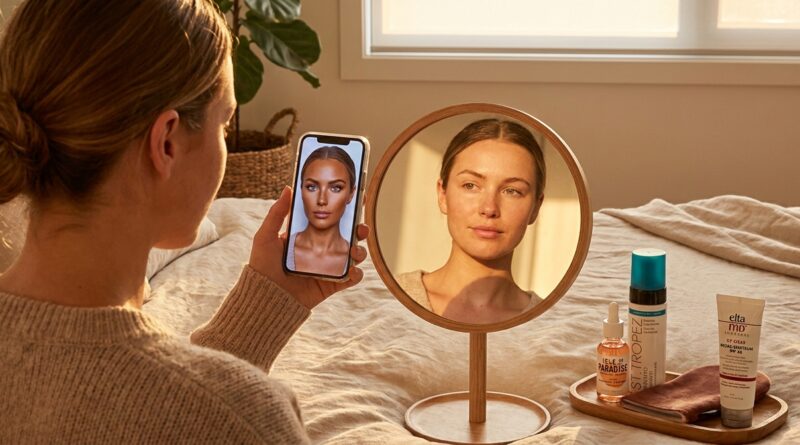
New ‘AI Tan Trap’ Rule: Why Virtual Filters Are Quietly Wrecking Your Real-World Skin Habits
If you have looked in the mirror lately and thought, “Why doesn’t my self tan look like everyone else’s?” you are not imagining the pressure. Your feed is packed with smooth, bronzed, poreless “summer skin,” and a lot of it is boosted by AI tanning filters, color grading, skin blurring, or full-on beauty edits. That matters more than it sounds. When fake glow becomes the baseline, real skin starts to feel like it is falling short. People end up applying extra coats of self tanner, mixing products that were never meant to be layered that way, or worse, drifting back toward sun exposure because filtered bronze has quietly reset the standard. The new rule is simple. If a tan only exists on a screen, it should not be the thing you measure your body against. That mindset can protect both your skin and your peace of mind.
⚡ In a Hurry? Key Takeaways
- AI tanning filters can make normal, healthy skin look “too pale” even when your real-life tone is perfectly fine.
- Use self tanner by the label, patch test first, and judge your color in natural light, not against filtered photos.
- Chasing an edited glow can lead to overapplication, unsafe product mixing, and more temptation to use UV tanning.
What the “AI tan trap” actually is
The AI tan trap happens when edited skin becomes your reference point.
You scroll through reels, stories, selfies, and dating profiles. Everyone looks evenly bronzed. Their shoulders glow. Their face matches their body perfectly. There are no streaks, no dry patches, no weird fading around the hands. It looks effortless.
But often, it is not real. It may be a warming filter, AI skin retouching, saturation boosts, blur tools, auto-lighting, or a beauty app that deepens skin tone while smoothing texture at the same time.
That can mess with your sense of what a normal self tan should look like. Real self tanner sits on real skin. Skin has pores, shadows, freckles, movement, and uneven texture. Cameras and filters flatten all of that.
Why this matters for self tanner safety
This is not just about vanity. It can change behavior.
1. People overdevelop their tan
If one coat looks natural but your feed tells you natural is “not enough,” you may apply another coat too soon. Then another. That raises the chance of orange buildup, clogged-looking texture, patchy fade, and irritated skin if you are scrubbing too aggressively between applications.
2. People start layering too many products
Some users stack drops, mousse, sprays, instant bronzers, and shimmer products trying to copy a filtered result. That can make it harder to know what is actually causing irritation or uneven color. More product is not always a better result.
3. People get pulled back toward UV exposure
This is the big one. If self tanner seems to “fail” because it does not look like edited skin online, some people decide only a real sun tan will do. That is the exact wrong lesson. A filtered glow is not proof that sun exposure is safer or more effective. It is proof that editing is powerful.
How AI tanning filters trick your eyes
Most beauty filters do not just make skin darker. They change several things at once.
They warm the whole image
A warmer photo makes skin look more golden and “healthy,” even if the actual shade did not change much.
They blur texture
Self tanner always looks more flawless on smoothed skin because pores, fine lines, and dry areas are softened or hidden.
They even out tone
Real skin has variation. Filters reduce redness, mute under-eye darkness, and blend edges around the jawline, elbows, and chest.
They boost contrast
This makes contours pop. Suddenly the tan looks deeper and more sculpted than it would in bathroom lighting.
So if you are comparing your bare shoulders in normal daylight to a heavily processed image, you are not making a fair comparison. You are grading your real skin against software.
Signs you may be caught in the AI tan trap
A few clues tend to show up fast:
- You feel disappointed with a tan that looked good before you opened social media.
- You keep reapplying even though the color is already visible.
- You take photos with filters to “check” whether the tan worked.
- You are tempted to use products more often than the label suggests.
- You think your skin looks dull in person, but only after seeing edited posts.
If any of that sounds familiar, take it as a nudge, not a failure. This is a culture problem, not just a you problem.
Practical ways to protect your skin and your headspace
Check your tan in natural light
Indoor bulbs can make your skin look flat, yellow, or darker than it really is. Stand near a window before deciding your tan is “too light” or “uneven.” Natural light gives you a much more honest read.
Wait for full development before judging it
Many self tanners need several hours to settle. Judging too early often leads to panic application and overdoing it.
Do not chase someone else’s shade
Your undertone matters. The same mousse can look golden on one person and olive on another. “Dark enough” is not a universal number.
Patch test new formulas
This is boring advice, but it saves trouble. If you are switching brands or trying concentrated tanning drops, test first. It helps you catch irritation and avoid surprise color shifts.
Keep your routine simple
Clean, dry skin. Light moisturizer on dry areas. One tanning product at a time. That is usually the safer path. When people start mixing formulas in a rush, the odds of streaks and skin stress go up.
Take “filter breaks” before tanning
If you know you are prone to comparison, avoid scrolling bronzed beauty content right before application. It sounds small, but it helps reset your expectations.
What safe self tanning should look like
Safe self tanning is not about getting the darkest result possible. It is about getting a result you like without harming your skin.
That means following directions, using products as intended, letting skin recover between exfoliation sessions, and not trying to correct every tiny variation with more and more color. It also means remembering that self tanner does not replace sunscreen. A cosmetic glow is not sun protection.
If you are in a life stage where ingredient anxiety is already high, like pregnancy, it is worth being extra selective and calm about what you use. Our guide to New ‘Sunless Pregnancy Glow’ Rule: How To Use Self‑Tanner Safely When You’re Expecting In 2026 breaks that down in a practical, no-panic way.
The mental health part people skip
This is where the conversation gets more important.
Appearance filters can chip away at self-esteem because they create a version of you that looks close enough to feel possible, but polished enough to stay out of reach. That is a rough mix. You start thinking a deeper tan will fix the problem, when the problem is often the comparison itself.
If your mood drops every time you see “perfect” bronzed skin online, the answer may not be a darker bottle. It may be changing the input. Unfollow accounts that leave you feeling behind. Save examples of real, unfiltered tanning results. Treat your skin like skin, not a project under constant review.
At a Glance: Comparison
| Feature/Aspect | Details | Verdict |
|---|---|---|
| Filtered “AI tan” look | Deeper tone, smoother texture, more even color, often boosted by lighting and retouching | Good for entertainment, bad as a real-life standard |
| Safe self tanner use | Patch testing, label-based timing, simple routine, natural-light check, no overlayering | Best option for a realistic glow without UV damage |
| Chasing filtered results | Can lead to overapplication, irritation, disappointment, and temptation to sun tan | Not worth it. Compare less, protect more |
Conclusion
The “AI tan trap” is real because it sneaks in quietly. It makes edited bronze look normal, then makes your healthy, unfiltered skin feel like it needs fixing. That is a bad trade. The smart move is to keep your standards rooted in real life. Use self tanner safely. Judge results in honest light. Do not let an algorithm talk you into darker and darker layers, risky product habits, or a return to UV exposure. This matters right now because sunless tanning, beauty filters, and mental health are colliding in the same scroll. Calling that out helps people make better choices for their skin and for their sanity. And honestly, that is the kind of glow culture worth keeping.