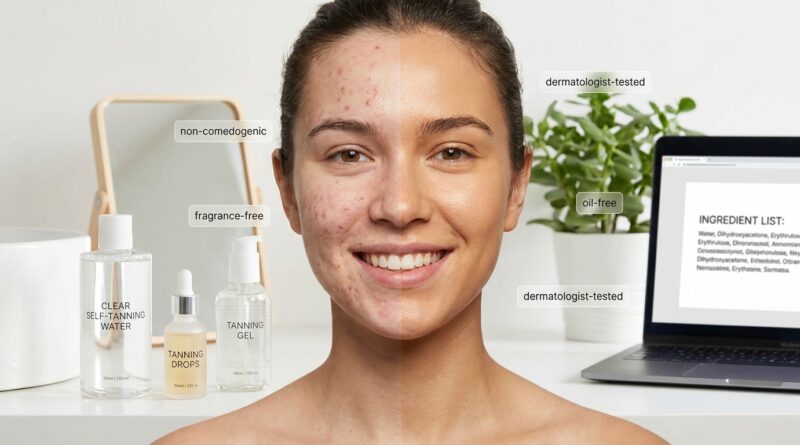
New ‘Acne-Safe Sunless Glow’ Rule: How To Pick Self-Tanners That Won’t Clog Your Pores Or Wreck Your Skin
You get the glow. Then the next morning your face feels like a clogged drain. Tiny bumps on your forehead. Congested pores around your nose. Maybe a full breakout on your chin. It is incredibly frustrating, especially when the bottle promised a “skincare-infused” bronze instead of chaos. The tricky part is that a lot of newer face tanners sound gentle but quietly rely on rich oils, buttery esters, and heavy emollients that acne-prone skin may not love. So if you are looking for a non comedogenic self tanner for acne prone skin, the goal is not to find a perfect magic label. It is to use a simple filter system. Look past the marketing, check the formula type, scan the ingredient list, and patch test like your pores matter, because they do. That one habit can save you from weeks of trying to fix a breakout caused by one “glowy” overnight tan.
⚡ In a Hurry? Key Takeaways
- A non comedogenic self tanner for acne prone skin is usually a lightweight water, gel, or clear serum formula with fewer rich oils and pore-clogging emollients.
- Start by avoiding face tanners packed with coconut oil, cocoa butter, heavy plant oils, and lots of waxy moisturizers high on the ingredient list.
- Even “clean” or “skincare-infused” tanners can trigger breakouts, so patch test for 3 days and keep your regular acne routine simple on tanning nights.
The new acne-safe sunless glow rule
Here is the rule. Do not judge a self-tanner by the front label. Judge it by the weight of the formula and the first chunk of the ingredient list.
That is what matters most for acne-prone skin.
A lot of brands now sell tanning waters, bronzing drops, face mists, and “serum tans” that sound light and skin-friendly. Some really are. Others are basically moisturizer-heavy formulas with tanning active added in. If your skin clogs easily, that difference matters.
The safest starting point is usually a lightweight formula that dries down fast and does not leave a greasy film. Think clear water, thin gel, or a simple serum texture. The more a tanner feels like a rich cream, sleeping mask, or facial oil, the more careful you should be.
Why self-tanner can trigger breakouts even when it looks gentle
DHA, the ingredient that creates the tan color, is not always the main problem. For many people, the breakout trigger is the vehicle carrying it.
That means the oils, esters, silicones, waxes, fragrance blends, and added “nourishing” ingredients around the DHA.
Common reasons acne-prone skin freaks out after tanning
One, the formula is too rich. If it sits on the skin like a heavy layer, it can trap sweat, oil, and dead skin.
Two, you used it over a thick moisturizer or under occlusive skin care. Layering can turn a decent product into a pore-clogging sandwich.
Three, the tan was applied on skin that was not clean enough. Makeup residue, SPF, and excess oil can mix with the tanner and create congestion.
Four, fragrance or botanical extras irritate your skin. Irritation can look like acne, even when it is really inflamed bumps.
If your skin also gets stingy, red, or tight from tanning products, read New ‘DHA-Sensitive Skin’ Rule: How To Pick A Sunless Tanner That Won’t Wreck Your Barrier In 2026. Barrier damage and breakouts often show up together.
How to pick a non comedogenic self tanner for acne prone skin
You do not need a chemistry degree. You just need a short checklist.
1. Start with the formula type
Best bet for acne-prone skin:
- Facial tanning water
- Light mist
- Clear gel
- Thin serum
Use more caution with:
- Tanning oils
- Whipped mousses with lots of conditioning agents
- Rich gradual tanning creams
- Overnight tanning masks
This is not a hard ban. Some creamy formulas are fine. But if your skin breaks out easily, lighter textures are usually the smarter first move.
2. Read the first 10 ingredients
This is where the real story lives.
If you see several rich oils or buttery ingredients near the top, pause. Acne-prone skin does better when these are lower down or absent altogether.
Ingredients to be cautious about if you clog easily:
- Coconut oil
- Cocoa butter
- Shea butter in richer formulas
- Isopropyl myristate
- Isopropyl palmitate
- Ethylhexyl palmitate
- Heavy waxes
- Dense seed oils high on the list
These are not bad ingredients for everyone. They are just frequent problem players for people searching for an acne safe tanning water or a truly non comedogenic self tanner for acne prone skin.
3. Do not be fooled by “skincare-infused” claims
This phrase can mean almost anything.
Sometimes it means helpful extras like glycerin, panthenol, or hyaluronic acid in a light base. Great. Other times it means the formula is loaded with rich facial oil ingredients and sold as luxurious skin care. Not so great if your pores clog for fun.
Helpful words on packaging:
- Oil-free
- Non-comedogenic
- Fragrance-free
- For blemish-prone skin
- Lightweight
But remember, packaging claims are just the first clue. The ingredient list gets the final vote.
4. Prefer simple support ingredients
Acne-prone skin often does best with tanners built around basic hydrators instead of “spa menu” formulas.
Generally friendlier support ingredients include:
- Glycerin
- Aloe
- Panthenol
- Hyaluronic acid
- Green tea
- Niacinamide in modest amounts
Again, simple is good. The more crowded the formula gets, the more chances there are for your skin to complain.
The easiest decision system to use in the store or online
If you want a fast filter, use this three-step test.
The 10-second acne-safe tanner test
Step 1: Is it a water, mist, gel, or light serum? If yes, keep looking.
Step 2: Are heavy oils, buttery emollients, or pore-clogging esters high on the ingredient list? If yes, move on.
Step 3: Does it leave a greasy or sticky finish in reviews? If yes, probably not your best face tanner.
That alone will help you cut through most of the marketing noise.
What real users and dermatologists keep noticing
There is a clear pattern. Acne-prone tanners tend to do better with products that act more like a stain than a treatment cream.
Why? Because lighter formulas are less likely to sit in pores all night.
Dermatologists also often point out that “non-comedogenic” is helpful but not perfect. There is no universal rating system every brand has to follow. One person’s holy grail can still break out someone else.
That is why patch testing matters so much.
How to patch test without wasting a week
Patch testing sounds boring until it saves your face.
Do this instead of a one-night gamble
Apply the tanner behind the ear, along the jawline, or on a small area near the side of the face for three nights in a row.
Watch for:
- Tiny clogged bumps
- Itching or stinging
- Redness
- New inflamed pimples
If your skin stays calm, then try a full-face application.
And yes, three days matters. Some pore clogs do not show up overnight.
Application habits that help prevent tanning breakouts
Sometimes the formula is only half the problem. The routine matters too.
Keep tanning night simple
- Wash your face with a gentle cleanser first
- Skip thick night creams before tanning
- Apply only a light, non-greasy moisturizer to dry spots if needed
- Use clean hands or a freshly washed mitt made for the face
- Let the product dry fully before bed
- Change your pillowcase if you are breakout-prone
Be careful with strong actives right before application
If you use retinoids, exfoliating acids, benzoyl peroxide, or acne pads, piling a tanner on top can sometimes irritate the skin or create uneven grabby patches.
You do not always need to stop your acne routine completely. Just avoid turning tanning night into a 12-step experiment.
Ingredients and formula styles that are often safer bets
If you are comparing options, these features usually point in the right direction:
- Water-based formula
- Oil-free or low-oil formula
- Minimal fragrance
- Shorter ingredient list
- No heavy occlusive finish
- Face-specific tanner instead of body formula used on the face
That last one matters more than people think. Body tanners are often richer and more fragranced. Your cheeks may not appreciate that.
Red flags that should make you put it back
- The product is marketed as a tanning oil and your skin clogs easily
- Multiple rich oils show up near the top of the list
- Reviews mention “broke me out” or “left little bumps” again and again
- The finish is described as slick, balmy, or greasy
- The formula combines tanning with a heavy overnight mask texture
None of these are automatic deal-breakers for every skin type. But if your face tends to punish you for one wrong move, these are fair warnings.
What to do if your current tanner keeps breaking you out
First, stop using it on your face. You can still use it on the body if your body skin tolerates it.
Second, switch to a lighter face-specific formula.
Third, reset your routine. Keep things bland for a few days. Gentle cleanser. Basic moisturizer. Acne treatment only if your skin is not irritated.
And if you are dealing with both breakouts and burning, dry patches, or that tight cardboard feeling, go back and check the barrier side of the problem too. That is where the advice in the DHA-sensitive skin guide can really help.
At a Glance: Comparison
| Feature/Aspect | Details | Verdict |
|---|---|---|
| Best formula type | Water, mist, gel, or thin serum that dries down clean without a greasy film | Best starting point for acne-prone skin |
| Ingredients to watch | Coconut oil, cocoa butter, heavy esters, waxes, and rich oils high on the ingredient list | Use caution or skip if you clog easily |
| Smartest buying rule | Ignore “skincare-infused” hype, read the first 10 ingredients, then patch test for 3 days | Most reliable way to avoid surprise breakouts |
Conclusion
If you have been searching for a non comedogenic self tanner for acne prone skin, the good news is you do not need to quit sunless tanning. You just need a better filter. Right now there is a big spike in people hunting for acne safe tanning water and pore-friendly face tanners because so many of the newer skin care-style formulas quietly include rich oils and heavy emollients that can set off breakouts. The fix is simple and usable right away. Choose lightweight formulas. Be skeptical of glowy marketing. Read the ingredient list. Patch test before going all in. That gives you a real system, based on what dermatologists and real users keep seeing, to separate the more pore-friendly options from the ones more likely to cause flare-ups. You can protect your barrier, keep your confidence, and still get the bronze without waking up to mystery bumps the next morning.