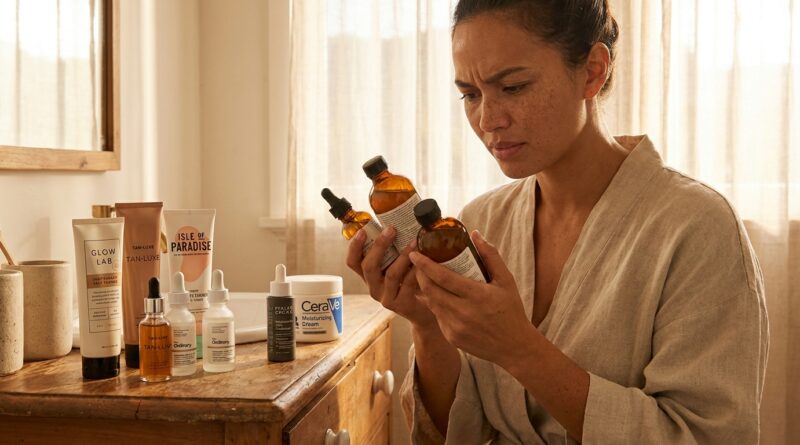
New ‘Skincare-First Tan’ Rule: How To Choose Self-Tanners That Actually Treat Your Skin (Not Just Tint It)
You are not imagining it. Shopping for self-tanner has become weirdly stressful. One bottle promises peptides, another says barrier support, and a third claims it is “skincare first” like that settles everything. If your skin is sensitive, acne prone, or always one bad product away from feeling tight and angry, that marketing can backfire fast. The wrong self-tanner can clog pores, sting compromised skin, grab onto dry patches, and then fade in blotches that somehow show up most clearly in photos. The good news is that skincare infused self tanner safety is not impossible to judge. You just need to ignore the front label for a minute and check what is really doing the work. A good formula should do two jobs at once. It should give even color, and it should support your skin with gentle hydration, a simple ingredient list, and as few irritation triggers as possible.
⚡ In a Hurry? Key Takeaways
- “Skincare-infused” does not automatically mean safer. The full ingredient list matters more than the front-label claim.
- For sensitive or breakout-prone skin, choose fragrance-free or low-fragrance formulas with glycerin, hyaluronic acid, ceramides, or squalane.
- If a self-tanner is packed with drying alcohols, heavy fragrance, or lots of essential oils, expect a higher chance of irritation, rough fade, or clogged pores.
Why the new “skincare-first tan” rule matters
Self-tanner used to be simple. You picked a mousse, lotion, or drops, hoped for the best, and accepted a little mess. Now brands are trying to make fake tan feel more like skin care. In theory, that is a smart move.
DHA, the ingredient that creates the tan effect, can leave skin feeling dry. Dry skin means uneven application. It also means patchy fading. So adding humectants, barrier-support ingredients, and calming agents makes sense.
The problem is that some products are truly built with skin health in mind, while others just sprinkle in one trendy ingredient and call it a treatment product. If you want a practical breakdown of that trend, The New ‘Skincare‑First’ Self-Tanners: Are These Hybrid Glow Products Really Safer For Your Skin? is a useful companion read.
What “skincare-infused” should actually mean
A self-tanner does not need to act like a full serum to be worth buying. But if a brand says it treats skin, a few things should show up in the formula.
Look for real support ingredients
These are the ones that usually make sense in a tanning product:
- Glycerin. Helps pull water into the skin and reduces that dry, tight feeling.
- Hyaluronic acid. Good for temporary plumping and keeping skin from looking papery.
- Squalane. Lightweight moisture support that often suits dehydrated skin.
- Ceramides. Helpful for barrier support, especially if your skin gets irritated easily.
- Panthenol and aloe. Can calm skin and reduce that just-applied sting some people feel.
- Niacinamide. May help with redness and oil balance, though some very sensitive users still prefer to patch test first.
If these ingredients appear fairly high on the ingredient list, that is more promising than seeing them buried near the bottom after fragrance and colorants.
Be careful with “actives” that sound exciting
Some labels throw around acids, retinol-like ingredients, or exfoliating extracts to sound advanced. That can be a problem. Self-tanner and strong exfoliating actives are not always a happy mix. Too much exfoliation can make your color fade faster and more unevenly. It can also irritate skin that is already reactive.
For most people, a tanning product works best when it hydrates and soothes, not when it tries to do six aggressive jobs at once.
How to judge skincare infused self tanner safety in real life
This is where the decision gets easier. Instead of trusting the marketing line, run through a quick label check.
1. Check the first half of the ingredient list
The first several ingredients tell you what the formula is mostly made of. If you see water, DHA, glycerin, and other moisturizing ingredients early on, that is usually a better sign than seeing alcohol and fragrance doing the heavy lifting.
2. Watch for fragrance overload
Fragrance is one of the biggest reasons a “gentle glow” product turns into an itchy regret. A strong tropical scent may make the formula nicer to use, but if your skin is reactive, it can be the very thing that causes redness or breakouts. Unscented or lightly scented tends to be safer.
3. Treat essential oils like a maybe, not an automatic yes
Tea tree, citrus, lavender, and eucalyptus sound clean and skin friendly. They are not always. Essential oils can irritate sensitive skin, especially in leave-on products. A little may be fine for some people. A blend of many is more risky.
4. Be cautious with heavy oils if you break out easily
Not every oil is pore-clogging, and skin varies a lot. But if your face tans tend to trigger bumps, keep an eye on richer oils and waxes, especially if they sit high on the list. Lightweight hydration usually works better for acne-prone users.
5. Patch test like you mean it
This sounds boring until it saves your skin. Apply the tanner to a small area on the jawline, neck, or inner arm. Wait 24 hours if you can. You are looking for redness, bumps, stinging, roughness, or odd color development.
Best formula types by skin concern
For sensitive skin
Go for simple formulas. Fewer extras. Less scent. More barrier support. A lotion or serum-style tanner often works better than a heavily fragranced mousse. Look for glycerin, ceramides, panthenol, and aloe.
Avoid products that brag about strong fragrance, “tingle,” or lots of botanical blends. Those are not automatic dealbreakers, but they raise the chance of irritation.
For acne-prone skin
Facial tanning drops or lightweight gel serums usually make the most sense. They let you control the amount and often layer better with your regular moisturizer. Look for non-greasy hydration and avoid formulas that feel heavy, sticky, or overly occlusive.
Also, remember this part. Patchy fade can mimic bad texture. Sometimes a tanner is not causing breakouts. It is just clinging to dry spots around healing acne.
For dry or dehydrated skin
This is where skincare-first formulas can really help. Dry skin is the main reason self-tan looks tired after day two. Pick a lotion, cream, or hydrating serum tanner with humectants and emollients. The goal is not just a nice first-day glow. The goal is an even fade.
Red flags that a product is more marketing than skin care
Here are the signs I would put in the “pretty bottle, weak argument” category:
- It says “skincare first” but lists fragrance very high.
- It highlights one hero ingredient, but the rest of the formula is basic or drying.
- It promises anti-aging, brightening, pore care, hydration, and body bronzing all at once.
- It has lots of shimmer or instant tint but little mention of barrier-friendly ingredients.
- It gives no clear advice for sensitive or acne-prone skin.
That does not mean the product is bad. It just means the treatment angle may be doing more work in the ad than in the bottle.
Application matters just as much as the formula
Even the safest self-tanner can look rough if you put it on compromised skin.
Do this before tanning
- Exfoliate gently, not aggressively, 12 to 24 hours before application.
- Skip strong acids or retinoids right before tanning, especially on the face.
- Moisturize dry areas like around the nose, chin, elbows, knees, and ankles.
Do this after tanning
- Keep skin hydrated daily so the color fades evenly.
- Do not scrub the skin to “fix” uneven fade on day one.
- Use your stronger active skin care once the tan has settled, not immediately after if you are sensitive.
This is often the missing piece in skincare infused self tanner safety. A decent formula still needs a skin-friendly routine around it.
What to buy if you want the safest bet
If you want a simple rule, buy the self-tanner that acts like a basic moisturizer first and a glow product second. That means:
- Hydrating base
- Moderate DHA level
- Low fragrance
- No long list of flashy actives
- Clear patch-test instructions
For the face, tanning drops mixed into your regular moisturizer are often easier to control than a full-strength dedicated face tanner. For the body, hydrating lotions and milk-style formulas usually suit dry or sensitive skin better than quick-dry mousses.
At a Glance: Comparison
| Feature/Aspect | Details | Verdict |
|---|---|---|
| Hydrating ingredients | Glycerin, hyaluronic acid, squalane, ceramides, panthenol, aloe high enough on the list to matter | Good sign. More likely to tan evenly and fade better |
| Potential irritation triggers | Heavy fragrance, multiple essential oils, lots of drying alcohol, strong exfoliating actives | Use caution, especially for sensitive or acne-prone skin |
| Best format choice | Face drops or lightweight serums for breakout-prone skin, richer lotions for dry skin, simple formulas for reactive skin | Pick based on your skin concern, not the trendiest packaging |
Conclusion
The big shift right now is not that self-tanner suddenly became skin care. It is that brands finally realized people want both. A safe, flattering glow and skin that still behaves itself a week later. That is a fair ask. With the market packed with skincare-first launches and glossy beauty coverage, it is easy to buy fast and choose blind. But if you read past the front label, watch for real hydration support, and avoid common irritation triggers, you can sidestep wasted money, breakout flare-ups, and that patchy fade nobody wants. A good self-tanner should fit into your long-term skin health plan, not fight against it. Sun-safe glow is still the goal. Healthy skin is what makes it look good.