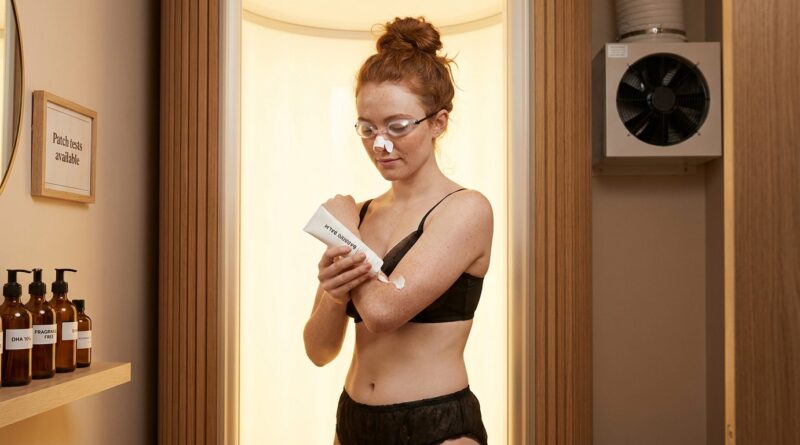
New ‘Barrier-First Spray Tan’ Rule: How To Protect Your Lungs, Eyes And Skin At The Booth Without Giving Up Your Bronze
You switched to spray tans for a reason. You wanted the bronze without the UV damage, and that part still makes sense. But a lot of regular tanners are now asking a very fair question. If I am standing in a booth full of mist every two or three weeks, what exactly am I breathing in, getting in my eyes, or putting on already touchy skin? That worry is not overreacting. It is just common sense. The good news is you do not need to give up your glow to be smarter about it. A barrier-first approach means protecting the parts of you that should not be exposed, before the tan solution ever hits your skin. Think lungs, eyes, lips, inside the nose, and any skin that is irritated, over-exfoliated, freshly shaved, or dealing with eczema. Once you start treating spray tanning like a beauty service that needs a few safety steps, the whole thing gets a lot less stressful.
⚡ In a Hurry? Key Takeaways
- Best practice is simple. Keep the tan off your lungs, eyes, lips, and broken or irritated skin, even though spray tans are still safer than UV tanning.
- Use nose filters or hold your breath during passes, wear proper eye protection if offered, seal lips with balm, and cover any compromised skin with a barrier cream.
- If a booth or salon does not offer ventilation, protective gear, or clear instructions, that is your cue to walk away.
Why the “barrier-first” rule matters
Spray tans are not the same thing as sunbeds. That part is important. Avoiding UV exposure is still a big win for your skin.
But “sunless” does not mean “nothing to think about.” The fine mist in a booth can reach places you do not actually want tanner to go. That includes your eyes, mouth, nose, and lungs. If your skin barrier is already annoyed from scrubbing, retinoids, shaving, waxing, or active breakouts, it can also react more badly than usual.
Barrier-first is just a practical way of saying this. Protect the vulnerable bits first. Then tan.
What people are most worried about
1. Breathing in the mist
This is the big one. Spray tan solutions often contain DHA, the ingredient that reacts with the top layer of your skin to create color. DHA is meant for external use on skin, not for inhalation. The concern gets bigger if you tan often, use enclosed booths, or are in a room with poor airflow.
2. Getting solution in your eyes or on mucous membranes
Your eyes, lips, and inside the nose are more sensitive than normal skin. Even if the product is common in salons, that does not mean those areas should be sprayed directly.
3. Putting tanner on a damaged skin barrier
If your skin is stinging, flaky, raw, sunburnt, freshly exfoliated, or inflamed, it is already telling you it needs a break. Adding spray solution can make irritation worse and can also lead to patchy results.
Your step-by-step spray tan safety tips checklist
Before you book
Start with the salon, not the solution shade chart.
Ask these questions:
- Is the booth or room well ventilated?
- Do you provide nose filters, eye protection, lip balm, and sticky foot covers?
- Can I skip the session if I have irritated or broken skin?
- Do you clean the booth and intake vents regularly?
If the person answering sounds confused by basic safety questions, that tells you plenty.
Before the appointment
Do your prep, but do not go overboard. Many people accidentally wreck their skin barrier trying to get the “perfect base.”
- Exfoliate gently 24 hours before, not right before the session.
- Avoid harsh scrubs, strong acids, and retinoids on the day before and day of your tan if your skin is sensitive.
- Shave or wax well ahead of time, ideally the day before, so your skin can settle.
- Do not go in with sunburn, razor burn, open spots, or active irritation.
- Skip heavy perfume, deodorant, or oil-based lotions unless the salon specifically says otherwise.
Right before you spray
This is where the barrier-first part really kicks in.
- Nose: Use nose plugs or filters if the salon offers them. If not, ask. If there is no option, be extra careful about breath timing during each pass.
- Eyes: Use protective eyewear if available, especially in automatic booths.
- Lips: Put on a decent layer of plain lip balm or petroleum-based ointment.
- Hairline and brows: A tiny amount of barrier cream can stop overdevelopment.
- Hands, nails, cuticles, elbows, knees, ankles: Use a light barrier cream so these drier areas do not grab too much color.
- Irritated skin: Cover small compromised areas with a protective ointment, or skip the tan if the area is widespread.
Do not slather yourself in thick cream head to toe. You are creating selective protection, not a full body raincoat.
Inside the booth or spray room
This is where a lot of the practical spray tan safety tips get ignored.
- Keep your mouth closed during spraying.
- If you are in an automated booth, follow the breathing prompts closely.
- When the mist is actively hitting your face, hold your breath for that brief pass if you can do so comfortably.
- Turn your face away slightly when instructed, rather than breathing straight into the cloud.
- Do not stay in the booth chatting or lingering after the spray is done.
If you have asthma, chronic lung issues, severe allergies, or you are pregnant and want extra reassurance, it is worth checking with a clinician before making spray tans a regular habit.
After the session
Do not forget the booth is only part one.
- Step out and get into fresh air instead of hanging around in the mist.
- If any solution gets in your eyes, rinse them with clean water.
- Wash your hands thoroughly unless the tech has blended them for you and given a timed rinse plan.
- Once your first rinse is done, use a bland moisturizer to support your skin barrier.
- If you notice itching, burning, coughing, wheezing, or a rash, stop using the product and get medical advice if symptoms do not settle.
Who should be extra cautious
Some people should take an even more careful approach.
- Anyone with asthma or breathing conditions
- People with eczema, rosacea, psoriasis, or very reactive skin
- Anyone with recent chemical peels, laser treatments, or over-exfoliation
- People who spray tan very often, such as every two to three weeks all year
If you are in one of these groups, a patch test and a conversation with the salon are smart, not fussy.
Booth tan versus custom spray. Is one safer?
Sometimes, yes. A custom spray with a careful technician can reduce overspray because the product is directed more precisely. A booth can be quick and convenient, but it may expose you to more airborne mist, especially around the face.
The safer option is usually the one with better ventilation, better protective gear, and better technique. Not just the one with the fancier branding.
Red flags that mean “skip this session”
- The booth smells stuffy and the room has poor airflow
- No one offers eye or nose protection
- You are told it is fine to spray over broken, sunburnt, or freshly treated skin
- The technician rushes face passes or ignores your breathing concerns
- You are coughing during or after every session
A tan is optional. Your lungs are not.
What a realistic safer routine looks like
If you love your regular bronze, here is the low-drama version.
- Choose a salon that takes ventilation and protective gear seriously.
- Prep gently the day before, not aggressively on the day.
- Protect nose, eyes, lips, and dry spots before spraying.
- Keep your mouth closed and avoid inhaling the face mist.
- Skip sessions when your skin barrier is angry.
- Moisturize after your rinse and watch for irritation.
That is it. No panic. Just smarter habits.
At a Glance: Comparison
| Feature/Aspect | Details | Verdict |
|---|---|---|
| UV beds vs spray tans | Spray tans avoid UV exposure, but can create inhalation and irritation concerns if done carelessly. | Spray tans are the better choice, with safety steps. |
| Automatic booth vs custom spray | Booths are quick but can mean more airborne mist. Custom sprays may allow better control if the technician is careful. | Pick the setup with better ventilation and protection, not just convenience. |
| Healthy skin barrier vs irritated skin | Calm skin handles spray tanning better. Irritated, broken, or over-exfoliated skin is more likely to sting or react. | If your skin is unhappy, postpone the tan. |
Conclusion
Spray tans still make far more sense than chasing color with UV, but they are not a free pass to ignore the basics. That is why the recent chatter around spray tan safety tips matters. People are finally noticing that “sunless” is not the same as “risk-free,” especially if you are breathing in mist in a small booth or booking sessions every couple of weeks. The fix is not to panic or swear off your bronze. It is to use a calm, barrier-first routine that protects your lungs, eyes, lips, and stressed-out skin before the spray starts. Do that, and you keep the upside of sunless tanning while cutting down on avoidable problems like inhalation, mucous-membrane exposure, and skin flare-ups. For the I Love Tanning crowd, that is the sweet spot. Glow smarter, not harder.