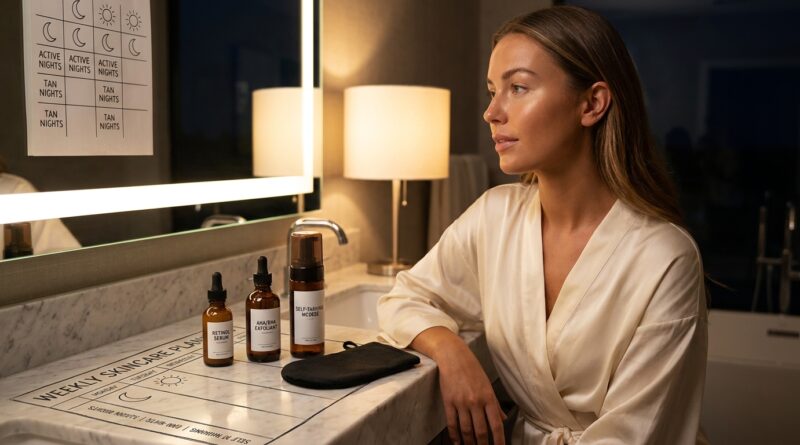
New ‘Retinol-Safe Tan’ Rule: How To Keep Your Self-Tanner Glowing While You Use Strong Actives
You are not imagining it. One week your self-tanner looks smooth and golden, and the next it is clinging to dry patches, fading in weird spots, or stinging the second it touches your skin. That usually happens when retinol, tretinoin, glycolic acid, lactic acid, or salicylic acid enter the picture and nobody warns you that these products speed up skin turnover. Self-tanner needs that top layer of skin to hang around for a few days. Your actives are trying to move it along faster. The fix is not to give up your glow or your skincare goals. It is to stop treating them like they can all go on at once. If you want to know how to use self tanner with retinol and exfoliating acids safely, the short answer is simple. Space them out, protect your skin barrier, and apply tan only when your skin is calm, dry, and not freshly exfoliated.
⚡ In a Hurry? Key Takeaways
- Yes, you can use self-tanner with retinol and exfoliating acids safely, but not on the same night if your skin is sensitive or already dry.
- Pause strong actives 24 hours before and after self-tanner when possible, then restart slowly once the tan has developed and your skin feels normal.
- If tanner stings, looks patchy fast, or leaves you red and itchy, your skin barrier is likely irritated. Stop the actives for a few days and focus on bland moisturizer.
Why retinol and acids mess with your fake tan
Self-tanner works through DHA, short for dihydroxyacetone. It reacts with the outermost dead skin cells and creates that temporary bronze color.
Here is the catch. Retinol, prescription tretinoin, and exfoliating acids help your skin shed old cells faster. That can be great for acne, texture, and fine lines. It is not great for a tan that is literally sitting on the layer those products are speeding off your body.
That is why your tan may:
- fade in two or three days instead of five to seven
- go patchy around the mouth, chin, nose, or neck
- grab onto flaky spots and look darker there
- sting when applied over overworked skin
This does not mean the tanner is bad. It usually means your routine is too crowded.
The new retinol-safe tan rule
If your skin is using strong actives, think of self-tanner as a separate event, not just another layer in your nightly routine.
Rule 1: Do not apply self-tanner right after a strong active night
Freshly exfoliated skin can be more sensitive, more porous in some spots, and more uneven overall. That is a recipe for sting and streaks.
A safer plan is this:
- Stop retinol, tretinoin, and exfoliating acids the night before tanning if your skin is reactive.
- On tanning day, keep your routine simple. Cleanse gently, let skin fully dry, then apply self-tanner.
- Wait until the tan has fully developed before bringing actives back.
Rule 2: Calm skin holds tan better than “perfectly exfoliated” skin
People often over-exfoliate because old tanning advice says to scrub everything off first. That can backfire, especially in fall when skin is already getting drier.
You want smooth skin, not raw skin. Gentle prep wins.
Rule 3: If it stings, stop and rethink the routine
Self-tanner should not feel like a chemical peel. Mild warmth from fragrance or active ingredients in a formula can happen, but stinging is a warning sign. Your barrier may already be irritated.
How to use self tanner with retinol and exfoliating acids safely
A simple weekly schedule that works for most people
If you use actives several times a week, this type of schedule is easier on skin:
- Day 1: Gentle cleanse, moisturizer only
- Day 2: Self-tanner at night
- Day 3: Gentle skincare, no acids if skin feels tight
- Day 4: Resume retinol or tretinoin if skin feels normal
- Day 5: Use an exfoliating acid only if you are not irritated
You do not have to follow that exactly. The big idea is spacing. Give your skin breathing room on both sides of tanning night.
If you use prescription tretinoin
Be more cautious. Tretinoin is stronger than over-the-counter retinol and can make skin peel in a way that shows up fast under self-tanner.
- Skip tretinoin the night before tanning
- Skip it the night of tanning
- Consider waiting one more night if your skin feels dry, tight, or itchy
If your dermatologist told you to use tretinoin on a strict schedule, do not make big changes without asking. But for many people, shifting one or two nights around a tanning application is reasonable.
If you use glycolic, lactic, mandelic, or salicylic acid
These can strip a tan faster, especially on the face, chest, and hands.
- Do not use them right before self-tanner
- Use them sparingly after tanning if you want the color to last
- Spot treat acne areas instead of wiping acid all over freshly tanned skin
The best prep routine before self-tanner
Good prep is less dramatic than old-school tanning hacks suggest.
Do this instead of aggressive scrubbing
- Use a gentle cleanser
- Shave or remove hair at least several hours before tanning if needed
- Lightly smooth rough spots like elbows, knees, ankles, and wrists
- Apply a tiny amount of plain moisturizer only on extra dry areas if your tanner tends to grab there
What you should skip: strong acid pads, rough scrubs, retinol, and anything that leaves your skin pink.
If you use tanning drops, the same rule applies. In fact, many people accidentally wreck their barrier by mixing drops into the wrong kind of moisturizer or layering too much active skincare underneath. If that sounds familiar, read New ‘Tanning Drop Safe Routine’ Rule: How To Keep Your Custom Glow From Wrecking Your Skin Barrier.
What to do after tanning so it lasts longer
Moisturize, but keep it boring
Right after the tan has developed, use a simple, fragrance-light moisturizer. Think comfort, not treatment. This helps slow down that dry, crackly look that makes tan fade unevenly.
Be careful where you restart actives
Your face usually loses tan first because that is where people use the strongest skincare. If you want facial tanner to last, you may need to:
- use retinol fewer nights than usual
- avoid acid toners for a couple of days
- switch to a gentler maintenance product while your tan is fresh
Do not chase fading with more and more tanner
Layering fresh tanner over peeling, irritated skin usually makes things worse. You end up with darker flakes, not a better glow.
Red flags that mean your skin barrier is not happy
Sometimes people think their self-tanner is the problem when their skin was already irritated.
Watch for:
- burning when plain moisturizer touches your skin
- itchy red patches
- shiny tight skin that suddenly flakes
- tiny bumps or rash-like irritation after tanning
If that is happening, stop the actives for a few days. Use a gentle cleanser, bland moisturizer, and sunscreen. Once your skin feels normal again, reintroduce products slowly.
Face vs body: the rules are a little different
On the face
The face usually needs the most caution because this is where tretinoin, retinol serums, acid toners, acne treatments, and vitamin C often pile up.
Use less self-tanner here, not more. And accept that facial tan may fade faster if you are serious about active skincare.
On the body
Many people use acids on the chest, arms, or back for acne or roughness. Those areas can also shed a tan fast. If you use body retinol or body acids, treat them the same way you would facial actives. Space them away from tanning days.
Common mistakes that cause patchy, short-lived tan
- Applying self-tanner right after retinol or an acid peel
- Using too many active products in one week
- Tanning over flaky skin
- Trying to scrub off patchiness with more acids
- Ignoring stinging and pushing through anyway
The good news is this is fixable. Most people do not need a new tanner. They need a calmer routine.
At a Glance: Comparison
| Feature/Aspect | Details | Verdict |
|---|---|---|
| Applying self-tanner on a retinol night | Higher chance of sting, dryness, and faster fading because skin turnover is already ramped up | Not ideal |
| Waiting 24 hours around tanning | Gives skin time to calm down and lets DHA develop on a more even surface | Best for most people |
| Using acids after tanning | Can brighten rough texture but often strips color faster, especially on the face | Use sparingly |
Conclusion
You do not have to choose between smoother skin and a believable glow. You just need better timing. Retinol, prescription tretinoin, and chemical exfoliants are trending hard right now for fall routines, but they make skin more sensitive and more likely to get irritated when you pile everything on without a plan. Self-tanner adds another moving part because DHA only colors the outer layer of skin, which your actives are busy shedding faster. Once you understand that, the whole mystery makes sense. Space out strong products, prep gently, moisturize well, and never ignore stinging or rashy skin. That simple reset can help your tan last longer, keep your barrier calmer, and save you from those red, itchy “what did I do to my face?” moments that send people straight to Reddit and the dermatologist.