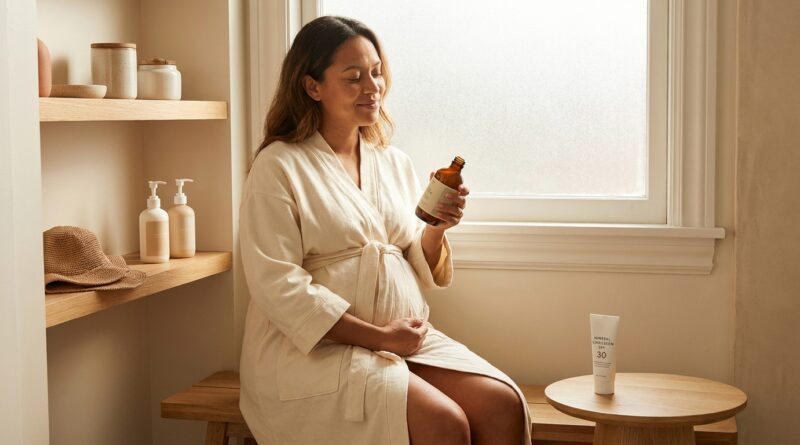
New ‘Pregnancy-Safe Tan’ Rule: How To Keep Your Sunless Glow Baby-Friendly In 2026
Pregnancy has a funny way of turning every ordinary product into a mini moral crisis. The shampoo gets side-eyed. The retinol gets tossed. And yes, the self-tanner suddenly feels suspicious, too. If you are trying to figure out whether a pregnancy safe self tanner is a real thing or just marketing, you are not overreacting. The internet is loud right now, and a lot of the advice floating around mixes very different products into one scary pile.
Here is the plain-English version. Most dermatology guidance continues to treat topical self-tanners made with DHA, short for dihydroxyacetone, as generally low-risk when used on the skin as directed. The bigger concerns are spray tans you can inhale, tanning pills, and melanotan injections, which are not in the same safety bucket at all. So if you want to keep a sunless glow while pregnant or breastfeeding, the goal is not panic. It is choosing the right format, using it carefully, and skipping the products that raise real red flags.
⚡ In a Hurry? Key Takeaways
- Topical DHA self-tanning lotions, mousses, and creams are generally considered the lower-risk option during pregnancy and breastfeeding.
- Skip or be very cautious with spray booths and aerosol mists, because inhaling the product is the part experts worry about most.
- Avoid tanning pills and tanning injections completely. They are not the same as self-tanner and come with much bigger safety concerns.
Why this suddenly feels so confusing
A lot of social posts use the word “toxic” like it explains everything. It does not. A lotion you rub onto your arms is not the same as a cloud of mist you breathe in. A salon spray tan is not the same as a tanning pill bought online. But once all of those get lumped together, it is easy to think every fake tan product is equally risky.
They are not. That is the big thing to remember.
The ingredient at the center of most self-tanners is DHA. It works by reacting with the very top layer of dead skin cells to create that bronzed look. It does not tan your skin the way the sun does. That matters, because UV tanning is a known risk. Self-tanner is a completely different process.
So, is there such a thing as a pregnancy safe self tanner?
For most people, yes. The closest thing to a pregnancy safe self tanner is a standard topical product, like a lotion, gel, cream, or mousse, used on intact skin and according to directions.
That does not mean “proven perfect in every possible scenario.” Pregnancy safety advice almost never works that way. What it means is that available medical guidance generally sees topical DHA as low-risk because absorption through the skin appears limited, especially compared with products that are inhaled or swallowed.
If you want the short answer, here it is. A self-tanning lotion is usually the most comfortable middle ground for pregnant or breastfeeding users who still want color without extra drama.
What experts are more concerned about
Spray tanning booths and aerosol sprays
This is where the caution gets stronger. Not because the tan color itself is magically worse, but because mists can be inhaled. And once you move from skin contact to breathing in particles, the risk picture changes.
If you are pregnant, many doctors and dermatology groups suggest avoiding spray booths unless you can truly prevent inhalation. Realistically, that is hard. Even if you hold your breath for part of it, you are still standing in a cloud.
If you absolutely choose to do it anyway, ask about nose filters, eye protection, lip balm as a barrier, and proper ventilation. But the simpler choice is usually to switch to a lotion or mousse for now.
Tanning pills
Easy one. Skip them. Tanning pills are not considered a safe substitute for self-tanner during pregnancy or breastfeeding.
Tanning injections or melanotan products
Also a hard no. These products come with safety concerns even outside pregnancy, and they are not the same thing as your usual bottle of self-tanner from the beauty aisle.
How to choose a safer self-tanner while pregnant or breastfeeding
You do not need a lab coat for this. Just use a little common sense and a little label reading.
Pick a topical format
Look for creams, lotions, gels, drops you mix into moisturizer, or mousses that you apply with your hands or a mitt. These are usually the easiest options if your goal is lower-risk use.
Avoid breathing it in
If a product sprays into the air, that is your cue to pause. Pump foams are usually easier to control than aerosols. Face mists are convenient, but they are not ideal if inhalation is a concern.
Use it on healthy skin
If your skin is badly irritated, cracked, sunburned, or freshly shaved to the point of stinging, wait a day or two. Intact skin is the safer bet.
Patch test first
Pregnancy can make your skin oddly reactive. A product you have used for years can suddenly cause itching or redness. Test a small area first, especially if the formula is scented.
Keep it simple
If your skin is more sensitive right now, choose formulas with fewer extras. Fragrance-free or gentler formulas may be easier to tolerate.
Ingredients that deserve a second look
DHA gets most of the attention, but it is not the only thing in the bottle. If you are trying to keep your routine calm and boring, which is often the smart move in pregnancy, also check for:
- Heavy added fragrance if smells are making you nauseated or your skin is sensitive
- Strong exfoliating acids if your skin barrier is already cranky
- Retinoids in related body products you might be layering underneath or on top
This is also a good time to remember that “natural” does not automatically mean safer. Essential oils, botanicals, and plant extracts can still irritate skin.
What about breastfeeding?
The same basic idea applies. Topical self-tanners are generally considered low-risk, but use some practical care.
Do not apply self-tanner where a baby’s mouth is likely to touch, especially the nipple and areola area. Let the product dry fully before skin-to-skin contact. And wash your hands well after applying.
If you are tanning your chest, give it extra time to develop and rinse according to directions before feeding. Boring advice, yes. Good advice, also yes.
If your OB shrugs, here is what that probably means
Many OBs are focused on medications, blood pressure, labs, fetal growth, and the big stuff. They may not have a detailed opinion on every beauty product in your bathroom. That can feel dismissive, but often it just means they do not see your self-tanner as a major medical danger compared with products that are clearly unsafe.
If you want more specific guidance, a dermatologist can be more helpful on the skin side of the question.
A practical routine for a low-stress glow
Step 1: Exfoliate gently
Use a soft washcloth or mild scrub, not an aggressive peel.
Step 2: Moisturize dry spots
Knees, ankles, elbows, and wrists still grab color. Pregnancy does not change that.
Step 3: Apply a lotion or mousse in a ventilated room
Open a window if you can. Use a mitt if you like. Take your time.
Step 4: Wash your hands well
Especially around nails and cuticles.
Step 5: Let it dry fully
Loose clothes help. So does patience, annoying as that may be.
If you are also thinking about how self-tanner fits into skin changes as you age, our guide to New ‘Premature Aging Safe Tan’ Rule: How To Protect Your Glow From Fine Lines In Your 30s, 40s And Beyond is worth a read. Different life stage, same basic goal. Keep the glow, skip the unnecessary damage.
Red flags that mean “put it back on the shelf”
Walk away from a product if it:
- Claims to work like a pill or injection
- Has no clear ingredient list
- Comes from a random seller with sketchy packaging or wild promises
- Triggers burning, hives, or obvious irritation during a patch test
You do not need the “strongest” tanner right now. You need the least complicated one that does the job.
At a Glance: Comparison
| Feature/Aspect | Details | Verdict |
|---|---|---|
| Topical self-tanner | Lotions, mousses, creams, and gels with DHA applied to the skin | Generally the lower-risk choice during pregnancy and breastfeeding |
| Spray tan booth or aerosol mist | Main concern is inhaling airborne particles during application | Use caution or avoid if possible |
| Tanning pills or injections | Not the same as self-tanner, with much bigger safety concerns and poor pregnancy fit | Avoid completely |
Conclusion
If the current wave of beauty fear is making you question every bottle you own, take a breath. The clearest takeaway from newer fact sheets and dermatology reviews is not that all sunless tanning is dangerous. It is that the type of product matters a lot. Topical DHA self-tanners are generally seen as low-risk, while spray-booth inhalation, tanning pills, and injections belong in a very different category. That distinction helps cut through the panic. You do not have to choose between feeling reckless and giving up every part of your routine that helps you feel like yourself. A careful, plain old lotion or mousse is often the sensible middle path. And honestly, during pregnancy, sensible is more than enough.