New ‘Allergy-Safe Tan Patch Test’ Rule: How To Stop Mystery Rashes Before Your Next Sunless Glow
You are not imagining it. A self tanner you used for years can suddenly start causing itching, stinging, hives, or a blotchy rash. That is frustrating enough on your body. It feels even worse when it shows up on your face right before an event. With so many formulas now mixing bronzers, fragrance, botanicals, acids, and “skincare” ingredients, figuring out what your skin will tolerate can feel like blind luck. The good news is that there is a much safer way to do this. If you are wondering how to patch test self tanner for allergy, the goal is simple. Test a small amount on the right spot, for the right amount of time, before you commit to a full-body application. A proper patch test will not catch every possible reaction, but it can save you from a miserable mystery rash, wasted money, and a week of hiding under long sleeves.
⚡ In a Hurry? Key Takeaways
- To patch test self tanner for allergy, apply a small amount to a discreet area like the inner arm or behind the knee, then wait 24 to 48 hours before using it widely.
- Test each type separately. Mousse, drops, spray, and face tanning serum can react differently because the ingredient mix is not always the same.
- If you get burning, swelling, hives, or a spreading rash, stop using it and wash it off. A patch test is much cheaper than treating a full reaction.
Why self tanner reactions seem to be happening more often
Dermatologists are seeing more irritated skin in general. That is not just from self tanner alone. It is often the whole routine. Retinol one night. Exfoliating acids the next. Vitamin C in the morning. Then a fragranced tanning mousse on top. Skin can only put up with so much.
Some reactions are true allergies, also called allergic contact dermatitis. Others are irritation. Both can look similar at first. You may notice redness, itching, warmth, dryness, tiny bumps, or a burning feeling.
And here is the tricky part. The culprit is not always DHA, the ingredient that creates the tan. It could be fragrance, preservatives, essential oils, botanical extracts, color guides, or added actives in “skincare tanners.”
What a patch test can and cannot do
A patch test is your early warning system. It helps you spot obvious trouble before you coat your legs, chest, or face.
What it can do:
- Show if a product causes fast irritation like stinging, burning, or redness.
- Catch some delayed reactions that appear over 24 to 48 hours.
- Help you compare which formulas your skin handles better.
What it cannot do:
- Guarantee you will never react on larger areas.
- Identify the exact ingredient causing the issue.
- Replace medical patch testing from a dermatologist if you keep reacting.
How to patch test self tanner for allergy
Step 1: Pick the right test spot
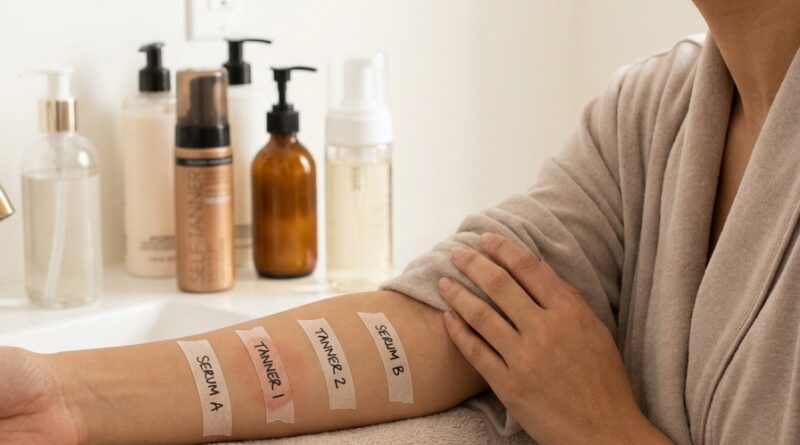
Choose a small, discreet area with skin similar to where you plan to use the tanner. Good options include:
- Inner forearm
- Inside of the elbow
- Behind the knee
- Along the jawline for face tanners, if your skin is not highly reactive
- Behind the ear for face formulas, but only if the product is meant for facial skin
If you are patch testing for body use, the inner arm is often easiest to monitor. For face products, use a small area near the jaw rather than the center of your cheeks.
Step 2: Start with clean, calm skin
Wash the area gently and pat dry. Do not apply the self tanner over skin that is freshly shaved, freshly exfoliated, sunburned, or already irritated. That can give you a false alarm because damaged skin stings more easily.
If your routine includes retinol or acids, give the area a break first. If you need help timing that properly, this guide on New ‘Actives-Friendly Tan’ Rule: How To Use Retinol, Acids And Self Tanner Together Without Trashing Your Skin is worth a look.
Step 3: Apply a small amount exactly as directed
Use the product the same way you plan to use it for real. That matters.
- Mousse or lotion: Apply a pea-sized amount to a patch about the size of a coin.
- Spray: Spray onto a cotton pad first, then dab a small test area so you do not mist half your bathroom.
- Drops: Mix them the same way you normally would with moisturizer, unless the brand specifically says to use alone.
- Hybrid face tanners or tanning serums: Apply a tiny amount to a small section of facial skin.
Do not cover the area with a bandage unless a doctor has told you to. Occluding the skin can increase irritation and is not how most people use self tanner in real life.
Step 4: Wait 24 to 48 hours
This is the part people skip. Then they regret it.
Check the area at a few points:
- After 15 to 30 minutes for immediate burning or itching
- After a few hours for redness or swelling
- At 24 hours for delayed irritation
- At 48 hours for rash, bumps, dryness, or hives that show up later
If your skin stays calm through that window, the product is more likely to be okay for you. Not guaranteed, but much more promising.
Step 5: Watch for these red flags
Stop and wash the area if you notice:
- Burning that does not settle quickly
- Intense itching
- Hives or raised welts
- Swelling
- A sharply outlined rash
- Blistering or oozing
If you get swelling, trouble breathing, or a severe reaction, seek urgent medical care right away.
Best patch test rules for different self tanner types
Mousses
Mousses often dry fast and can contain fragrance and guide color. They are easy to overapply, so use a tiny amount on a small patch. If the guide color contains extra dyes, you may react to that rather than the tanning ingredient itself.
Tanning drops
Drops can be sneaky because people assume they are gentle just because they mix into skincare. They are still active products. Test them with the exact moisturizer you plan to use, since the combination matters.
Sprays
Sprays can irritate both skin and airways. Patch test on skin first, and use them in a well-ventilated area. If a spray makes you cough or your eyes sting, that is useful information too.
Face tanning waters and serums
These often contain extra skincare ingredients like niacinamide, hyaluronic acid, fruit extracts, or fragrance. Nice in theory. Not always nice in practice. If your face is sensitive, patch test near the jawline before using it all over.
Gradual tan lotions
These may seem milder because the color develops slowly, but daily use means repeated exposure. If your skin is going to get annoyed, it may happen after several applications. Keep watching beyond the first day.
Common mistakes that make patch tests less useful
- Testing on broken or over-exfoliated skin
- Trying a new tanner the night before an event
- Ignoring mild itching because “it will probably be fine”
- Testing a body tanner on the arm, then using it on the face
- Mixing a new tanner with three new skincare products at the same time
- Assuming natural or clean formulas cannot irritate skin
If you react, how to narrow down the problem
Keep the product box or ingredient list. That sounds boring, but it matters. If you react to more than one tanner, compare what they share. Fragrance is a common issue. So are certain preservatives and botanical additives.
Take a clear photo of the reaction. Note when you applied the product and when symptoms started. That gives a dermatologist much better clues than trying to remember a week later.
If your skin reacts to multiple beauty products, not just self tanner, ask a dermatologist about formal patch testing. That is the best way to identify specific allergens.
What to do right before your first full application
If your patch test is clear, do one more smart thing. Use the product on a small body area first, like part of your thigh, before doing your whole body. Think of it as a mini dress rehearsal.
Keep the rest of your routine simple that day. Skip harsh scrubs, peels, and strong actives. Wear loose clothing. And do not pile on fragranced body lotions right after unless the brand says it is fine.
At a Glance: Comparison
| Feature/Aspect | Details | Verdict |
|---|---|---|
| Patch test timing | Best done 24 to 48 hours before full use, with checks for immediate and delayed reactions | Worth the wait |
| Best test location | Inner arm or behind the knee for body tanners, jawline for face tanners | Use skin similar to the target area |
| If irritation appears | Wash off, stop use, document symptoms, and seek medical advice if reaction is strong or repeated | Do not push through it |
Conclusion
Sunless tanning should not feel like a gamble. With more people dealing with allergic contact dermatitis and irritation from packed skincare routines and viral beauty products, a simple patch test is one of the easiest ways to protect your skin. It helps you catch problems early, avoid painful reactions, and stop spending money on formulas your skin quietly hates. Whether you use mousse, drops, sprays, or a glow serum that claims to do everything, giving each one a proper test run can save you a lot of grief. Start small, wait the full 24 to 48 hours, and listen to your skin. A good tan is nice. A calm, comfortable skin barrier is better.