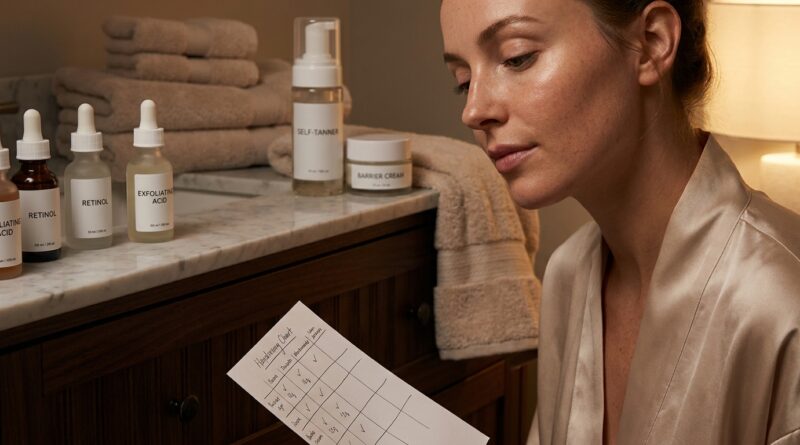
New ‘Retinol-Season Tan’ Rule: How To Use Self‑Tanner Safely When You’re On Strong Actives
You finally get your skin routine working. The breakouts calm down, the texture smooths out, the dark marks start to fade. Then you reach for self-tanner and suddenly everything goes sideways. It stings. It grabs onto dry spots. It fades in weird patches around your mouth, nose, knees, or wrists. If you have been wondering, can you use self tanner with retinol and exfoliating acids, the short answer is yes. You just cannot treat it like a normal tanning routine. Strong actives speed up cell turnover and can weaken your skin barrier, which makes DHA-based tanner more likely to cling, fade fast, or irritate skin. The fix is not giving up your glow or your retinoid. It is timing. If you pause the strongest actives around tanning day, moisturize the right way, and avoid applying tanner over angry skin, you can keep your skincare progress and still get a believable, even sunless tan.
⚡ In a Hurry? Key Takeaways
- Yes, you can use self tanner with retinol and exfoliating acids, but you should pause strong actives 24 to 48 hours before and after tanning if your skin gets sensitive or patchy.
- Apply self-tanner only on calm, hydrated skin. Avoid freshly exfoliated, peeling, stinging, or irritated areas.
- If you use prescription tretinoin, strong AHAs, BHAs, or brightening acids often, expect facial tan to fade faster and plan for gentler, more frequent touch-ups instead of heavy reapplication.
Why retinol and self-tanner can fight each other
Self-tanner works by reacting with dead skin cells on the surface. Retinol, tretinoin, glycolic acid, lactic acid, salicylic acid, and some brightening products all speed up turnover or loosen those surface cells. That is great for smoother-looking skin. It is not so great for a long-lasting tan.
When your routine is strong, three things usually happen. First, your tan fades faster. Second, it can go uneven because dry patches hold more color. Third, irritated skin can sting when DHA touches it.
That is why the new rule is simple. Treat tanning like an event in your skincare calendar. Do not just slap it on after your usual acid night and hope for the best.
So, can you use self tanner with retinol and exfoliating acids?
Yes. Most people can. But the safest and best-looking way is to separate tanning from your strongest active nights.
The basic rule
Pause retinoids and exfoliating acids at least 24 hours before self-tanner on the body. For very sensitive skin, go 48 hours. Then wait another 24 hours after applying self-tanner before restarting. If you are using prescription tretinoin, tazarotene, high-strength glycolic acid, or frequent peel pads, the longer end of that range is usually smarter.
Why the pause helps
It gives your skin barrier time to settle down. It also keeps the top layer of skin from shedding too fast right when the tan is trying to develop.
How to schedule your products without ruining your tan
If you use retinol 2 to 4 nights a week
This is the easiest setup. Skip your retinol the night before tanning. Tan the next day on clean, dry skin. Skip retinol again that night. Restart the following night if your skin feels normal.
If you use tretinoin or tazarotene nightly
You may need to take one or two nights off before tanning and one night off after. If your dermatologist gave you a strict prescription plan, it is worth asking how much flexibility is okay for special events. One skipped night usually matters less than a full barrier flare-up.
If you use acids most nights
Press pause. If you exfoliate heavily right before self-tanner, the color often develops unevenly and fades in a hurry. Think of acids as prep tools, not same-day tools. Exfoliate earlier, then let skin calm down before tanning.
The biggest mistake: tanning over compromised skin
If your skin is red, burning, peeling, tight, or flaky, self-tanner is not the move that day. It will not hide barrier damage. It usually highlights it.
Watch for these signs:
- Stinging when you apply moisturizer
- Visible peeling around the mouth or nose
- Rough, sandpapery texture on arms or legs
- Recent overuse of scrubs, acids, or retinoids
If you notice any of that, spend a few days repairing first. Use a bland moisturizer, skip strong actives, and let your skin feel normal again.
Best prep for self-tanner when you use strong actives
1. Exfoliate gently, not aggressively
You still want smooth skin. You just do not want raw skin. Use a soft washcloth, mitt, or very gentle exfoliating step 24 hours before tanning, not right before. Avoid stacking a scrub on top of acid pads or a retinoid night.
2. Moisturize the dry zones
Ankles, knees, elbows, wrists, hands, and around the nostrils tend to grab color. Apply a light layer of moisturizer there before tanner. Not thick enough to block it, just enough to buffer it.
3. Keep the rest of skin product-light
Heavy oils or rich creams all over can interfere with an even application. You want skin that is hydrated but not slippery.
4. Be picky about your shower products
After tanning, harsh body wash can strip your color faster, especially if your skin is already dry from actives. If you want your glow to last, read New ‘Tan-Safe Shower’ Rule: How To Pick Body Wash And Moisturizer That Won’t Strip Your Sunless Glow. It is a smart follow-up if your tan always seems to disappear by day three.
Face tanning is trickier than body tanning
This is where most people struggle. The face usually gets the strongest actives, so it sheds faster and reacts more easily.
What to do instead
Use less product. Pick a facial tanning mist, drops, or a very light mousse. Skip broken-out, peeling, or irritated areas. Buffer around the eyes, corners of the nose, and mouth with moisturizer if those spots get dry from tretinoin or acids.
Also, expect your face tan to fade quicker than your body tan. That is normal. A tiny touch-up is better than one heavy coat.
If you use brightening serums
Vitamin C is usually less of a problem than exfoliating acids, but strong acid-based brighteners can still make skin more reactive. If a serum tingles or leaves you dry, treat it like an active and pause it around tanning day.
What ingredients are most likely to cause trouble?
- Prescription tretinoin and tazarotene
- Retinol and retinaldehyde
- Glycolic acid and lactic acid
- Salicylic acid if used often or at high strength
- Peel pads and exfoliating toners
- Benzoyl peroxide, especially if your skin is already dry
Not everyone reacts the same way. Some people can tan with almost no schedule change. Others need a full 48-hour buffer. Your skin tells the truth faster than any label does.
A practical tanning schedule that works for most people
Option 1: Mildly active routine
- Day 1 night: Skip retinol or acids
- Day 2: Apply self-tanner
- Day 2 night: Skip strong actives again
- Day 3 night: Resume if skin feels fine
Option 2: Sensitive skin or prescription retinoid user
- Day 1 and Day 2: Pause retinoid and acids
- Day 3: Apply self-tanner
- Day 3 night and Day 4: Focus on hydration only
- Day 4 or Day 5: Restart actives slowly
How to tell if your tan is failing because of actives
If your color looks great on day one but vanishes by day three, actives may be speeding up fade. If it looks patchy from the start, your skin was likely too dry, too exfoliated, or too irritated before application.
Another clue is where the problem shows up. Around the mouth, chin, nose, brows, and between fingers are classic spots if you use strong skincare or over-wash after tanning.
When to skip self-tanner completely
Sometimes the best move is waiting a few days.
- After a chemical peel
- After microneedling or laser
- When skin is sunburned
- During an eczema flare
- If your barrier is cracked, hot, or painful
That is not being overly cautious. It is common sense. Self-tanner is cosmetic. Barrier damage is a skin health issue.
At a Glance: Comparison
| Feature/Aspect | Details | Verdict |
|---|---|---|
| Using self-tanner with retinol | Usually fine if you pause retinol 24 to 48 hours before and about 24 hours after tanning, especially on sensitive areas. | Yes, but schedule it carefully. |
| Using self-tanner with exfoliating acids | AHAs and BHAs can over-exfoliate, cause stinging, and make tan fade faster or grab unevenly. | Possible, but avoid same-day use. |
| Tanning over dry or irritated skin | Color clings to flakes, looks blotchy, and may sting on contact if the barrier is compromised. | Skip it until skin calms down. |
Conclusion
You do not have to choose between smart skincare and a safe glow. That is the good news. Right now, a lot of people are using prescription retinoids, over-the-counter retinol, nightly acids, and strong brightening routines, while UV damage and risky tanning trends keep coming back into the conversation. The sweet spot is simple. Respect your skin barrier, give strong actives a short pause, and treat self-tanner like something you plan for, not something you squeeze in after an acid night. Done right, you can stay on track with anti-aging or acne treatment and still get even, believable color without burning, blotchiness, or undoing months of hard-won skin progress.