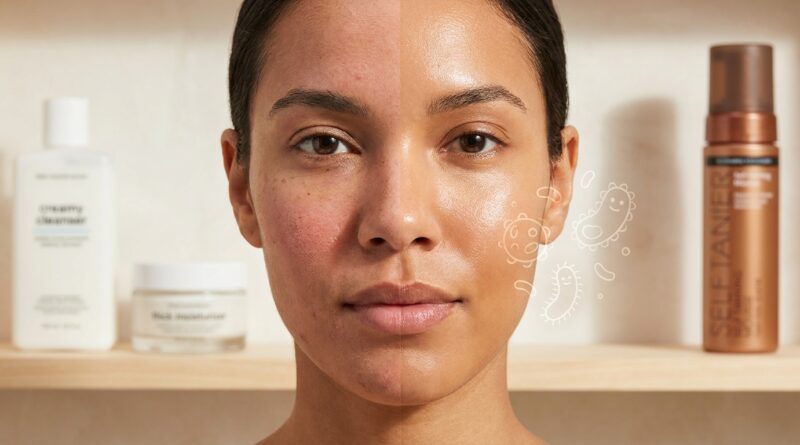
New ‘Microbiome-Safe Tan’ Rule: How To Keep Your Skin Flora Happy When You Fake A Glow
You get the tan just right, then your skin starts acting like it wants no part of the plan. Tight cheeks. Itchy legs. Random little bumps. Maybe your usual lotion suddenly stings. That is frustrating, especially when you already did all the “right” prep like shaving, exfoliating, and carefully layering self tanner. The problem is that a perfect-looking glow can hide a not-so-happy skin barrier underneath. If you have been wondering how to protect skin barrier and microbiome when using self tanner, the answer is not to stop tanning altogether. It is to stop overworking your skin. Too many acids, scrubs, retinoids, and frequent DHA applications can leave skin dry, reactive, and more likely to turn patchy anyway. A microbiome-safe routine helps you keep the bronze while avoiding the irritated, stripped feeling that makes self tanning harder in the long run.
⚡ In a Hurry? Key Takeaways
- To protect your skin barrier and microbiome when using self tanner, cut back on harsh exfoliation, over-shaving, and back-to-back active skincare.
- Use a simple routine: gentle cleanse, light prep, self tan on calm skin, then moisturize consistently to reduce patchiness and irritation.
- If your skin burns, stings, or stays itchy, pause tanning and actives for a few days. Barrier damage can get worse if you keep pushing through.
Why self tanner can upset your skin
Self tanner is not automatically bad for your skin. The trouble usually comes from everything wrapped around it. A lot of people exfoliate hard, shave close, use acids to smooth texture, apply retinoids at night, then add DHA on top. That is a lot.
Your skin barrier is the outer layer that helps keep moisture in and irritants out. Your microbiome is the mix of helpful bacteria living on your skin. Both do better when your routine is steady and not too harsh.
When you strip the skin over and over, it can become dry, inflamed, and easier to upset. That can show up as itching, redness, rough patches, or a tan that grabs unevenly.
The new microbiome-safe tan rule
Think of it this way. Prep enough for an even glow, but not so much that your skin has to recover from the prep itself.
A good rule is this: if your skin feels squeaky, tight, hot, or stingy before tanning, it is not ready for more exfoliation or more product. Calm skin tans better.
If this topic sounds familiar, it pairs well with New ‘Microbiome-Safe Tan’ Rule: How To Protect Your Skin’s Good Bacteria When You Self Tan All Summer, which digs into why day-three itch and patchiness often start well before the tanning mitt comes out.
How to protect skin barrier and microbiome when using self tanner
1. Stop stacking every exfoliant at once
You do not need a scrub, an acid pad, a peel, and a rough mitt all in the same 24 hours. Pick one gentle method. For most people, that means a soft washcloth or a mild exfoliating product used sparingly.
If you are using glycolic, salicylic, lactic acid, or retinoids, avoid piling them on right before tanning. Over-exfoliated skin is more likely to sting and tan unevenly.
2. Be smarter about shaving
Shaving already exfoliates. If you shave and then scrub aggressively, you are doubling up. Try shaving gently with a fresh razor and a cushioning shave product. Then give your skin a little breathing room before self tanner if possible.
If your legs are especially sensitive after shaving, moisturize first and tan later rather than forcing it all into one rushed session.
3. Apply self tanner to calm, dry skin
Calm is the goal. Not freshly irritated. Not red. Not post-peel. Not right after using a strong acne wash all over your body.
Your skin should be clean and fully dry. If you need moisturizer, use a light layer only on drier spots like elbows, knees, ankles, and wrists so the tan does not cling.
4. Keep the rest of your routine boring
This is one of those moments where boring wins. Use a gentle cleanser. Use a plain moisturizer. Skip fragranced body products if your skin is already acting up. You are trying to lower the total stress load on your skin.
Fancy routines can wait a day or two.
5. Moisturize daily after tanning
This is where many people lose the plot. They focus on getting the tan on, then forget to support the skin underneath. Daily moisturizer helps maintain the barrier, reduces flaky fade, and can help the tan wear off more evenly.
Look for simple barrier-friendly ingredients like glycerin, ceramides, squalane, colloidal oatmeal, or hyaluronic acid. If your skin is very sensitive, go fragrance-free.
What to pause if your skin is getting reactive
If your skin has started feeling weirdly hot, itchy, or bumpy, do a quick routine audit. The usual suspects are:
- Physical scrubs used too often
- Acid toners or body lotions every day
- Retinoids layered too close to tanning night
- Harsh soaps or strongly fragranced body wash
- Frequent tanning without recovery days
Take a few days off the extras. Focus on cleansing gently and moisturizing well. Once your skin feels normal again, restart with fewer steps.
Signs your skin barrier may be struggling
You do not need a microscope to spot a barrier problem. Common signs include:
- Tightness after showering
- Itching that gets worse after tanning
- Products that suddenly sting
- Dry, rough, or flaky patches
- Redness or sensitivity that lingers
- Patchy fade even when your application was careful
If that sounds like you, your skin is asking for less friction, fewer actives, and more moisture.
A simple microbiome-safe tanning routine
The day before
Use one gentle exfoliation step if needed. Shave carefully if you shave. Skip strong acids and retinoids.
Tanning day
Cleanse with a mild body wash. Make sure skin is dry. Add a little moisturizer to dry zones only. Apply self tanner evenly. Let it develop as directed.
The next few days
Moisturize every day. Avoid going back in with scrubs just because you want the tan to fade “cleaner.” Let your skin settle. If you use actives on your body, reintroduce them slowly, not all at once.
When to be extra careful
Some skin types need a gentler approach from the start. Be more cautious if you have eczema, rosacea, very dry skin, recent sunburn, or a history of contact irritation.
In those cases, patch testing matters. Try the tanner on a small area first. And do not apply over broken, inflamed, or freshly irritated skin.
At a Glance: Comparison
| Feature/Aspect | Details | Verdict |
|---|---|---|
| Exfoliation before tanning | Gentle, limited exfoliation helps even application. Heavy scrubbing plus acids can damage the barrier. | Less is usually better |
| Actives like retinoids and body acids | Useful in general skincare, but applying them too close to self tanning can raise irritation and patchiness. | Pause around tanning days |
| Daily moisturizer | Supports the barrier, keeps skin comfortable, and helps the tan fade more evenly. | Worth doing every day |
Conclusion
You do not have to choose between glowy skin and calm skin. The trick is not doing more. It is doing less, more carefully. Right now, more glow-obsessed tanners are stacking acids, retinoids, scrubs, and frequent self tan applications than ever, and that can quietly damage the skin barrier and disrupt the microbiome, especially on dry or sensitive skin. A microbiome-safe game plan helps you stay bronzed while cutting down on irritation, flares, and sensitization. That means a tan that not only looks better, but feels better too. Take care of what is underneath the color, and your skin will usually reward you for it.