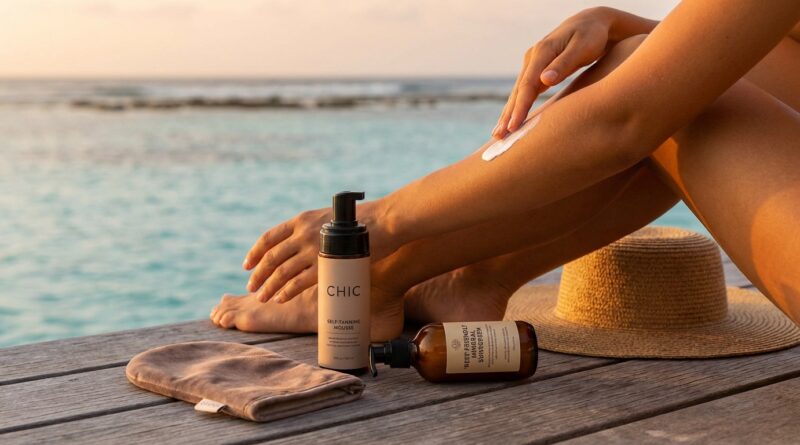
New ‘Reef‑Safe Tan Routine’: How To Pair Your Self‑Tanner With Ocean‑Friendly SPF Without Sabotaging Your Skin
You did the fake tan, the color looks great, and then the sunscreen stress starts. That part is frustrating. A self-tan gives you glow, not UV protection, and the “reef-safe” label that should make shopping easier often does the opposite. Some formulas feel thick, some leave a white cast, and some pill the second they hit freshly moisturized skin. If you have ever worried that your SPF will streak your tan, clog your pores, or make you look ashy in holiday photos, you are not overthinking it. The good news is that you do not need a complicated routine. You just need to know what “reef-safe” really means, which sunscreens are less likely to mess with self-tanner, and how to layer them in the right order. Once you get that part right, you can keep your color, protect your skin, and feel a lot less confused in the sunscreen aisle.
⚡ In a Hurry? Key Takeaways
- Self-tanner does not protect against sun damage, so you still need broad-spectrum SPF 30 or higher every day.
- For a reef safe sunscreen for self tanners, pick a mineral formula with zinc oxide, let your tan fully develop first, and apply SPF by pressing and smoothing, not rubbing aggressively.
- “Reef-safe” is not a tightly controlled label, so check the ingredient list and focus on reliable sun protection first, then cosmetic finish second.
First, the big myth: a fake tan is not sunscreen
This catches a lot of people out. A sunless tan can make skin look bronzed, but it does not create meaningful protection from UVA or UVB rays. If you skip sunscreen because your skin looks darker, you are still at risk of burning, premature aging, and long-term sun damage.
That matters even more in warmer weather, when people are outside longer and often reapplying body products on the go. The glow is cosmetic. The SPF is the protection. You need both if you want the look without the damage.
What “reef-safe” actually means, and why the label is confusing
Here is the messy part. “Reef-safe” sounds official, but in many places it is mostly a marketing phrase, not a hard scientific certification. Brands may use it to suggest a formula is better for marine life, but there is no single universal standard that makes the claim foolproof.
What shoppers usually mean by reef-safe
Most people are looking for sunscreens that avoid ingredients such as oxybenzone and octinoxate, which have been restricted in some locations including Hawaii due to concerns about coral reefs and marine ecosystems.
That is a reasonable starting point, but it does not mean every product labeled “reef-safe” is automatically harmless to the ocean, or even that it is the best sunscreen for your skin. The smarter move is to look for broad-spectrum protection, water resistance if you are swimming, and a formula you will actually apply generously.
Why mineral sunscreen gets recommended so often
Mineral sunscreens usually use zinc oxide, titanium dioxide, or both as active ingredients. They are often suggested as a more ocean-conscious option, especially when they avoid the chemical filters most often criticized in reef discussions.
For self-tanners, zinc-based sunscreens can also be a good fit because they tend to sit on top of the skin rather than relying on the same kind of chemical absorption process. That said, texture matters. Some mineral formulas are elegant. Others are chalk in a tube.
How to choose a reef safe sunscreen for self tanners
If your goal is to protect your skin without wrecking your glow, do not shop by buzzword alone. Use this checklist instead.
1. Look for broad-spectrum SPF 30 or higher
Broad-spectrum means protection against both UVA and UVB rays. SPF 30 is a solid baseline for daily wear. If you are on the beach, poolside, boating, or spending hours outside, SPF 50 is often the better call.
2. Check the active ingredients
If you want the most common version of “reef-safe,” start with mineral filters. Zinc oxide is the star player here. Titanium dioxide can also work well. Many people find zinc-only formulas less irritating, especially on sensitive or breakout-prone skin.
3. Pick the right finish for your skin type
If sunscreen makes you shiny or breaks you out, you are less likely to use enough. For oily or acne-prone skin, look for lightweight lotion, gel-cream, or fluid mineral formulas marked non-comedogenic. For dry skin, creamier textures sit better and are less likely to cling to self-tan patches.
4. Tinted formulas can help with white cast
This is one of the easiest tricks in the book. A tinted mineral sunscreen can blend more naturally over a sunless tan and reduce that gray, dusty look that some untinted zinc formulas leave behind. Just test it first. Some tints lean too orange, too pink, or too dark.
5. Water resistance matters on holiday
If you are sweating, swimming, or lying by the pool, “reef-safe” means very little if the product slides off in 20 minutes. Look for 40 or 80 minutes of water resistance and reapply on schedule.
How to layer self-tanner and mineral SPF without streaks
This is the part nobody explains well. The trick is timing and touch.
Night before: apply self-tanner to clean, prepped skin
Exfoliate first. Moisturize dry spots like elbows, knees, ankles, and wrists. Apply your self-tanner evenly and let it develop fully according to the brand instructions. Ideally, do this the night before you plan to be outside.
Do not pile sunscreen on top of fresh, developing tan. That is when streaks happen.
Morning after: use a light moisturizer only if you need it
If your skin feels dry, use a thin, fast-absorbing moisturizer and let it sink in completely. Heavy oils can break down self-tan unevenly and make sunscreen slide around.
Then apply sunscreen gently
Instead of rubbing hard like you are trying to polish a table, spread the sunscreen in sections and smooth it on with light passes. On the body, pressing and gliding works better than aggressive back-and-forth rubbing. On the face, pat and blend.
Give it a minute or two to settle before getting dressed. That reduces transfer and pilling.
Use enough product
This is the hard truth. A tiny amount of sunscreen may look prettier, but it does not protect properly. For the face and neck, many dermatologists suggest roughly two finger lengths of product. For the body, you need a generous amount, around a shot-glass worth for full-body coverage.
Common mistakes that ruin the finish
Applying SPF before the tan has developed
If your self-tanner is still processing, sunscreen can interfere with the finish. Let the tan develop, rinse if the product requires it, then start your SPF routine.
Using very oily sunscreen over patchy skin
Oil-rich formulas can break down fading tan unevenly, especially around hands, feet, and creases. If your tan is already patchy, use a gradual tan lotion to refresh it rather than trying to hide the issue with more sunscreen.
Rubbing in reapplication too aggressively
Reapplying is essential, but do it carefully. For the face, a mineral SPF stick or tinted powder sunscreen can be useful on top of makeup, though powders should not be your only layer for long outdoor days. For the body, reapply lotion with a gentle hand.
Forgetting friction points
Seat belts, swimsuit straps, beach towels, and tight clothing can wear away both self-tan and sunscreen. Pay extra attention to shoulders, chest, and thighs if you are active outdoors.
What to do if mineral sunscreen looks chalky on your tan
You are not imagining it. Some formulas really do sit visibly on bronzed skin.
Try these fixes:
- Switch to a tinted mineral sunscreen.
- Apply in thin sections instead of one giant blob.
- Warm the product between your hands first.
- Use a hydrating but non-greasy base if your skin is dry.
- Choose fluid or serum-style mineral SPFs, which often leave less cast than thick beach creams.
If a sunscreen always pills, cakes, or leaves ghostly streaks, do not force it. The best sunscreen is the one you will wear correctly and reapply.
Face vs body: do not assume one product does both well
A lot of people try to use one sunscreen everywhere to keep things simple. Fair enough. But if you self-tan your face or use bronzing drops, a dedicated facial SPF often sits better and is less likely to clog pores.
For the body, you may want something more water-resistant and budget-friendly so you can apply enough. For the face, prioritize comfort, finish, and compatibility with makeup or facial tanner.
A simple routine that works
The night before sun exposure
Exfoliate. Moisturize dry areas. Apply self-tanner. Let it develop fully.
The next morning
Rinse off guide color if needed. Apply a light moisturizer if your skin feels dry. Wait a few minutes. Then apply broad-spectrum mineral SPF 30 or 50.
During the day
Reapply every two hours, and after swimming or sweating. Wear a hat, sunglasses, and cover-up when you can. Sunscreen is important, but it is not a force field.
At a Glance: Comparison
| Feature/Aspect | Details | Verdict |
|---|---|---|
| Self-tanner protection | Adds color only. Does not provide reliable UVA or UVB protection. | Never use it in place of sunscreen. |
| Mineral “reef-safe” SPF | Often uses zinc oxide or titanium dioxide and may avoid filters like oxybenzone and octinoxate. | Best starting point, but still check ingredients and finish. |
| Layering with a tan | Apply SPF only after the self-tan has fully developed, then smooth on gently and reapply carefully. | This gives you the best shot at glow plus protection. |
Conclusion
You do not need to choose between keeping your glow and protecting your skin. The real fix is simpler than the marketing makes it seem. Treat “reef-safe” as a starting point, not a guarantee. Focus on broad-spectrum protection, mineral filters if that fits your values and skin, and a texture you will actually use enough of. Most of all, remember that a sunless tan is just color. It is not armor. With a little planning, you can head into warmer weather and vacation season with a routine that feels low-stress, looks good, and helps you avoid the very real mistake of under-protecting bronzed skin. That means fewer burns, less confusion in the sunscreen aisle, and a much better chance of enjoying your glow without paying for it later.