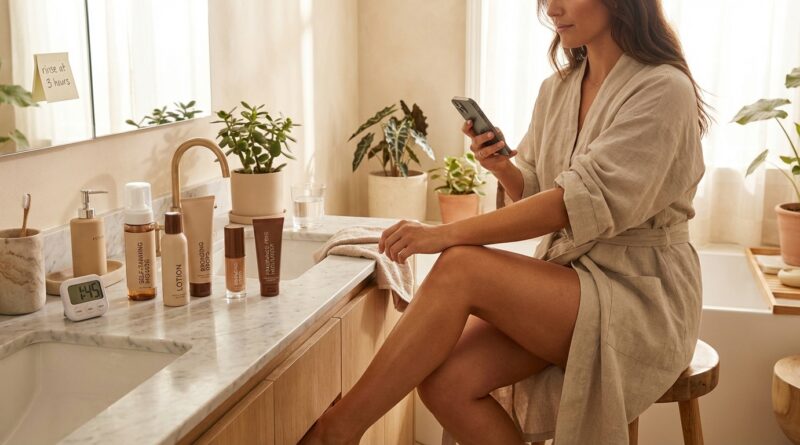
New ‘Patch-Proof Glow’ Rule: How Long To Really Leave Self-Tanner On Before It Starts Damaging Your Skin
If you have ever ignored the label on your self-tanner because TikTok said “leave it on all night for extra color,” you are not alone. It sounds harmless. More time should mean more glow, right? Not really. For most self-tanners, there is a point where the color has already developed and the only thing that keeps happening is your skin getting drier, tighter and more irritated. That is why people end up with a tan that looks great for a day or two, then fades in patches like cracked paint. If you want the simple answer to how long should you leave self tanner on for safe even tan, it is this: follow the product’s stated rinse window, and do not assume longer means darker. In most cases, that means around 1 to 8 hours depending on the formula. After that, you are usually risking your skin barrier more than helping your color.
⚡ In a Hurry? Key Takeaways
- For a safe, even tan, leave self-tanner on only as long as the label says. Usually 1 to 8 hours depending on the product type.
- If you want a deeper result, use a darker formula or apply another layer later. Do not just keep the first coat on forever.
- Overdoing wear time can dry out skin, weaken your barrier and cause the blotchy, flaky fade people often blame on the product.
The new rule people actually need
The smartest rule is boring, but it works. Rinse when the brand tells you to rinse.
Self-tanner does not work like hair dye. It is not endlessly building deeper color hour after hour. The active ingredient, usually DHA, reacts with the very top layer of dead skin cells. That reaction starts fairly quickly and keeps developing for several hours. But once the useful contact time has passed, leaving the product sitting there longer often means extra dryness from the formula, not extra payoff.
That is the part social media clips leave out. Your skin pays for that “just in case” extra time.
How long should you leave self tanner on for safe even tan?
Here is the practical breakdown.
Mousse self-tanner
Most mousses are designed to stay on for about 4 to 8 hours before rinsing, unless they are marked express. If it says 6 hours, do 6 hours. Sleeping in it when the instructions say otherwise is not a beauty hack. It is just more time for drying ingredients and bronzer residue to sit on your skin.
Express self-tanner
These are the products with timing like 1 hour for light, 2 hours for medium, 3 hours for dark. Treat those numbers seriously. They are built around timed development. Going way past the window can push you into dryness and uneven wear, especially around hands, feet, knees and elbows.
Self-tan drops
Drops are different because they are usually mixed into your moisturizer or serum and left on. In that case, the “timing” is about how often you apply them, not when you rinse. More drops does not always mean better results. Too much can leave your face looking muddy or patchy, especially if your skin is already dehydrated.
Self-tan lotions
These often sit on skin for 6 to 8 hours before rinsing, though some gradual tanners are meant to stay on with no rinse. Again, read the directions. A rinse-off lotion and a gradual daily lotion are not the same thing.
Why leaving it on too long backfires
This is where the “patch-proof glow” idea falls apart.
Many self-tanners contain alcohols, fragrance, bronzers and other ingredients that can feel fine for a few hours but become irritating when left on too long. The longer they sit, the more likely your skin feels dry, rough or itchy. If your barrier gets stressed, the tan does not fade neatly. It grabs in some spots, sheds early in others and turns that smooth bronze into a weird reptile-like breakup.
People often blame the tanner itself when the real problem was over-wearing it.
What pros do instead of sleeping in every formula
If a pro wants a darker result, they usually do one of three things.
- They choose a darker shade to begin with.
- They prep dry areas better so the tan takes evenly.
- They add another light application later instead of stretching the first one too long.
That is the big shift. Better formula choice beats marathon wear time.
Signs you are leaving self-tanner on too long
Your skin usually tells you before the tan does.
- Tightness after rinsing
- Itching or stinging
- Rough texture on arms, chest or legs
- Darker buildup on elbows, ankles, hands or neck
- A fade that turns scaly or patchy within a few days
If that sounds familiar, your next test is easy. Use the same product again, but this time stick exactly to the rinse time on the bottle. Then compare how it wears over the next week.
How to get a darker tan without damaging your skin
Prep the dry spots first
Use a small amount of plain moisturizer on elbows, knees, ankles, wrists and knuckles before you tan. That helps stop those areas from going too dark.
Apply on dry, clean skin
No heavy oils. No sticky leftover lotion unless the brand says it is fine. Self-tanner likes a clean surface.
Use the right formula for your goal
If you always want more depth, move up from light to medium, or medium to dark. Do not try to force a light formula into acting like a dark one.
Moisturize after rinsing
This is one of the easiest ways to protect your barrier and keep fading more even. Hydrated skin holds onto that top layer better.
Think about sunscreen too
Once your tan looks good, the next problem is often SPF. If that part confuses you, New ‘Reef‑Safe Tan Routine’: How To Pair Your Self‑Tanner With Ocean‑Friendly SPF Without Sabotaging Your Skin is worth a read. It helps you protect your skin without wrecking the finish you just worked for.
Face versus body: the timing is not always the same
Your face is usually more reactive than your legs or arms. It may also already be dealing with exfoliating acids, retinoids, acne products or shaving. That means over-leaving self-tan on the face can show up faster as dryness, texture and uneven fade.
If your face tan always goes crusty around the nose or chin, it is smart to shorten wear time a bit within the brand’s safe range, or switch to a drop formula mixed with moisturizer.
The no-nonsense timing guide
If you want one simple cheat sheet, use this.
- Express mousse: 1 to 3 hours, based on the brand’s shade guide
- Standard mousse: usually 4 to 8 hours
- Rinse-off lotions: usually 6 to 8 hours
- Gradual tan lotions: leave on, reapply as directed
- Face drops: leave on, but control depth by number of drops and frequency
The key point is this. Safe, even color comes from the right formula and timing, not from breaking the timing rules.
At a Glance: Comparison
| Feature/Aspect | Details | Verdict |
|---|---|---|
| Leaving tanner on longer than directed | May slightly deepen color in some cases, but more often adds dryness, irritation and uneven fade | Not worth it |
| Following the product rinse window | Lets the DHA develop as intended while reducing unnecessary stress on the skin barrier | Best option for a safe even tan |
| Getting darker with a second planned application | Gives more control and usually fades better than one overextended session | Smarter than sleeping in every formula |
Conclusion
You do not need to fall for the “leave it on as long as possible” trend to get a better tan. In fact, that is often exactly how people end up with dry skin, a rough feel and that patchy fade they hate a week later. The clear rule is simple. Leave mousse, drops and lotions on only as long as the product is meant to be worn, then rinse or leave on as directed. That one habit protects your skin barrier, helps your color wear more evenly and gives you a much better shot at a smooth, believable glow. Ignore the viral hacks. Your skin will look better for it.