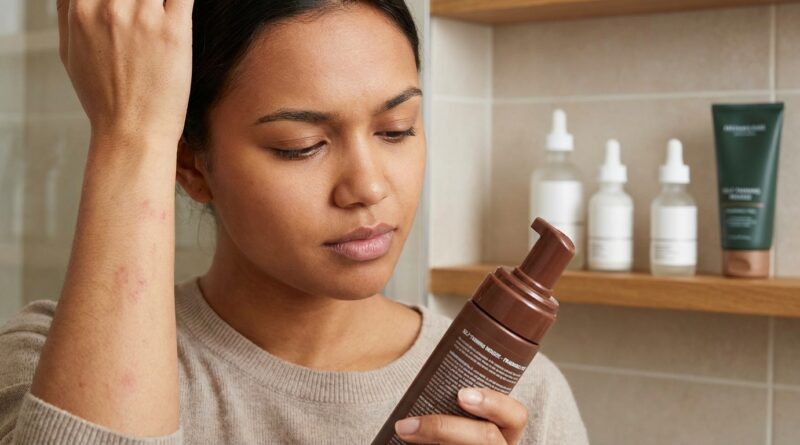
Why Your Self-Tanner Suddenly Burns or Itches: The New ‘Fragrance Fatigue’ Problem No One Is Warning You About
You are not imagining it. One week your favorite self tanner goes on like always, and the next week it burns, itches, or leaves tiny red bumps behind. That is scary, expensive, and honestly a little maddening. Many people assume the active tanning ingredient, DHA, must be the problem. But patch testing often comes back negative for DHA, which only makes things more confusing. What is happening more often is a skin sensitivity issue that builds over time. Think of it like your skin saying, “I am done with this mix.” The usual suspects are often fragrance blends, masking perfumes, botanicals, and newer preservative systems, not the tanning part itself. The good news is that this does not always mean you have to give up sunless tanning forever. It usually means you need to get much more picky, much more methodical, and a lot kinder to your skin barrier for a while.
⚡ In a Hurry? Key Takeaways
- Many cases of a self tanner allergic reaction are linked to fragrance mixes or preservatives, not DHA itself.
- Stop using the product, let skin fully calm down, then patch test one simple formula at a time on a small area for several days.
- If you get burning, swelling, hives, or a worsening rash, see a dermatologist or allergist because repeated exposure can make sensitivity worse.
Why a self tanner can suddenly start burning when it never did before
Skin is not static. It changes with age, weather, hormones, over-exfoliating, shaving, retinoids, acne treatments, and even stress. A product your skin tolerated last year can start causing trouble now.
This is where “sensitized skin” comes in. Sensitized skin is not exactly the same thing as having naturally sensitive skin. It is skin that has become reactive after repeated exposure, barrier damage, or both. That means a favorite mousse can suddenly feel like a chemical peel, even if the formula only changed a little, or your skin did.
With self tanner, people often focus on DHA because it is the ingredient that creates color. But many reactions blamed on DHA are actually tied to the rest of the formula. Fragrance is a big one. Preservatives are another. Add in essential oils, plant extracts, bronzers, and penetration enhancers, and you have a pretty crowded ingredient list.
What “fragrance fatigue” really means
This is not a formal medical diagnosis. It is a useful way to describe something people are seeing more often. Your skin may handle fragranced products for years, then slowly stop tolerating them after repeated use.
That can happen because:
- Your skin barrier is weaker than it used to be.
- You are exposed to fragrance in many products at once, not just self tanner.
- A formula was updated with new scent ingredients or masking agents.
- You developed allergic contact dermatitis or an irritation response over time.
Fragrance is especially tricky because it is not always one ingredient. “Fragrance” or “parfum” can stand in for a mix of many chemicals. Some products also use essential oils or aroma compounds separately, so a bottle can be “natural smelling” and still be a problem.
If patch tests say “not DHA,” what could be causing it?
1. Fragrance mixes and masking scents
Self tanners often use fragrance to cover the classic tanning smell. That means extra perfume ingredients may be doing more work than you realize. Common trigger families include fragrance mixes, limonene, linalool, citronellol, geraniol, hexyl cinnamal, and essential oil components. These can also oxidize over time, which may make them more irritating.
2. Preservatives
Preservatives keep water-based formulas safe, but some are more irritating for certain people. The names vary, but common concerns include phenoxyethanol, sodium benzoate, potassium sorbate, benzyl alcohol, and some older preservative families. Not everyone reacts to these, but if your skin is already angry, they can push it over the edge.
3. Botanicals and essential oils
Aloe, citrus oils, lavender, tea tree, chamomile, coconut extracts, fruit enzymes. These sound soothing, but “natural” does not mean low risk. Plant ingredients are a frequent source of surprise reactions.
4. Penetration boosters and drying alcohols
Foams and sprays often need solvents to spread and dry fast. On healthy skin that may be fine. On freshly shaved, exfoliated, retinoid-treated, or already irritated skin, it can sting badly.
5. Color guides and cosmetic bronzers
Sometimes the guide color, not the tanning ingredient, is the issue. Extra dyes and pigments can irritate some people, especially if they sit on the skin for hours.
How to tell irritation from allergy
You do not need to become a chemist, but this distinction helps.
Irritant reaction
This often shows up fast. Burning, stinging, tightness, dry patches, and redness are common. It usually happens because the skin barrier is damaged or the formula is just too harsh for your skin right now.
Allergic contact reaction
This can show up later, sometimes 12 to 72 hours after use. Itching is often stronger. You may see rashy patches, swelling, bumps, or eczema-like areas. Once your immune system starts recognizing a trigger, even small amounts can set it off.
Real life is messy, though. Some people get a mix of both.
Why reactions seem to be happening more now
There are a few likely reasons.
- People use more active skincare now, including retinoids, acids, scrubs, and acne treatments.
- Many self tanners are packed with skincare extras, which means more potential triggers.
- Fragrance is being used heavily to hide the self-tanner smell.
- Repeated year-round use gives your skin more exposure opportunities.
If you want a broader look at irritant trends and smarter testing, New Study Flags Hidden Irritants in Top Amazon Self‑Tanners: How To Patch‑Test Like a Pro in 2026 is worth reading too. It pairs well with a simple ingredient-checking routine before you buy anything new.
Your game plan if your self tanner suddenly burns or itches
Step 1. Stop the current product
Do not “push through” to see if your skin adjusts. That can make sensitization worse.
Step 2. Let your skin calm all the way down
Use a plain, fragrance-free moisturizer. Skip scrubs, acids, retinoids, and heavily scented body care for a bit. If your skin is very inflamed, ask a pharmacist or doctor what is appropriate. Severe reactions need medical advice.
Step 3. Audit everything touching that area
Your tanner may not be the only problem. Body wash, lotion, shaving cream, laundry detergent, and perfume can all pile on. If your chest, arms, or legs are reacting, simplify the whole routine.
Step 4. Compare ingredient lists from “safe before” and “not safe now” products
Look for repeat offenders. If every problem product contains fragrance, essential oils, or the same preservative blend, that is a clue.
Step 5. Re-test with one stripped-down formula only
Pick one fragrance-free or very low-fragrance product with a short ingredient list. Patch test it on a small spot, like the inner forearm or behind the knee, once daily for several days. Then test a slightly larger area. Wait. Do not test three products at once or you will have no idea what caused what.
How to patch test without fooling yourself
A single dab for ten minutes is often not enough. Self tanner reactions can be delayed.
- Choose a small hidden area.
- Apply the product the same way you would normally use it.
- Leave it on as directed.
- Repeat daily for 2 to 3 days unless you react sooner.
- Watch for burning, itching, tiny bumps, dry scaly patches, or worsening redness.
- Only move to a larger area after a clean test.
If you have had a strong reaction before, go slower than you think you need to.
What to look for in a “safer” replacement
No product is risk-free, but your odds improve if you look for:
- Fragrance-free formulas, ideally truly fragrance-free, not just “unscented”
- Short ingredient lists
- Fewer plant extracts and essential oils
- No heavy guide color if bronzers seem to bother you
- Cream or lotion formats if foams sting your skin
Also think about timing. Applying self tanner right after shaving, dry brushing, exfoliating, or using acids is asking a lot from your skin. Give your barrier a break first.
When to see a dermatologist or allergist
Make an appointment if:
- Reactions are happening with multiple products
- The rash lasts more than a few days
- You get facial swelling, widespread hives, or severe itching
- You cannot identify a pattern
- You want formal patch testing for fragrance, preservatives, and cosmetic allergens
This is especially important if you keep getting a self tanner allergic reaction from fragrance preservatives across different brands. At that point, guessing gets expensive and your skin pays the price.
At a Glance: Comparison
| Feature/Aspect | Details | Verdict |
|---|---|---|
| Likely trigger | Fragrance mixes, essential oils, preservatives, bronzers, and solvents are often more suspicious than DHA | Check the full formula, not just the tanning ingredient |
| Best first move | Stop the product, calm the skin barrier, simplify body care, then patch test one basic option | Slow and boring is the safest plan |
| When to get help | Repeated reactions, delayed itchy rashes, swelling, hives, or no clear pattern across products | Ask for dermatology or allergy patch testing |
Conclusion
If your skin suddenly turned on a self tanner you used to love, that does not mean you are being dramatic or that you can never use sunless color again. Right now allergy and sensitivity forums are full of people dealing with the same thing, and the common thread is often fragrance mixes and modern preservatives rather than DHA itself. Once you understand what sensitized skin looks like, learn the main non-DHA trigger families, and rebuild your routine one careful step at a time, the whole situation gets less scary. You save money, avoid painful flare-ups, and give yourself a real shot at finding a formula your skin can handle. Slow down, patch test properly, and trust what your skin is telling you.