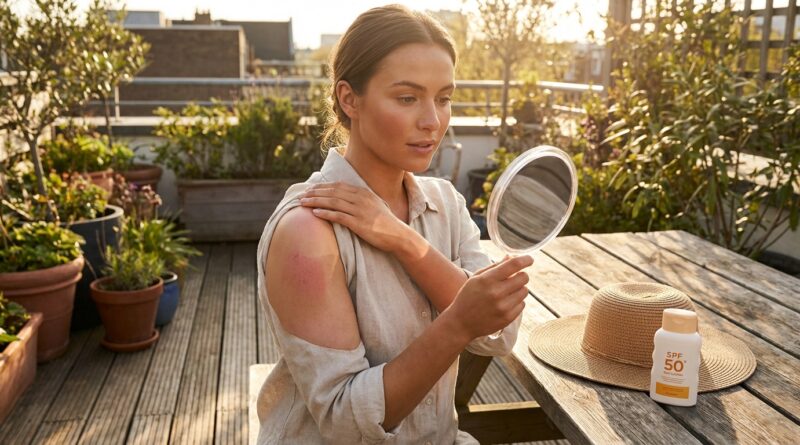
New Warning Over ‘Invisible Sunburn’ Risk: Why Your Self-Tan Can Hide Serious Skin Damage
If you use self-tanner, this warning matters more than it sounds. A fake tan can make your skin look healthy, even, and already sun-kissed, which is exactly why real sunburn can sneak up on you. A lot of people assume bronzed skin means some level of protection. It does not. If you are wondering, does self tanner protect from sunburn, the answer is no. Not in any reliable way. What dermatologists are worried about is simple. When your skin already looks darker from a bottle, early redness, patchy irritation, and subtle UV damage can be harder to spot. That means you may stay outside longer, miss the warning signs, and end up more burned than you realize. The good news is you do not need to give up your self-tan. You just need a smarter routine so the color you chose does not hide the damage you did not.
⚡ In a Hurry? Key Takeaways
- Self-tanner does not protect you from sunburn. You still need sunscreen every time you go out.
- Check for heat, tenderness, tightness, and pinkness in natural light because fake tan can hide early redness.
- If you think you burned, stop tanning and let your skin heal before applying more color.
Does self tanner protect from sunburn?
No. Self-tanner changes the look of your skin, not its ability to block UV rays.
That is the key point. Products that create a sunless tan usually use DHA, a color additive that reacts with dead skin cells on the surface. It gives you a bronzed look. It does not create melanin. It does not act like sunscreen. It does not stop UV damage.
Some self-tanners may include SPF, but that only counts if the label clearly says so, and even then the protection is limited and wears off. A tan-looking finish by itself is not protection.
Why dermatologists are warning about “invisible sunburn”
Sunburn usually gives you clues. Redness. Warmth. That tight, prickly feeling. Sometimes you catch it early enough to get out of the sun.
But when your skin is coated in bronzing color, those clues can be less obvious. On some people, early redness gets muted by the fake tan tone. On others, uneven burning just looks like the self-tanner is fading badly.
That can lead to a simple mistake. You think, “I look fine,” so you stay outside another hour. Later that evening, your skin feels hot and sore, and by the next day the burn is obvious.
What hidden sun damage can look like instead
When color makes redness harder to see, pay attention to other signs:
- Skin feels warm or hot to the touch
- Tightness when you smile or move
- Stinging when you shower or apply lotion
- Itchiness or tenderness
- Areas that suddenly look darker, blotchy, or oddly patchy
- Dryness that seems to appear out of nowhere after sun exposure
If your skin feels burned, treat it seriously even if it does not look bright red.
A safer spring and summer routine if you love self-tan
1. Apply sunscreen like your fake tan is not there
Because it is not doing the job of sunscreen. Use broad-spectrum SPF 30 or higher on exposed skin. Reapply every two hours, and sooner if you sweat or swim.
2. Check your skin in natural light
Bathroom lighting is not always your friend. Look at your shoulders, chest, nose, thighs, and tops of feet near a window or outdoors in shade. Those are easy places to miss both sunscreen and early burning.
3. Use the touch test
Run the back of your hand over areas that got sun. If they feel warmer than nearby skin, that is a clue. If they sting when you moisturize, take it seriously.
4. Do not use a fake tan as a reason to stay out longer
This is where people get caught. Looking tan can trick you into feeling safer than you are. Set a reminder to reapply SPF and take shade breaks.
5. Keep after-sun care simple
If your skin feels irritated, use a gentle moisturizer, cool compresses, and avoid harsh scrubs, acids, or retinoids until things calm down.
What to do if you think you burned under self-tanner
First, stop sun exposure. Get indoors or into full shade.
Then cool the skin gently. Drink water. Moisturize with a bland, fragrance-free lotion. Avoid piling on more self-tanner to “even it out.” That can make it harder to see what your skin is doing and may irritate already stressed skin.
If your skin starts peeling, blistering, or feeling very painful, treat that as a real burn. And if you are trying to figure out when it is safe to tan again, this guide on Can You Spray Tan Over Sunburn or Peeling Skin? The Safety Rules No One Explains Clearly walks through the timing and the common mistakes.
Common myths that cause trouble
“I already look tan, so I probably won’t burn as fast.”
False. Self-tan changes appearance, not UV resistance.
“If I do burn, I’ll see it.”
Not always right away. That is the whole issue. Color on the skin can blur the first warning signs.
“A base tan from a bottle is still some kind of base tan.”
No. It is cosmetic color. Helpful for confidence, not for protection.
Who should be extra careful
Anyone can miss a burn under self-tanner, but it is especially worth watching if you:
- Have fair or sensitive skin
- Burn easily at the start of spring
- Use darker self-tanner shades
- Spend long stretches walking, gardening, or at outdoor events
- Apply self-tan to cover uneven tone, redness, or old marks
In those situations, a fake tan can make your skin look more even right when you most need to notice change.
At a Glance: Comparison
| Feature/Aspect | Details | Verdict |
|---|---|---|
| Self-tanner and UV protection | Standard self-tanner adds color to the outer skin layer but does not block UVA or UVB rays | Not protective |
| Spotting sunburn | Bronzed color can make early redness, blotchiness, or irritation less obvious | Harder to catch early |
| Best safe habit | Use broad-spectrum SPF, reapply often, and check skin by both sight and feel after time outdoors | Strongly recommended |
Conclusion
You can absolutely enjoy a sunless glow and still be smart about your skin. The trick is remembering that self-tan is color, not coverage. Right now a lot of people are swapping winter skin for spring self-tan and then spending more time outside, which is exactly when this invisible sunburn problem shows up. A simple routine helps. Wear real sunscreen, check your skin in good light, notice heat and tenderness, and do not brush off odd patchiness just because you used bronzing products. That gives you the best of both worlds. You keep the glow you wanted and lower the chance of missing real UV damage that needs your attention.