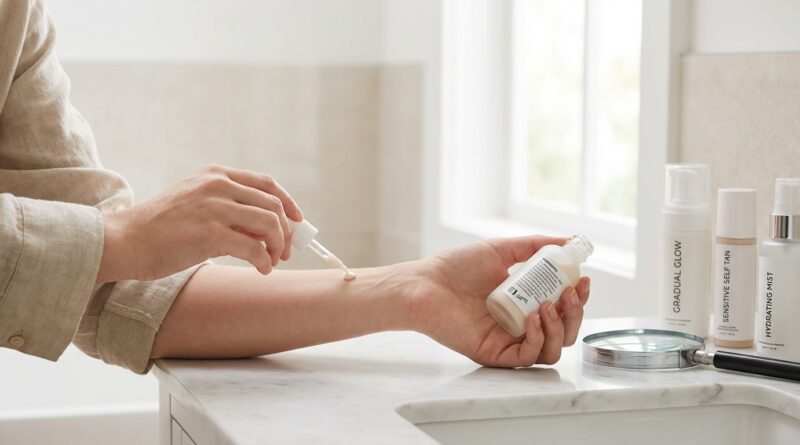
New Study Flags Hidden Irritants in Top Amazon Self‑Tanners: How To Patch‑Test Like a Pro in 2026
You did the responsible thing. You stopped baking in the sun and picked up a self tanner instead. Then came the sting, the itchy red patches, or those tiny bumps that seem to appear overnight. That is maddening, especially when the bottle says things like “clean,” “gentle,” or “dermatologist tested.” Those labels sound reassuring, but they do not guarantee your skin will be happy. A January 2026 review of the 50 best selling Amazon sunless tanners found a clear pattern. These products may help you avoid UV damage, but they can still trigger irritant dermatitis and allergic reactions, especially if you have sensitive skin, rosacea, eczema, or acne-prone skin. The good news is that you do not need a chemistry degree to lower your risk. You just need to know what to look for and how to do a proper self tanner allergic reaction patch test before you cover your whole body.
⚡ In a Hurry? Key Takeaways
- A self tanner can still cause burning, itching, rash, hives, or breakouts even if it avoids sun damage.
- Do a 2-step patch test on a small hidden area for 24 to 72 hours before full use, especially on the face.
- Fragrance, essential oils, heavy preservatives, and added bronzers are common troublemakers for sensitive skin.
Why self tanners can irritate skin in the first place
The active ingredient in most self tanners is DHA, short for dihydroxyacetone. It reacts with proteins in the top layer of your skin to create that tanned look. DHA itself is not always the main problem. Often, the bigger issue is the rest of the formula.
Many of the top selling products now pack in fragrance blends, botanical extracts, essential oils, color guides, shimmer, preservatives, and “skincare” extras like acids or retinoid-adjacent ingredients. That can be fine for some people. For reactive skin, it can be a mess.
The 2026 review found that irritation risk climbed when formulas combined multiple sensitizers in one bottle. Think synthetic fragrance plus citrus oils plus plant extracts plus drying alcohols. If your skin barrier is already a little cranky, that mix can tip it over fast.
Hidden irritants showing up in popular formulas
1. Fragrance, even when it smells “fresh” or “beachy”
Fragrance is still one of the most common triggers for allergic contact dermatitis. And “natural fragrance” is not automatically safer. It can still contain compounds that bother sensitive skin.
2. Essential oils and plant extracts
Tea tree, citrus peel oils, lavender, peppermint, and eucalyptus sound gentle. They are not gentle for everyone. If you have rosacea or eczema, these can sting or leave you red and blotchy.
3. Preservatives that keep the formula shelf-stable
Preservatives are necessary, but some are more irritating than others for certain people. The problem is not that preservatives exist. The problem is when a product already contains several other triggers too.
4. Color guides and cosmetic bronzers
That instant bronze tint helps you see where you applied the product. It can also add dyes or pigments that cause irritation or clogging in acne-prone skin.
5. “Skincare boosted” self tanners
Some newer formulas add exfoliating acids, heavy occlusives, or rich oils to market themselves as all-in-one glow products. Handy on paper. Risky if your pores clog easily or your skin reacts to active ingredients.
What “dermatologist tested” really means, and what it does not
This is where people get tripped up. “Dermatologist tested” usually means a dermatologist was involved in some kind of testing. It does not mean the product is allergy-proof. It does not mean it is ideal for eczema, rosacea, or fungal acne. And it definitely does not mean your skin will not react.
The same goes for “clean,” “non-toxic,” and “for sensitive skin.” Those terms are marketing first. Ingredient list second. Your skin only cares about the actual formula.
How to do a self tanner allergic reaction patch test like a pro
If you only remember one thing from this article, make it this. A proper patch test is your best shot at catching trouble before it spreads everywhere.
Step 1. Pick the right test spot
Use a small hidden area with somewhat sensitive skin. Good spots include:
- Behind the ear for face products
- Along the jawline if you are testing facial tanner
- Inner forearm
- Inside of the elbow
- Behind the knee for body tanners
Do not test on already broken, shaved, sunburned, or freshly exfoliated skin.
Step 2. Apply a tiny amount
Clean and dry the area. Apply a pea-sized amount or one small swipe, enough to cover a patch about the size of a quarter. Let it dry fully. Do not wash it off unless the directions say to rinse after a set time.
Step 3. Wait longer than you think
This is the part most people skip. Watch the area for 24 hours at minimum. If you have sensitive skin or a history of reactions, watch it for 48 to 72 hours. Allergic reactions can take time to show up.
Step 4. Look for more than just a classic rash
A bad reaction does not always look dramatic right away. Watch for:
- Stinging or burning
- Itchiness
- Redness that keeps spreading
- Tiny bumps or acne-like breakouts
- Dry, tight, shiny skin
- Swelling
- Hives
Step 5. Do a real-world test
If the first patch looks fine, test the product on a slightly larger hidden area, like a small section of your thigh or side of the neck. This matters because some reactions only appear when you use more product.
Step 6. Only then use it for a full application
If your skin stays calm after both tests, you are in much safer territory. Not guaranteed, but safer.
Red flags that mean stop using it immediately
Wash the product off and stop right away if you get intense burning, swelling, hives, wheezing, eyelid puffiness, or a rapidly spreading rash. If you have trouble breathing or facial swelling, get urgent medical help.
If it is a milder reaction, take photos, note the ingredient list, and keep the bottle. If you end up seeing a dermatologist, that information helps a lot.
How to choose a lower-risk self tanner
Go for shorter ingredient lists
Shorter is not always perfect, but it often means fewer things to react to.
Pick fragrance-free over unscented when possible
“Unscented” can still contain masking fragrance. “Fragrance-free” is the better sign.
Avoid essential oils if your skin is reactive
If you have rosacea, eczema, or mystery irritation, skip the fancy botanical cocktail.
Be careful with face formulas that promise skin care benefits
If your skin is acne-prone, a simple formula is usually better than one stuffed with oils and extras.
Mousse is not automatically safer than lotion
Texture does not tell you much. The ingredient list does.
If you are acne-prone, watch for this extra problem
Some self tanners do not cause a true allergy. They simply trap sweat, sit heavy on the skin, or bring along pore-clogging ingredients that lead to breakouts. If your “reaction” looks more like a cluster of closed comedones or inflamed pimples, the formula may be too rich rather than truly allergenic.
That is why it helps to test self tanner on a small area of the face first, not just the arm. Facial skin behaves differently.
Patch-test mistakes people make all the time
- Testing for only 20 minutes and calling it good
- Testing on the wrist, then applying on the face
- Testing after shaving or exfoliating
- Trying a new tanner the day before a wedding, trip, or party
- Using other strong skin products at the same time
If you are using retinoids, benzoyl peroxide, exfoliating acids, or prescription rosacea treatments, give your skin a quiet day or two before testing. That makes it easier to tell what is actually causing the reaction.
What to do if you already had a reaction
First, wash the tanner off with lukewarm water and a gentle cleanser. Do not scrub. Do not pile on acids, peels, or harsh acne treatments to “fix” it. That usually makes things worse.
Use a bland moisturizer. Think simple, fragrance-free, barrier-friendly cream. If the area is very itchy or inflamed, check with a pharmacist or your doctor about next steps. If the reaction keeps returning, ask a dermatologist about patch testing for specific allergens. That can help you spot patterns across other products too.
Why this matters more in 2026
Self tanners are getting more sophisticated, but also more crowded with add-ons. Brands are trying to make one bottle do everything. Tan, hydrate, firm, brighten, blur, scent the skin, and look Instagram-ready. Nice idea. Tough on sensitive skin.
The 2026 review of the top 50 Amazon sellers suggests this is becoming a bigger issue, not a smaller one. More people are avoiding UV damage, which is great. But more people are also finding out the hard way that a “safer than tanning bed” product can still be rough on skin.
At a Glance: Comparison
| Feature/Aspect | Details | Verdict |
|---|---|---|
| Common trigger ingredients | Fragrance, essential oils, bronzing dyes, preservatives, rich oils, added actives | Read the full ingredient list, not just the front label |
| Best patch-test method | Small hidden area first, then larger hidden area, monitor for 24 to 72 hours | This is the safest at-home approach before full use |
| Lower-risk formula signs | Fragrance-free, fewer extras, shorter ingredient list, no essential oils | Usually a better bet for sensitive, rosacea, eczema, or acne-prone skin |
Conclusion
Self tanner is still a smarter move than chasing a tan with UV exposure, but “safer” does not mean “risk free.” The January 2026 review of the 50 best selling sunless tanners on Amazon found that while these products do avoid UV damage, they are also a growing cause of irritant and allergic contact dermatitis, especially in people with sensitive, rosacea, or eczema-prone skin. The good news is you can stay ahead of that trend. Learn the ingredient patterns. Keep an eye out for fragrance-heavy or overstuffed formulas. And always do a careful self tanner allergic reaction patch test before a full application. A little patience now beats waking up with a face full of hives the night before an event.