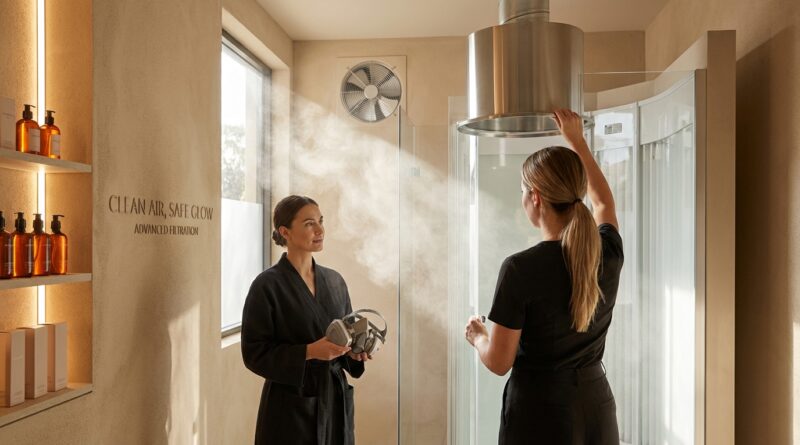
New ‘Spray-Tan Fog’ Warning: How To Actually Protect Your Lungs At Your Next Sunless Session
If you have ever stepped into a spray tan booth and felt like you were standing in a sweet-smelling cloud with no clear idea what you were breathing, you are not overreacting. That uneasy feeling is valid. A lot of spray tan advice talks about color, undertones, and streaks, but skips the part that matters to your lungs. The mist in a spray tan session can include DHA, bronzers, fragrances, preservatives, and very fine droplets that are easy to inhale if the space is enclosed or poorly ventilated. For most people, the goal is simple. Get the glow, skip the UV damage, and do not leave coughing or with burning eyes. The good news is you do not need to panic or swear off sunless tanning. You just need better habits, better questions, and a little less trust in the old “just hold your breath” routine.
⚡ In a Hurry? Key Takeaways
- Spray tan safety ventilation matters because the main concern is not just what lands on your skin, but what you inhale in the mist.
- Use nose filters or a well-fitted mask when possible, wear eye protection, and ask your salon how the booth air is exhausted or filtered.
- If you have asthma, allergies, or scent sensitivity, poor ventilation is a real red flag. A UV-free tan should not come at the cost of irritated lungs.
What is actually in that spray tan fog?
The headline ingredient people talk about is DHA, short for dihydroxyacetone. It is the sugar-derived active that reacts with the top layer of your skin to create that tanned look. On skin, that is the whole point. In the air, it is a different conversation.
During a spray tan, DHA is not floating around by itself. The mist can also contain cosmetic bronzers, aloe, fragrance, botanical extracts, preservatives, and other add-ins depending on the formula. Some of those ingredients are harmless on skin for many people, but inhaling a fine aerosol is not the same as rubbing lotion on your arm.
This is why The New ‘Safer Spray Tan’ Checklist: What Your Salon Isn’t Telling You About DHA, Ventilation And Protective Gear is worth a read. It gets into the uncomfortable truth that “safer than tanning beds” is not the same as “no safety questions needed.”
Why ventilation matters more than most salons admit
Good ventilation does two things. First, it removes overspray from the air before you breathe too much of it in. Second, it lowers how much mist lingers on surfaces and in the room for the next client or for the person doing the spraying all day.
If you walk into a booth and the air looks hazy, that is not a great sign. If you can smell a strong sweet or perfumed scent hanging in the room before your session even starts, also not great. Those are clues that the air is not clearing quickly enough.
Signs a setup may be poorly ventilated
Watch for these simple clues:
- The room still looks misty after the last session.
- The smell hangs around for a long time.
- There is no visible extraction fan, exhaust system, or airflow plan.
- The technician rushes you in and out without allowing the booth to clear.
- You leave with throat irritation, coughing, watery eyes, or a headache.
A good salon should be able to explain, in plain English, how overspray is removed. You do not need an engineering lecture. Just a clear answer.
What to ask your spray tan technician before you start
You are not being difficult by asking questions. You are being sensible. Try these:
1. “How is this booth or room ventilated?”
Ask whether air is exhausted outside, filtered, or recirculated. Exhausting overspray out of the breathing zone is usually more reassuring than a vague “the room has air.”
2. “Do you offer nose plugs, filters, eye protection, or lip balm?”
Some salons provide them automatically. Others only do if you ask. If they seem surprised that you want respiratory or eye protection, that tells you something.
3. “Can I wear a mask until the actual spray starts, or use nose filters during the session?”
A salon that takes safety seriously should not act like this is a weird request.
4. “What ingredients are in the solution?”
If you have asthma, allergies, eczema, or fragrance sensitivity, ask for the ingredient list. Fragrance-free or lower-scent options may be easier on you.
5. “Can we do a lighter pass with less overspray?”
More product is not always better. A careful technician can often get a good result without flooding the air.
How to protect your lungs during a spray tan
This is the part people usually reduce to “hold your breath.” That advice is lazy. It might help for a second or two, but it is not a real plan.
Use nose protection
Nose filters or nose plugs are one of the easiest upgrades. They reduce what goes straight into your nasal passages. If a salon does not have them, bring your own.
Protect your eyes
Fine mist can irritate eyes, especially if the formula has fragrance or if you already have dry eyes or allergies. Ask for protective eyewear. Closing your eyes alone is better than nothing, but sealed eye covers are better.
Ask about masks for at-home use
If you are using an at-home spray system, a well-fitted mask rated to filter fine particles can make sense during setup, cleanup, and even spraying if it does not interfere with the tan area you want treated. For a facial spray, that gets trickier, so focus even more on ventilation and reducing airborne mist.
Do not spray in tiny closed rooms at home
Bathrooms with no fan, closets, and sealed bedrooms are bad choices. Use a space with moving air, open windows if practical, and a fan setup that pulls mist away from your face rather than blowing it around the room.
Stand smart
Turn your face away when possible during body passes. Follow the technician’s cues, but do not be shy about asking for a pause if you need a breath in clearer air.
If you have asthma or allergies, take this more seriously
If you have asthma, chronic sinus issues, seasonal allergies, or scent-triggered headaches, you may react more strongly than the average person. That does not mean spray tanning is automatically off limits. It means your margin for bad air is smaller.
Be extra cautious if you have ever had wheezing, chest tightness, coughing fits, or eye irritation after salon services. A patch test on skin is useful for skin reactions, but it will not tell you how your airways will feel in a misty room.
When to skip the session
- Your asthma is already flaring up.
- You have a cold, sinus infection, or irritated airways.
- The room smells strong before you even start.
- The salon cannot explain its ventilation setup.
- You feel pressured to ignore discomfort.
If you have a diagnosed respiratory condition and you are unsure, it is reasonable to ask your clinician what level of exposure they are comfortable with. That is not overkill. It is basic self-care.
Salon booths versus at-home systems
Neither option is automatically safer. It depends on setup and habits.
Salon booths
The upside is that professional spaces may have extraction systems and trained staff. The downside is that some salons move fast, clean poorly, or treat ventilation like a background detail instead of a core safety feature.
At-home spray systems
The upside is control. You pick the formula, the timing, and the room. The downside is that many homes are not set up to handle aerosolized product well. People often spray in small spaces with bad airflow because it feels tidy. For your lungs, that can be the worst option.
If you tan at home often, think like a painter or someone using a fine mister. Airflow matters. Surface cleanup matters. Protective gear matters.
Ingredients worth paying attention to
You do not need to become a cosmetic chemist. Just keep an eye on a few categories.
DHA percentage
Higher DHA can mean a darker result, but it can also mean more active ingredient in the air if overspray is heavy. Darker is not always smarter.
Fragrance
Fragrance is a common problem for people with headaches, allergies, or sensitivity. If strong scents bother you, ask for fragrance-free or low-odor formulas.
Botanical extracts and bronzers
Natural does not always mean easier on your airways. Plant extracts and added bronzers can still irritate some people.
Preservatives
These are normal in cosmetic products, but if you know you react to certain preservatives on skin or through scent exposure, ask before your session.
Simple safety habits that make a real difference
- Choose salons that can clearly explain their ventilation system.
- Ask for nose filters, eye protection, and lip balm.
- Avoid chatting in the middle of spraying. Talking means breathing in more mist.
- Wait for visible mist to clear before dressing or doing touch-ups.
- At home, use a larger room with active airflow, not a sealed bathroom.
- Clean overspray residue so it does not keep hanging around in your space.
What a good salon answer sounds like
You are looking for calm, specific answers. Something like, “Yes, the booth has active extraction and we let the mist clear between clients. We also offer nose filters and eye protection, and I can show you the solution ingredients.”
What you do not want is a shrug, a laugh, or “It’s fine, everyone does it.” That is not expertise. That is a sales script.
At a Glance: Comparison
| Feature/Aspect | Details | Verdict |
|---|---|---|
| Ventilation quality | Clear air extraction, fast mist removal, and no lingering haze or heavy odor after a session. | One of the most important safety checks. |
| Protective gear | Nose filters, eye covers, and sensible mask use can cut down exposure to mist. | Worth using, especially for sensitive lungs and eyes. |
| Solution ingredients | DHA, fragrance, bronzers, botanicals, and preservatives vary by formula and may affect comfort. | Ask to see the ingredient list if you have asthma, allergies, or scent issues. |
Conclusion
Spray tans still make sense for a lot of people. They can be a much better choice than chasing a tan with UV exposure. But “better than sun damage” should not mean ignoring the air you breathe while getting sprayed. As salon and at-home systems keep growing in popularity, we need more than shade guides and glossy before-and-after shots. We need practical, science-aware habits around spray tan safety ventilation, masks, nose and eye protection, and smart questions about booth airflow and ingredients. The goal is not fear. It is common sense. You can enjoy a UV-free glow and still protect your lungs. That is the version of beauty advice people actually need.