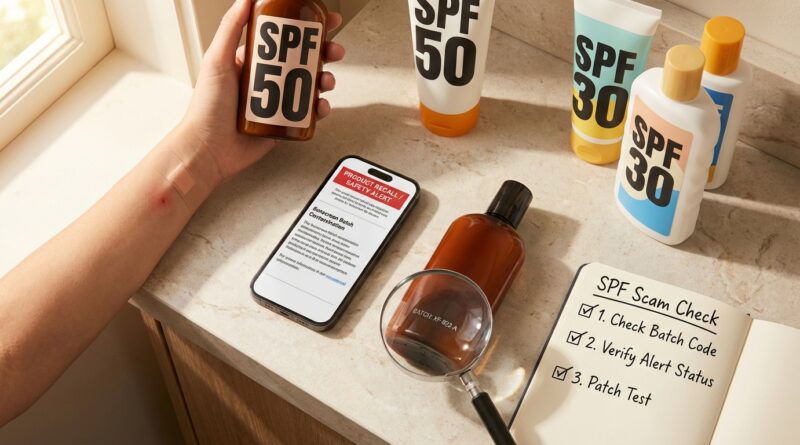
New ‘SPF Scam Check’ Rule: How To Stop Fake-Protection Products From Quietly Sabotaging Your Sunless Glow
You do all the right things for a sunless tan, then one weak sunscreen can undo it fast. That is what makes the recent sunscreen recall headlines so frustrating. You buy an SPF 50, trust the label, head outside, and still come home pink. For anyone who self-tans, that is more than annoying. It can mean patchy fading, irritated skin, and a false sense of safety that leads to more sun exposure than you meant to get. The bigger issue is simple. Some products may not protect at the level printed on the bottle. If you love your glow but avoid tanning beds and real sun, that is a problem worth taking seriously. The good news is you do not need to panic or toss every bottle in your bathroom. You just need a smarter way to check what you own, spot red flags, and shop for sunscreen that actually backs up its promise.
⚡ In a Hurry? Key Takeaways
- Recent sunscreen recall news means some SPF labels may not match real-world protection, so it is smart to verify what you are using.
- Check your bottle’s brand, lot number, expiration date, and recall status, then replace anything questionable before your next beach, pool, or patio day.
- For sunless tanning safety, use broad-spectrum SPF from established brands, apply enough of it, and do not let a fake tan fool you into thinking your skin is protected.
Why this matters so much if you use self-tanner
A sunless tan changes your color. It does not change your skin’s natural ability to handle UV rays.
That sounds obvious, but it is easy to forget in real life. When your skin looks bronzed, you may feel less urgent about shade, hats, or reapplying sunscreen. A lot of people also spend more time outside when their tan looks fresh because, well, they want to enjoy it.
That is where sunscreen recall and sunless tanning safety connect. If the SPF you trust is weaker than promised, you can burn faster than expected on skin you thought was covered. And burns over DHA-treated skin are no fun. They can lead to dryness, flaking, uneven fade, and a blotchy tan that disappears in all the wrong places.
What “SPF scam check” really means
This is not about becoming a lab scientist in your bathroom. It just means taking five minutes to check whether a sunscreen deserves your trust.
Think of it like checking a smoke detector battery. Most of the time, everything is fine. But when it is not, you want to know before you need it.
Start with the basics on the bottle
Pick up your sunscreen and look for these details:
- Brand name and exact product name
- SPF number
- Broad-spectrum claim
- Expiration date
- Lot number or batch code, often stamped on the crimp, bottom, or back
- Water-resistance claim, such as 40 or 80 minutes
If you cannot find the lot number or the label is rubbed off, that bottle is already harder to verify. That alone is a good reason to replace it if it is older.
Step by step: How to check if your sunscreen has been recalled
1. Search the brand site first
Many brands post recall notices, quality alerts, or batch check tools on their websites. Search the product name plus terms like “recall,” “lot number,” or “quality notice.”
2. Check FDA recall listings
If you are in the U.S., look at FDA recall and safety alert pages. Search by brand and product name. If a sunscreen has been pulled because of contamination, packaging problems, or failed testing, it may show up there.
3. Check major retailer notices
Large retailers sometimes post recall updates faster than people expect, especially if they sold the product directly. Search the store name with the product name.
4. Match the lot number exactly
This part matters. A recall may affect only certain lots, not every bottle from that brand. If your lot number matches, stop using it. If it does not, keep reading before you assume all is well.
5. Look for signs of instability
Even without a recall, sunscreen can go bad. Be cautious if the product:
- Smells strange or sour
- Has separated badly and will not mix back together
- Changed color
- Feels grainy, watery, or unusually thin
- Has been stored in a hot car, beach bag, or sunny windowsill for weeks
Heat can break down a formula over time. If a bottle has lived in your glove box all summer, it has not had an easy life.
Red flags that matter even if there is no official recall
Not every weak product gets a dramatic headline. Some just quietly disappoint people.
Be more careful with:
- Unknown brands with huge SPF claims and little testing history
- Products marketed more for “glow” or shimmer than actual sun protection
- SPF sold mainly through social ads with vague ingredient info
- Sprays that feel too light and are hard to apply evenly
- Products with missing expiration dates or hard-to-read labels
If the packaging spends more time talking about bronzing pearls, tropical sparkle, and vacation vibes than UVA and UVB protection, that is a clue to slow down.
How much sunscreen you actually need for sunless tanning safety
This is where good products still fail people. Not because the formula is bad, but because most of us use too little.
For the face
A common guide is about two finger lengths of sunscreen for the face and neck combined, depending on the formula.
For the body
Think roughly a shot-glass amount for full-body coverage. More if you are tall or wearing minimal clothing at the pool or beach.
If you lightly mist on a spray and rub for two seconds, you are probably not getting the SPF on the label. Sprays need a generous, even coat and usually a rub-in step unless the instructions clearly say otherwise.
Reapplication still counts
Reapply at least every two hours when outdoors, and sooner after swimming, sweating, or towel drying. A self-tan does not change that rule.
Best sunscreen types for protecting a sunless tan
Lotions and creams
These are usually the easiest to apply evenly, which makes them a smart choice if you care about both real protection and keeping your self-tan from turning patchy.
Mineral formulas for sensitive skin
If your skin gets irritated easily after exfoliating or tanning prep, mineral sunscreens with zinc oxide or titanium dioxide may feel gentler. They can leave a cast on some skin tones, though newer tinted versions can help.
Water-resistant formulas for outdoor days
If you are showing off your glow at the pool, beach, or festival, use something water-resistant. Otherwise, sweat and splash can strip away protection faster than you think.
Face SPF that plays nicely with self-tan
If you use facial tanning drops or mousse, pick a sunscreen that does not pill under makeup and is easy to reapply. If it feels greasy or heavy, people tend to skip reapplication. Comfort matters because habits matter.
What to do if you think your sunscreen failed
If you wore sunscreen and still burned more than expected, do a quick review before using it again.
- Check whether it was expired
- Think about how much you applied
- Check if you reapplied on time
- See whether the bottle was exposed to heat
- Search for recall or testing complaints tied to that exact product
If the product seems suspicious, stop using it. Take photos of the bottle, lot number, and your receipt if you still have it. You can contact the brand and, in the U.S., consider reporting problems through FDA channels if there is a safety concern.
A smarter shopping checklist for future bottles
When you buy your next SPF, use this quick filter:
- Choose broad-spectrum SPF 30 or higher
- Buy from established retailers, not random third-party sellers
- Check for a clear expiration date and lot code
- Prefer brands with a solid track record and accessible ingredient info
- Match the formula to your real life, face, body, water use, and sweat level
- Skip products that seem designed more for aesthetics than protection
A good sunscreen does not need flashy marketing. It needs to work.
The biggest myth to drop right now
The biggest myth is this. “I already look tan, so I probably will not burn as quickly.”
That is the trap. A sunless tan can make skin look healthier and more protected than it really is. But DHA color sits in the top layer of skin. It does not give you built-in SPF. Not even a little.
So if you care about sunscreen recall and sunless tanning safety, the goal is simple. Treat your glow as cosmetic color, not armor.
At a Glance: Comparison
| Feature/Aspect | Details | Verdict |
|---|---|---|
| Recall check | Look up the exact product name, lot number, and expiration date on brand, FDA, and retailer pages. | Do this first before trusting an older or trendy SPF. |
| Formula type | Lotions and creams are easier to apply evenly than many sprays or shimmer-heavy “glow” products. | Best pick for reliable day-to-day protection. |
| Sunless tan mindset | A fake tan changes appearance, not UV resistance, so you still need broad-spectrum SPF and reapplication. | Non-negotiable for protecting both your glow and your skin. |
Conclusion
Fresh recall news is a good reminder that not every SPF label deserves blind trust. That matters even more for self-tanners, because a bronzed look can make it easy to feel safer in the sun than you really are. A quick bathroom-cabinet check, a careful look at lot numbers and expiration dates, and smarter shopping going forward can save you from surprise burns, barrier damage, and a self-tan that fades in blotchy patches. The goal is not to scare you off sunscreen. It is the opposite. It is to help you find formulas worth relying on, so your routine protects your glow and your long-term skin health at the same time.