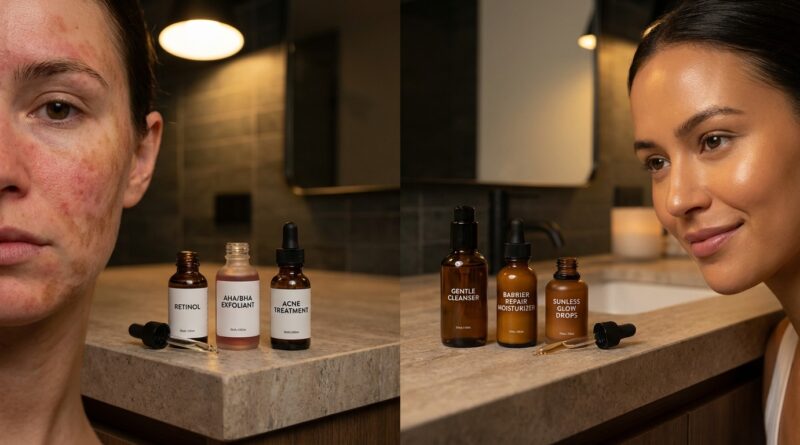
New ‘Retinol + Self-Tan Clash’ Warning: How To Stop Your Night Routine From Stripping Your Glow (And Irritating Your Skin)
You are not imagining it. Your self tan really can look perfect one night, then fade in weird patches while your skin starts feeling dry, tight, or oddly stingy a day or two later. That is often the moment people blame the tanning drops, mousse, or mist. But the real trouble is usually sitting right there in the rest of the routine. If you are using retinol, glycolic acid, salicylic acid, benzoyl peroxide, tretinoin, or strong acne treatments, yes, they can speed up how fast self tan fades and make your skin more reactive at the same time. The short version is simple. Self tanner needs a calm, intact top layer of skin to develop evenly and hang around for a few days. Retinol and exfoliants push skin cells to shed faster. That can strip your glow early, create patchiness, and leave your barrier more likely to get irritated by DHA, the ingredient that creates the tan.
⚡ In a Hurry? Key Takeaways
- Yes, retinol and exfoliants can ruin self tanner by making it fade faster, turn patchy, and irritate skin.
- Pause strong acids and retinoids for a short window before and after self tan, then restart slowly.
- If your face burns, stings, or feels tight, protect your barrier first and do not keep stacking active products.
Why this clash happens
Self tanner works on the outermost layer of your skin. DHA reacts with dead skin cells near the surface to create that bronze color. It does not sink in like a treatment serum. It sits where your skin is already preparing to shed.
Now add retinol or exfoliating acids. Those products are made to increase cell turnover or loosen the bonds between surface cells. That is useful if you are trying to smooth texture, clear breakouts, or soften fine lines. But it is not great if you want a self tan to stay even.
So if you have been asking, can retinol and exfoliants ruin self tanner, the honest answer is yes. They usually do it in three ways. They fade the tan faster. They make the fade uneven. And they raise the odds of dryness and irritation if your barrier is already stressed.
The biggest troublemakers in your routine
Retinol and prescription retinoids
Retinol, retinal, adapalene, tretinoin, and tazarotene all increase turnover to different degrees. That means your tan can disappear faster, especially on the face where people often use stronger actives.
Prescription retinoids are the most likely to create that “my tan vanished overnight” effect.
Exfoliating acids
Glycolic, lactic, mandelic, and salicylic acid can all shorten the life of a tan. Glycolic tends to be the most aggressive because it penetrates well and works quickly. Salicylic can be especially drying if you are already acne-prone and using other treatments too.
Benzoyl peroxide and acne meds
Benzoyl peroxide does not just dry skin out. It can also make your routine harsher overall, especially when mixed with acids or retinoids. That can lead to flaking, uneven color, and a face that feels raw.
Scrubs, cleansing brushes, and peel pads
These can physically or chemically remove the very layer your tan is clinging to. Used too close to tanning, they are almost guaranteed to create patchiness.
How to time your routine so your tan lasts
This is where most people need a clear plan, not more guessing.
Before self tan
Try to stop strong exfoliants and retinoids 24 to 48 hours before applying self tanner to the face. If your skin is sensitive, lean toward 48 hours. If you use prescription tretinoin or you are already flaky, you may need a longer break.
Keep the routine simple during that window. Use a gentle cleanser, a plain moisturizer, and if needed, a hydrating serum without acids.
The night you tan
Do not layer self tanner on top of retinol, acid toners, peel pads, or benzoyl peroxide. Apply it to clean, dry, calm skin. Let it develop without interference.
After self tan
Hold off on retinol and exfoliating acids for another 24 to 48 hours if you want the color to last and your skin to stay comfortable. Then restart slowly.
If your face tends to sting after tanning, give it more time. One extra night of boring skincare is better than a week of redness and blotchy fade.
What to use instead on “tan nights”
Think low drama. This is not the night for a 7-step results routine.
- Gentle, non-stripping cleanser
- Simple hydrating serum, if your skin likes one
- Barrier-friendly moisturizer
- Self tanner as the active step
If your skin is already feeling touchy, read Is Your Skin Barrier Ready For Self-Tan Season? The New ‘Repair First, Bronze Second’ Rule Everyone’s Missing. It does a good job explaining why a damaged barrier and self tanner are a bad mix.
Signs your routine is stripping your glow, not the tanner itself
Here are the giveaways.
- Your face fades much faster than your body
- The tan disappears around the mouth, nose, chin, or active acne areas first
- Skin feels tight after cleansing
- Your usual moisturizer suddenly stings
- You see flaky patches or rough texture under the tan
- Color grabs unevenly on the next application
If that sounds familiar, your skincare stack is probably the issue. Not the self tanner.
A better weekly rhythm
If you want both clear skin and a believable glow, alternate instead of pile on.
Example routine
Night 1: Gentle cleanse, moisturize, self tan
Night 2: Gentle cleanse, hydrating serum, moisturizer
Night 3: Retinol or exfoliant, not both
Night 4: Recovery night with only hydration and barrier support
This kind of spacing gives your skin time to settle and gives your tan time to develop and wear more evenly.
When to be extra careful
Some people need a wider safety margin.
- If you use tretinoin, adapalene, or prescription acne products
- If you recently increased the strength of your acids or retinoid
- If it is winter and your skin is already dry
- If your barrier is compromised from over-exfoliation
- If you have eczema, rosacea, or very sensitive skin
In those cases, patch testing matters. So does patience.
If your skin already feels burned out
Stop the actives for a few days. Keep cleansing gentle. Moisturize more consistently. Skip scrubs. Skip peel pads. Skip the temptation to “fix” uneven tan by exfoliating harder.
That usually makes things worse.
Once the skin feels normal again, bring products back one at a time. If irritation keeps happening, check with a dermatologist, especially if you are on prescription treatments.
At a Glance: Comparison
| Feature/Aspect | Details | Verdict |
|---|---|---|
| Retinol with self tanner | Speeds up cell turnover, can make facial tan fade fast and increase dryness | Use on separate nights when possible |
| Exfoliating acids near tanning day | Can cause patchy fade, stingy skin, and shorter wear time | Pause 24 to 48 hours before and after tanning |
| Barrier-first routine | Gentle cleanser, moisturizer, fewer actives, calmer skin surface | Best option for longer-lasting, more even color |
Conclusion
You do not have to choose between smoother skin and a good self tan. You just need better timing. Right now more people are using exfoliating serums, retinoids, and barrier repair creams, while also moving to sunless tanning as a safer option than UV. The missing piece is that the same ingredients used for acne, texture, and fine lines can also shorten the life of a tan, make DHA feel harsher, and leave the barrier dry and angry. A dermatologist-informed schedule helps you avoid redness, burning, and patchy fade, and it helps each tan last longer too. So before you blame the bottle, look at the stack. In a lot of cases, the self tanner is fine. It is the product traffic jam around it that is causing the mess.