New ‘Microbiome-Safe Tan’ Rule: How To Choose Self-Tanners That Don’t Quietly Trash Your Skin’s Good Bacteria
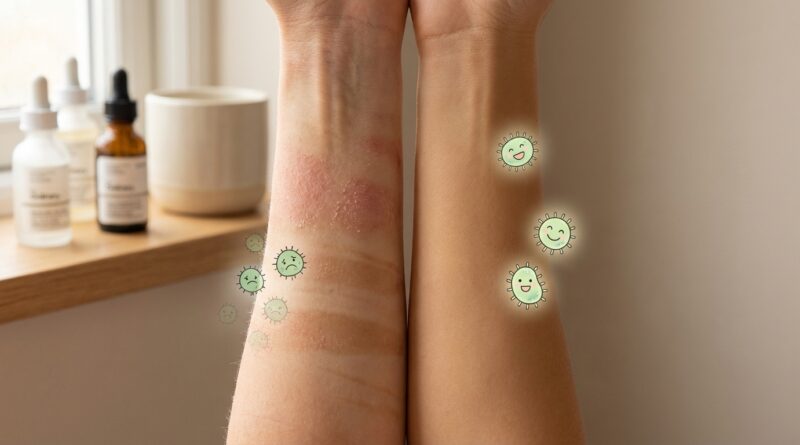
You did the responsible thing. You gave up tanning beds, started wearing SPF, and switched to self-tanner. So it feels especially unfair when your skin still gets tight, itchy, blotchy, or suddenly full of little angry bumps. If that sounds familiar, the problem may not be “your skin being difficult.” It may be that your tanning routine is stressing your skin barrier and the microbiome that helps keep it calm. That matters because many people use self-tanner week after week, all year long. A product does not need to be harsh enough to burn in order to slowly push skin out of balance. The good news is you do not need to give up your glow. You just need a better filter for what to buy, what to avoid, and how to support your skin before and after application. Think of this as your simple guide to finding a microbiome safe self tanner that looks good and plays nicer with your skin.
⚡ In a Hurry? Key Takeaways
- A microbiome safe self tanner should avoid lots of drying alcohol, heavy fragrance, harsh exfoliating acids, and unnecessary antibacterial ingredients.
- Pick formulas with simple ingredient lists plus barrier helpers like glycerin, squalane, ceramides, panthenol, aloe, or hyaluronic acid.
- Sunless tanning is still safer than UV tanning, but frequent use works best when you protect your skin barrier and patch test new products.
Why your self-tanner can mess with your skin even if it is “safe” from the sun
Self-tanner is safer than sunbathing. Full stop. But “safer than UV” does not always mean “gentle for daily or weekly use.” Those are two different questions.
Most self-tanners use DHA, short for dihydroxyacetone. It reacts with amino acids in the very top layer of skin to create that bronzed look. DHA itself is not automatically the villain here. The bigger issue is the whole formula around it, and how often you use it.
If your tanner is packed with drying solvents, strong fragrance, essential oils, harsh preservatives, or exfoliating acids, your skin barrier can start to feel the wear and tear. Once that barrier gets cranky, your microbiome can shift too. That is the community of bacteria, fungi, and other microbes that live on your skin and help defend it.
When that balance is off, skin may feel stingy, look red, break out more easily, or react to products that never used to bother you.
What “microbiome-safe” really means
This term is still a little fuzzy in the beauty world. There is no universal gold-star label that guarantees a product is perfect for everyone. So instead of chasing marketing claims, use a common-sense definition.
A microbiome safe self tanner is one that is less likely to disrupt your skin barrier or wipe out the conditions your healthy skin microbes like. In plain English, it should tan your skin without leaving it dry, inflamed, over-stripped, or constantly irritated.
Good signs to look for
Look for formulas that are:
- Fragrance-free or very lightly fragranced
- Free of denatured alcohol high on the ingredient list
- Rich in humectants like glycerin and hyaluronic acid
- Supportive of the barrier with ceramides, squalane, fatty acids, panthenol, or colloidal oatmeal
- Simple, without a long list of “active” extras
- Designed for sensitive skin, eczema-prone skin, or reactive skin
Red flags to watch for
Be more cautious with formulas that contain:
- Alcohol denat near the top of the list
- Strong parfum or lots of fragrant essential oils
- Menthol, eucalyptus, peppermint, or other tingly ingredients
- AHA, BHA, or strong exfoliating blends inside the tanner itself
- Antibacterial or antiseptic ingredients that are not really needed
- Lots of colorants and shimmer additives if your skin is already reactive
Why the skin microbiome matters for self-tanner users
Your skin is not a blank wall you paint color onto. It is a living surface with oils, water, proteins, and microbes all working together.
That tiny ecosystem helps with:
- Keeping harmful germs in check
- Supporting your skin’s pH
- Helping the barrier stay sealed and calm
- Reducing the odds of irritation and inflammation
If you self-tan often, you may also be exfoliating more often, showering strategically, shaving, scrubbing off old color, and reapplying product regularly. That is a lot of friction for one body. Even if each step seems mild on its own, the stack can add up fast.
How to read the label like a normal person
You do not need a chemistry degree. Start with these simple checks.
Step 1: Find the drying stuff
If alcohol denat, SD alcohol, or isopropyl alcohol is one of the first few ingredients, that formula may dry some people out. This is common in fast-drying mousses and sprays.
Step 2: Check for fragrance overload
Many self-tanners use fragrance to cover that classic “biscuit” smell from DHA. That is understandable, but heavily fragranced products can be rough on sensitive skin. If you know your skin gets annoyed easily, fragrance-free is often the safer bet.
Step 3: Look for barrier helpers
Ingredients like glycerin, aloe, squalane, ceramides, panthenol, oat, and sodium hyaluronate are usually a good sign. They help skin hold water and stay more comfortable.
Step 4: Be careful with “multi-tasking” claims
A tanner that also promises exfoliation, acne treatment, pore clearing, brightening, and firming sounds efficient. In real life, it can be too much. For reactive skin, simpler is usually better.
The best format for sensitive, breakout-prone, or dry skin
Not all self-tanners behave the same way.
Lotions and creams
Usually the easiest place to start. They tend to be more moisturizing and less loaded with quick-dry alcohol. Best for dry, sensitive, or mature skin.
Mousses
Popular because they dry fast and go on evenly. But they can be more drying. Fine for some people, less great if your skin already feels tight after showering.
Sprays
Convenient, but easy to overapply. Some are alcohol-heavy and can be irritating, especially if you use them often.
Face drops or serums
These can work well if the base is gentle. But facial skin is usually fussier than body skin, so avoid formulas with strong fragrance or too many extras.
A practical buying framework for a microbiome safe self tanner
Here is the easiest way to narrow your options.
- Pick lotion, cream, or serum formats first if your skin is dry or reactive.
- Choose fragrance-free when possible.
- Avoid formulas with drying alcohol near the top.
- Look for glycerin, squalane, ceramides, panthenol, aloe, or oatmeal.
- Skip built-in scrubs, acids, and “deep cleansing” claims.
- Patch test on a small area for 2 to 3 days before full use.
- If your skin breaks out easily, test the face and body products separately.
Your routine matters just as much as the product
Sometimes the tanner is only half the story. The routine around it can be what tips your skin from “fine” to “why is my chest suddenly itchy?”
Before tanning
Do a gentle prep, not a total skin reset. Use a mild cleanser. If you exfoliate, keep it light and do not use a rough scrub. Skip strong acids, retinoids, and benzoyl peroxide right before tanning, especially on the face.
If your skin is very dry, apply a plain, lightweight moisturizer several hours before tanning rather than right on top of the product. You want your barrier supported, but you do not want to dilute the tan too much.
After tanning
Moisturize daily. This is not just about making the color last longer. It also helps your barrier recover and keeps the top layer of skin from getting flaky and irritated. Use bland, boring moisturizers. That is a compliment.
Good choices include creams with ceramides, glycerin, petrolatum, squalane, or colloidal oat.
What to avoid during your tanning cycle
- Harsh foaming body washes
- Daily acid pads on top of self-tanner
- Strong fragranced lotions
- Physical scrubs with sharp particles
- Layering too many actives on the face while using tanning drops
If you are getting breakouts, redness, or bumps, do this detective work
Try to separate the likely culprit.
Breakouts on the face
The issue may be the base formula, not the DHA. Rich oils, fragrance, or heavy silicones can bother some acne-prone people. Try a simpler face tanner or use less often.
Itchy, rashy body skin
Think fragrance, essential oils, or too-frequent exfoliation. Switch to a fragrance-free lotion-style tanner and pause all scrubs for a week.
Tight, flaky skin
This often points to barrier stress. Your skin may need fewer tanning sessions and more moisture between them.
Random sensitivity to everything
That is your cue to take a break. Go back to a basic routine for a week or two. Gentle cleanser, plain moisturizer, SPF. Then patch test again.
Does “prebiotic,” “probiotic,” or “microbiome-friendly” on the bottle mean anything?
Sometimes yes. Sometimes it is mostly branding.
Prebiotic ingredients can, in theory, help support a healthy skin environment. Ferments and postbiotics may also be useful in some formulas. But none of those claims cancel out a product that is still packed with irritants.
So if a bottle says “microbiome-friendly” but also has strong fragrance, drying alcohol, and exfoliating acids, trust the ingredient list more than the front label.
How often is too often?
There is no magic number that fits everyone. But if you are applying self-tanner multiple times a week, plus exfoliating to remove patchiness, plus using active skincare, your skin may be doing more work than you realize.
A better approach is to use a solid base tan, then maintain it gently with a gradual tanning lotion a few times a week if your skin tolerates it. This often causes less chaos than repeated full-strip-and-reapply cycles.
Who should be extra careful
- People with eczema or rosacea
- Anyone with a history of contact dermatitis
- Acne-prone adults using retinoids or acids
- People who shave or wax often before tanning
- Anyone whose skin stings when they apply “normal” products
If you are in one of these groups, patch testing is not optional. It is smart.
At a Glance: Comparison
| Feature/Aspect | Details | Verdict |
|---|---|---|
| Formula base | Lotions and creams are usually more hydrating. Mousses and sprays often dry faster but can contain more alcohol. | For sensitive or dry skin, start with lotion or cream. |
| Ingredient profile | Fragrance-free, low-alcohol formulas with glycerin, ceramides, squalane, aloe, or panthenol are usually easier on the barrier. | These are the best bet for a microbiome safe self tanner. |
| Routine support | Gentle cleansing, light prep, daily moisturizer, and fewer harsh actives help skin stay calm between applications. | Often just as important as the tanner itself. |
Conclusion
You do not need to choose between protecting your skin from the sun and keeping your skin calm. Sunless tanning is still the smarter move than chasing color with UV exposure. But growing research suggests that long-term cosmetic use can affect the skin microbiome and weaken the barrier, especially when products are used often and layered into an already busy routine. The fix is not panic. It is a better system. Choose a microbiome safe self tanner with a simple, low-irritation formula. Support it with barrier-friendly skincare. Patch test. Go easy on exfoliation. If your skin has been acting “mysterious,” that tiny ecosystem may be asking for a little less stress and a little more support. Get that balance right, and you can keep the glow without quietly trading sun damage for chronic redness, sensitivity, or adult acne.