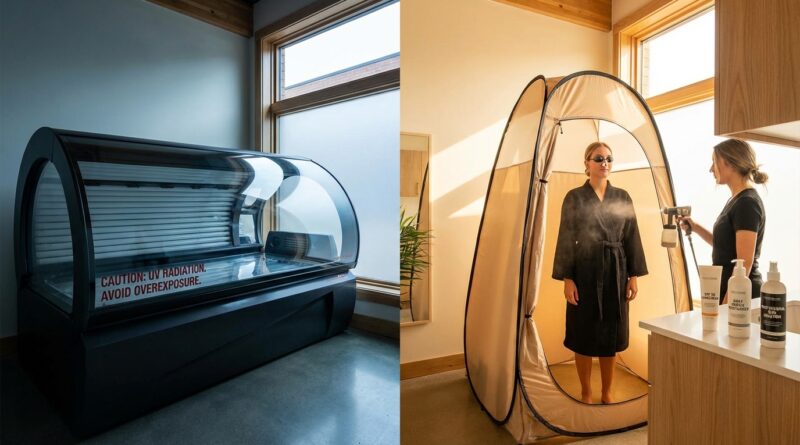
New FDA Tanning Rule Reversal: What It Really Means For Sunless Tan Lovers in 2026
You saw the headline, your group chat lit up, and suddenly everyone has a tanning opinion again. That is frustrating, because most people are not trying to debate federal policy. They just want to know one simple thing. Is sunless tanning still the safer choice in 2026? Short answer, yes. The FDA news about pulling back on a proposed under-18 indoor tanning ban does not mean UV tanning beds became safe overnight. It does not mean a “base tan” is protective. And it definitely does not mean your spray tan can replace sunscreen. What it does mean is the policy conversation got messier, which is exactly when bad decisions creep back in. Teens may hear “not banned” and think “not risky.” Adults may read “reversal” and assume indoor tanning concerns were overblown. They were not. If your goal is glow without extra UV damage, self-tanner and spray tanning are still the better lane. You just want to use them smartly, with SPF still in the picture.
⚡ In a Hurry? Key Takeaways
- The FDA tanning rule 2026 sunless tanning safety takeaway is simple: the rule change affects indoor UV tanning policy, not the basic fact that sunless tanning is still the safer cosmetic option.
- If you use self-tanner or get spray tans, keep wearing broad-spectrum SPF every day because a darker look does not equal UV protection.
- Sunless products are not risk-free, but their common issues are usually skin irritation, dryness, or inhalation concerns during spraying, not the direct UV damage linked to tanning beds.
What actually happened with the FDA tanning rule?
The headline version is easy to misread. The FDA pulled back from a proposed federal move that would have banned indoor tanning bed use for people under 18 nationwide.
That sounds dramatic, but it is important to separate policy from science. A rule reversal does not magically rewrite what dermatologists have been saying for years about UV exposure. Indoor tanning beds still use ultraviolet radiation. UV radiation still damages skin. And repeated damage still raises the risk of skin aging and skin cancer.
So if you read the news and thought, “Did they find out tanning beds are not that bad after all?” the answer is no. This is a regulatory decision, not a clean bill of health.
What it means for sunless tanning safety in 2026
For people who love a bronzed look but want to avoid extra UV exposure, the practical advice has not changed much. Sunless tanning is still the safer route compared with laying in the sun or using tanning beds.
That is the key point in the FDA tanning rule 2026 sunless tanning safety conversation. The policy noise is about access and rules. Your personal safety choice is still about exposure. UV beds expose your skin to UV radiation on purpose. Self-tanners and spray tans color the outer layer of skin without requiring that same UV hit.
Why self-tanner is still preferred
Most self-tanners use DHA, short for dihydroxyacetone. It reacts with amino acids in the top layer of your skin and creates a temporary browned effect. That is very different from a UV tan, which is your skin responding to radiation damage by producing more pigment.
One is cosmetic color. The other is a damage response. That difference matters.
What “safer” does and does not mean
Safer does not mean perfect. Some people get dryness, itchiness, clogged pores, fragrance irritation, or patchiness from self-tanning products. Spray tans also raise questions about avoiding inhalation or contact with eyes and lips during application.
But those are not the same category of concern as repeated UV exposure. If you are choosing between “glow from a bottle” and “glow from a bed,” sunless still wins on the bigger skin-health picture.
Why the mixed messaging is risky
This is the part that worries skin experts every time tanning makes the news. Many people do not read the fine print. They absorb the vibe.
And the vibe of a rule reversal can be dangerous.
For teens
“If it is not banned, it must be okay.” That is the kind of shortcut logic that can send people back to tanning beds, especially before prom, vacations, or sports events.
For adults
“Maybe one base tan before summer is fine.” It is a common myth, and it sticks around because it sounds practical. But a base tan offers very little protection and comes with the same UV tradeoff that caused the color in the first place.
For sunless tan users
“I already look tan, so I probably will not burn as easily.” Also false. A spray tan changes appearance, not your actual UV resistance.
The biggest myth to kill right now: a spray tan is not sunscreen
This one needs to be said clearly. If your skin looks darker because of self-tanner, that visual cue can trick your brain. You may feel “protected” because you do not look pale anymore. But the product has not built a UV shield unless it specifically contains sunscreen, and even then, most self-tanners are not meant to replace your regular sun protection routine.
So yes, wear SPF with a fresh spray tan. Wear it with mousse. Wear it with tanning drops. Wear it when you are pleased with your color and want to preserve it. In fact, SPF helps on both fronts. It protects your skin, and it can help your tan fade more evenly by reducing extra sun stress.
How to keep your routine sunless-first and skin-smart
1. Keep UV tanning and sunless tanning in separate mental buckets
They are not versions of the same thing. One adds cosmetic color without UV. The other relies on UV exposure. Treating them as interchangeable is where people make sloppy choices.
2. Use self-tanner on healthy, calm skin
If your skin is already irritated, freshly shaved, over-exfoliated, or sunburned, self-tanner can cling unevenly and may sting. Give your skin a day to settle when needed. Then apply to clean, dry skin with a light moisturizer on rough spots like elbows, knees, ankles, and wrists.
3. Be careful with spray tan overspray
If you get a booth or salon spray tan, ask about protective steps. Nose filters, eye protection, lip balm, and good ventilation are all reasonable things to care about. This is not about panic. It is about being thoughtful.
4. Patch test if you are sensitive
Fragrance, preservatives, and botanical add-ins can be more annoying for some people than DHA itself. If your skin is reactive, test a small area first.
5. Moisturize, but do not overdo it right before application
Hydrated skin usually holds color better. But if you slather thick lotion all over right before tanning, you can dilute the result or cause streaking. Think balanced, not greasy.
6. Keep sunscreen in your routine every single day
This is the habit that matters most. Sunless tanning should sit on top of your skincare routine, not replace the protective part of it.
DHA side effects people actually notice most
When readers hear “chemical” or “FDA” in the same week, anxiety rises fast. So let’s keep this grounded. The most common real-world issues with self-tanner are usually practical ones, not dramatic ones.
- Dry patches turning extra dark
- Breakouts if a formula is too heavy for your skin
- Fragrance irritation
- Temporary odor as the tan develops
- Orange tone if the shade is wrong for your undertone
- Uneven fading if skin is dry or over-scrubbed
Those are fixable routine problems. They are annoying, yes. But they are usually manageable with better prep, better formula choice, and better aftercare.
If you are a parent, this headline needs extra translation
If you have a teen, this is a good time for a very calm conversation. Not a lecture. Just a reality check.
You can say something like, “The rule changed, but the skin risk did not. If you want color for an event, let’s do it without UV.” That keeps the focus on options, not shame.
For a lot of families, resistance drops when the safer alternative still gets the result. A good spray tan before homecoming, prom, senior photos, or vacation often solves the real problem, which is wanting to feel polished and confident.
How to read future tanning headlines without getting misled
Here is a simple filter. Ask these three questions.
Is this about policy, or about evidence?
A rule can change for legal, political, or administrative reasons. That does not automatically mean the health evidence changed.
Is this about UV tanning, or sunless tanning?
Reporters and social posts often blur them together. They should not.
Does this change what I do tomorrow?
For most readers, no. The next smart move is still the same. Skip intentional UV tanning. Use sunless options if you want color. Keep wearing SPF.
What to do before your next tan
If this week’s headlines left you second-guessing your routine, here is the simple reset.
- Choose self-tanner or spray tan over UV tanning beds.
- Exfoliate gently, then moisturize dry areas.
- Apply carefully or book a well-reviewed spray tan tech.
- Avoid inhaling mist during spray sessions when possible.
- Wear broad-spectrum sunscreen after your tan develops.
- Do not treat a darker look as proof of protection.
At a Glance: Comparison
| Feature/Aspect | Details | Verdict |
|---|---|---|
| Indoor tanning beds | Use UV radiation to darken skin. The FDA rule news is about policy, not proof of safety. | Higher-risk option. Not recommended for a “safe tan.” |
| Self-tanner and spray tan | Color comes from DHA reacting with the top layer of skin, without the same UV exposure. | Still the preferred cosmetic option for a bronzed look. |
| Sun protection after tanning | A sunless tan changes appearance only. It does not give meaningful built-in UV protection. | SPF remains necessary every day. |
Conclusion
The FDA reversal made the conversation louder, not clearer. That is exactly when people start making choices based on headlines instead of skin logic. So here is the plain-English version. Indoor tanning did not suddenly become harmless. A base tan is still not a smart protection plan. And a spray tan still does not replace sunscreen. If you love the look of bronzed skin, a sunless-first routine remains the better path in 2026. Just pair it with SPF, decent prep, and a little common sense about DHA side effects and spray tan safety. That is how you keep the glow and skip the confusion. When mixed messages hit, the safest move is usually the boring one. Stick with the option that gives color without extra UV, and let the policy drama stay in the headlines, not in your skincare routine.