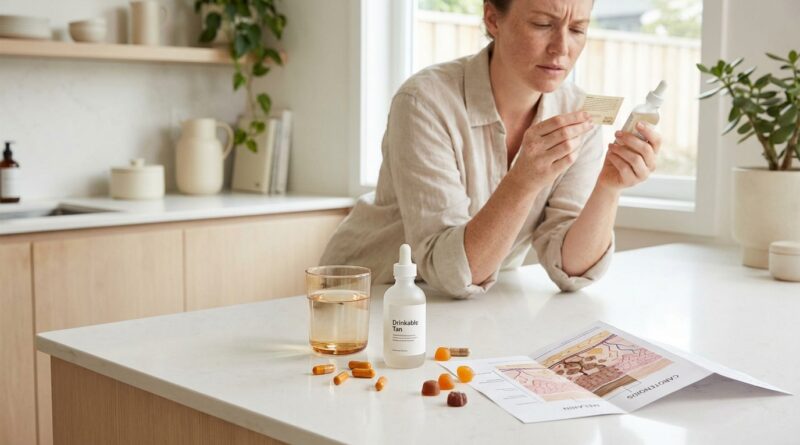
New ‘Drinkable Tan’ Warning: What Dermatologists Want You To Know Before Sipping Your Glow
If you are already careful with SPF, self-tanner, and not frying your skin for a little color, I get why “drinkable tan” products sound tempting. The pitch is simple. Add drops to water or chew a gummy, then wake up looking warmer and glowier without UV damage. That is a very attractive idea. The problem is that the marketing is racing way ahead of the science. These products often mix beta-carotene, other carotenoids, L-tyrosine, vitamins, and herbal extras, then hint that a deeper tan is just a supplement away. Dermatologists are much more cautious. Some ingredients may slightly change skin tone in certain people, but not in the smooth, predictable, beachy way ads suggest. And “natural” does not mean low-risk. If you use topical DHA, take multivitamins, or have liver, thyroid, eye, or pregnancy-related concerns, you need to slow down and read the label before you sip.
⚡ In a Hurry? Key Takeaways
- Drinkable self tanner safety is still a big question mark. Most products are supplements, not proven sunless-tan treatments.
- Check labels for high-dose beta-carotene, vitamin A, tyrosine, and stacked blends if you already take other supplements or use topical tanners.
- Stop right away and talk to a doctor if you notice yellow-orange skin, stomach upset, headaches, vision changes, or unusual itching.
Why dermatologists are pumping the brakes
There is a key difference between a product that changes your skin color and a product that creates a true tan look.
Topical self-tanners usually use DHA, which reacts with dead skin cells on the surface. It is pretty predictable. You apply it. It develops. It fades.
Drinkable tanning products work very differently. Most do not “tan” the skin in the usual sense. Instead, they rely on pigments or pathways that may shift skin tone from the inside. That can mean a subtle warm cast for some people. It can also mean patchy, uneven, or more yellow-orange tones for others.
That is why a lot of dermatologists do not love the promise being made on social media. The ads often show a bronze result. The biology is much messier.
What is actually in these products?
The ingredient list usually tells the real story faster than the influencer video does.
Beta-carotene and carotenoid blends
These are the most common. Beta-carotene is a pigment found in foods like carrots and sweet potatoes. In high enough amounts, carotenoids can build up in the skin and create a yellow-orange cast. This is called carotenemia.
That may sound harmless, and in mild cases it often is. But it is not the same thing as a natural-looking tan. It can be more obvious on palms, soles, and around the nose.
L-tyrosine
L-tyrosine is an amino acid involved in making melanin, the pigment tied to skin and hair color. But taking extra tyrosine does not mean your body will suddenly produce a safe, even tan on command. There is not strong evidence that swallowing tyrosine creates the kind of visible bronzing these products promise.
Vitamin A and “beauty blend” extras
Some formulas pile on vitamin A, biotin, collagen, adaptogens, or herbal ingredients. This can muddy the risk picture fast, especially if you already take a daily vitamin or a hair-and-skin supplement.
That is where drinkable self tanner safety gets more serious. The issue is not just one ingredient. It is the stacking effect.
Who should avoid drinkable tanning products completely?
For some people, the safest move is simple. Skip them.
1. Smokers and former heavy smokers
High-dose beta-carotene supplements have raised concerns in research involving smokers, especially around lung cancer risk in certain groups. That does not mean every gummy is dangerous for every person, but it is a major reason not to play around with high-dose carotenoid products casually.
2. Anyone who is pregnant or trying to conceive
Some products contain vitamin A or related compounds in amounts that may not be wise during pregnancy. Labels are not always clear enough. If you are pregnant, breastfeeding, or trying, ask your doctor first.
3. People with liver disease, kidney disease, or thyroid issues
Changes in pigment handling, supplement metabolism, and skin tone can be harder to interpret if you already have an underlying health issue.
4. People with eye conditions
Some carotenoids are used in eye-health supplements, but that does not mean every tanning blend is eye-friendly. If you have retinal disease, glaucoma, or unexplained vision symptoms, do not add random pigment supplements without medical advice.
5. Anyone already taking multiple supplements
This is a big one. If your routine already includes a multivitamin, skin gummies, collagen, vitamin A, immune blends, or pre-workout powders, it is easy to double up without realizing it.
Red-flag symptoms to watch for
If you decide to try one anyway, know what counts as a stop sign.
- Yellow-orange discoloration, especially on palms or soles
- Nausea or stomach cramps
- Headaches
- Itching or rash
- Vision changes
- Dark urine or unusual fatigue
Some of these can point to harmless pigment buildup. Others can suggest your body is not handling the supplement well. Also, if your skin or eyes look yellow, do not assume it is “working.” Yellowing can have medical causes that need proper attention.
How to read the label in under 60 seconds
You do not need a chemistry degree. Just run through this checklist.
Step 1: Look for the active “tan” ingredient
If the product cannot clearly tell you what is supposed to create the glow, that is your first warning.
Step 2: Check the dose
See how much beta-carotene, vitamin A, or tyrosine you are getting per serving. Then check whether the brand expects you to take one serving or multiple servings a day.
Step 3: Scan for proprietary blends
“Proprietary blend” often means you are not getting a clean breakdown of amounts. That is not ideal when pigment-related side effects are possible.
Step 4: Compare it with what you already take
Your multivitamin matters. Your greens powder matters. Your beauty gummies matter. Stack enough “wellness” products together and a harmless-looking gummy can become a bad fit.
Step 5: Look for basic safety transparency
Does the company mention third-party testing? Contraindications? Pregnancy warnings? If the page is all before-and-after photos and no plain-English safety info, move on.
Can you use these with topical DHA self-tanner?
Usually, yes, in the sense that there is no automatic rule that says the combo is forbidden. But the result may be less pretty than you hope.
DHA colors the outer layer of skin. Carotenoids can shift your underlying tone. Together, they may create an odd undertone, especially if your face, hands, and body absorb or fade differently.
If you are already happy with your topical routine, a drinkable tanner is not likely to be the magic finishing touch. It may just make your color harder to control.
What kind of results are realistic?
This is the part ads gloss over.
Best-case scenario, some people may notice a subtle warmth after consistent use over time. Not overnight. Not after one sachet. Not in a way that looks like a week in Greece.
Worst-case scenario, you spend money for no visible effect, or end up with a tone that reads more golden-yellow than bronzed.
That does not mean every product is a scam. It means the claims are often stronger than the evidence.
If you still want to experiment, do it the low-drama way
If you are healthy, not pregnant, not a smoker, and not taking overlapping supplements, you can lower your risk by being methodical.
Start with one product only
Do not mix tanning drops, tanning gummies, and a new skin supplement at the same time.
Use the minimum listed serving
More is not better here. Faster color usually just means higher odds of side effects or weird undertones.
Take weekly photos in natural light
This helps you spot subtle changes more honestly than bathroom lighting does.
Keep your SPF habits exactly the same
This is important. A “sunless from the inside” product does not protect you from UV. Not even a little.
Stop after a short trial if nothing is happening
If you see no change after a reasonable period, that is useful information. Do not keep escalating the dose hoping to force a result.
The bigger issue: supplement marketing moves faster than skin science
This trend is a good reminder that “dermatologist-approved” on a product page can mean almost anything. Sometimes it means one doctor was paid to consult. Sometimes it means nothing meaningful at all.
When it comes to drinkable self tanner safety, the lack of strong, independent guidance is the real problem. These products live in the supplement world, where testing and claims can be a lot looser than most people realize.
So if the sales pitch sounds too easy, trust that instinct. Your skin is not being difficult. The marketing is being slick.
At a Glance: Comparison
| Feature/Aspect | Details | Verdict |
|---|---|---|
| How color develops | Usually through carotenoid pigment buildup or related pathways, not a true topical-style tan effect | Unpredictable |
| Best candidate | Healthy adult with no pregnancy concerns, no smoking history risk, and no overlapping supplement stack | Still use caution |
| Main safety concern | High-dose beta-carotene, vitamin overlap, side effects, and misleading expectations | Read labels carefully before buying |
Conclusion
The short version is this. A drinkable tan is not the same thing as a safe, proven self-tanner you can measure and control. Right now there is a real spike in “sunless from the inside” products using beta-carotene, L-tyrosine, and carotenoid blends, and they are being sold like easy dermatologist-approved shortcuts to a year-round glow. But the science is mixed, the results are inconsistent, and the safety questions get bigger if you already use topical DHA or take other supplements. The smart move is not panic. It is pause. Check who should avoid these products, know the early warning signs, and read the label before you let marketing do the thinking for you. If you still want to test one, keep expectations modest and your routine simple. Your best glow comes from healthy skin and careful choices, not from rushing into the latest Amazon trend.