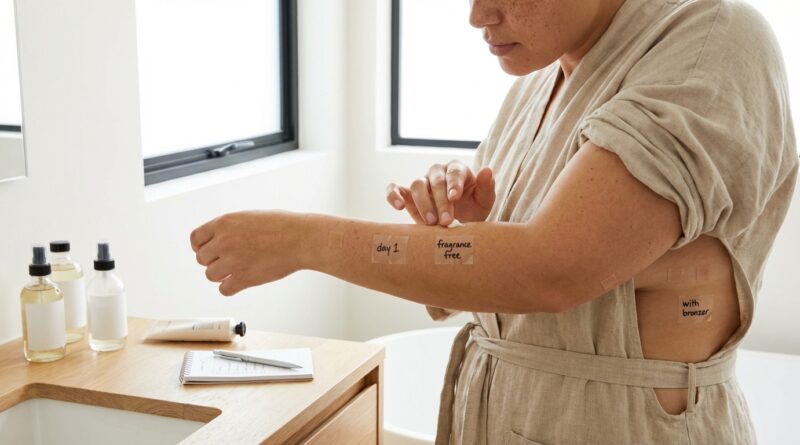
New ‘Allergy-Safe Tan’ Rule: How To Patch‑Test Sunless Tanners Like A Derm (Before Your Skin Freaks Out)
You are not imagining it. Plenty of people are suddenly getting itchy patches, chest rashes, or angry little bumps from self tanners they swear they have used for years. That is frustrating enough on its own. It is even worse when your skin is already touchy from eczema, fragrance, retinoids, acids, or overdoing exfoliation. One bad tanning night can leave you blotchy, uncomfortable, and weirdly nervous to try again. The good news is that there is a much safer way to test a product before you commit to a full-body glow. A proper patch test for self tanner is not just dabbing a dot on your wrist and hoping for the best. It needs the right spot, the right timing, and one very boring but smart rule. Wait long enough. If you want to know how to patch test self tanner for sensitive skin, here is the simple derm-style method you can actually use tonight.
⚡ In a Hurry? Key Takeaways
- Patch test self tanner on a small area like the inner arm or behind the knee, then wait 24 to 48 hours before using it all over.
- Do not patch test on freshly shaved, exfoliated, broken, or eczema-flared skin, because that can give you a false sense of safety or trigger a reaction.
- If you get itching, burning, hives, swelling, or a rash that spreads, wash it off and skip the product completely.
Why people are reacting to self tanners now
Sometimes it is the formula. Sometimes it is your skin. Sometimes it is both.
Brands reformulate. Ingredients get swapped. Fragrance blends change. Preservatives change. Even if the bottle looks the same, what is inside may not be exactly what your skin handled two summers ago.
Then there is your skin barrier. If you have been using glycolic acid, salicylic acid, retinoids, benzoyl peroxide, strong vitamin C, or you are coming off an eczema flare, your skin may be much easier to upset. A mousse that felt fine last year can suddenly sting or leave a rash overnight.
And yes, several ingredients can be the problem. DHA is the tanning active people talk about most, but fragrance, essential oils, preservatives, bronzers, and plant extracts can also be the culprit.
What a real patch test should tell you
A proper patch test checks two things.
1. Will this trigger irritation or allergy?
This is the big one. You are watching for itching, burning, swelling, bumps, redness, heat, or eczema-style roughness.
2. Will this shade develop weirdly on your skin?
Self tanner can also look too orange, too dark, too green, or cling to dry patches. A small test spot helps you catch that before your whole chest tells the story.
Think of it as a skin safety check and a color preview in one go.
How to patch test self tanner for sensitive skin
Here is the screenshot-able version.
Step 1: Pick the right test spot
Use a small area that is easy to hide but still gives useful information. Good choices:
- Inner forearm
- Inside of elbow, if that area is not eczema-prone for you
- Behind the knee
- Along the side of your torso
If you usually react on the chest or neck, do a second tiny test there only if the first test is calm. Those areas are often more sensitive.
Step 2: Start with calm skin
Do not test right after shaving, scrubbing, dry brushing, waxing, or using exfoliating acids. Wait until your skin feels normal. Also skip patch testing over broken skin, sunburn, or an active eczema flare.
If your barrier has been acting up, give it a couple of low-key days first. Plain moisturizer. Gentle cleanser. Nothing spicy.
Step 3: Apply a small amount exactly as directed
Use the self tanner the same way you would in real life. If it is a mousse, use a tiny amount. If it is a lotion or drops, use the amount you would normally apply to that area. Let it sit for the brand’s stated development time, then rinse if the instructions say to rinse.
Do not mix it with other products unless that is how you plan to use it.
Step 4: Wait 24 to 48 hours
This is the part people skip. A lot of reactions are delayed. You may feel fine at bedtime and wake up itchy. Or the area may become red and bumpy the next afternoon.
If your skin is very sensitive or you have a history of fragrance reactions, give it the full 48 hours.
Step 5: Check for more than just redness
Look for:
- Itching
- Burning or stinging
- Dry, rough, or scaly patches
- Tiny bumps or hives
- Swelling
- Warmth
- A rash that expands beyond the test spot
No reaction after 24 to 48 hours is a good sign. Not a guarantee, but a much safer green light.
Step 6: If you are extra sensitive, do a repeat open application test
This sounds fancy, but it is simple. Apply the same product to the same small spot once daily for two to three days. Leave it uncovered. This can help catch slower reactions that a one-time test misses.
It is especially useful if you have eczema, perfume allergies, or have reacted to “gentle” products before.
Where most patch tests go wrong
The most common mistake is testing on the wrist. That skin does not always act like your chest, neck, or legs. Another mistake is testing right after exfoliating, which can make almost anything sting.
People also confuse normal bronzer transfer with a real reaction. Temporary guide color rubbing off is messy, but it is not the same thing as skin getting itchy, raised, or hot.
And one more. If you test one product, that does not clear the whole brand forever. A new shade, new scent, or “improved formula” should be treated like a new product.
How to tell irritation from allergy
Irritation usually looks like this
- Mild stinging or tightness
- Dryness
- Redness that stays local
- Flaking
This often shows up fast, especially on over-exfoliated skin.
Allergy can look like this
- Intense itching
- Raised rash or hives
- Swelling
- Spreading redness
- Reaction that appears hours later
You do not need to play detective forever. If a product clearly makes your skin angry, stop using it. Wash it off. Take a photo in case you need to compare later or show a pharmacist, GP, or dermatologist.
If your patch test reacts, what should you do?
First, rinse the area with lukewarm water and a gentle cleanser if needed. Do not scrub. Do not try to “tan over” the rash. That never ends well.
Then go basic. Fragrance-free moisturizer. Nothing exfoliating. Nothing heavily scented.
Get medical advice urgently if you have facial swelling, trouble breathing, widespread hives, or a severe reaction. For a milder rash that does not settle, it is worth checking in with a pharmacist, GP, or dermatologist.
Ingredients worth checking if your skin is fussy
You do not need a chemistry degree, but these are worth noticing on the label:
- Fragrance or parfum: A common trigger for sensitive skin.
- Essential oils: “Natural” does not always mean gentle.
- Preservatives: Some people react to specific ones.
- DHA: The active that creates the tan. Not always the problem, but often blamed.
- Added bronzers and botanical extracts: Nice in theory, risky for some skin types.
If you are troubleshooting, keep notes. Brand, exact product name, scent, shade, and what happened. That makes future shopping much easier.
Smart timing rules before a full-body tan
If your patch test went well, great. Still be strategic.
- Do your first full application when you do not need to be anywhere important the next morning.
- Avoid tanning right after shaving or using actives.
- Moisturize dry zones, but do not heavily coat the whole test area unless the product directions say to.
- Use clean mitts and fresh towels to avoid extra irritation.
And while you are protecting your glow, it is worth checking your sunscreen too. A weak or misleading SPF can mess with both your skin and your tan. This guide on New ‘SPF Scam Check’ Rule: How To Stop Fake-Protection Products From Quietly Sabotaging Your Sunless Glow is a handy follow-up.
A simple patch-test routine you can save
Tonight: Pick a small spot on calm, clean skin. Apply the self tanner exactly as directed.
Tomorrow: Check for itching, burning, bumps, dryness, and spreading redness.
Next day: If you are very sensitive, re-check at 48 hours or repeat on the same spot once more.
Only then: Move to full-body application.
At a Glance: Comparison
| Feature/Aspect | Details | Verdict |
|---|---|---|
| Best patch-test timing | 24 hours is the minimum. 48 hours is better for sensitive or eczema-prone skin. | Wait longer if your skin is reactive. |
| Best test location | Inner arm, side torso, or behind knee. Avoid broken or freshly exfoliated skin. | Use a small hidden spot that matches your usual reaction zones as closely as possible. |
| Reaction warning signs | Itching, hives, swelling, heat, rough patches, or a rash that spreads beyond the test area. | Wash off and do not use the product all over. |
Conclusion
If allergy and sensitivity posts feel like they are popping up everywhere, that is because they kind of are. People are reacting to old favorites, new viral mousses, and products that looked harmless on paper. The exact reason is not always obvious. It could be DHA. It could be fragrance. It could be preservatives, reformulations, or a skin barrier that is simply fed up. That is why a proper patch test matters so much now. It gives you a quick, practical way to protect both your skin and your confidence before you commit to a full tan. So if you are trying a new bottle, swapping brands because your usual one is sold out, or your skin is still touchy after an eczema wobble, do not just slap it on and hope. Test small. Wait properly. Then glow with a lot less drama.