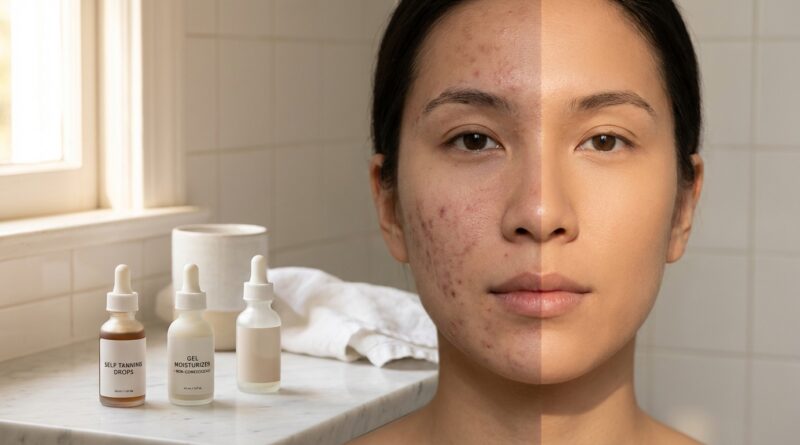
New ‘Acne‑Safe Glow’ Rule: How To Choose Sunless Tanners That Won’t Wreck Breakout‑Prone Skin
If self tanner seems to leave you with whiteheads, clogged pores, or those sore little red bumps that show up a day later, you are not imagining it. A lot of people with acne-prone skin quietly give up on sunless tanning because the glow never feels worth the breakout. That is frustrating, especially when you are already avoiding real sun to protect your face. The good news is you do not have to choose between clear skin and color. The trick is picking an acne safe sunless tanner with the right formula, and using it in a way that does not overwhelm your barrier. A believable glow usually comes down to fewer rich oils, fewer heavy fragrances, fewer pore-clogging extras, and a gentler prep routine. Think of this as your simple, dermatologist-inspired filter. You are not hunting for the darkest mousse on the shelf. You are looking for one that your skin can live with.
⚡ In a Hurry? Key Takeaways
- An acne safe sunless tanner is usually lightweight, non-comedogenic, fragrance-light or fragrance-free, and free of heavy oils that can trap sweat and dead skin.
- Patch test first, avoid applying over irritated breakouts, and keep your usual acne treatment routine simple for 24 hours around tanning day.
- The best self tanner for breakout-prone skin is not always the darkest or most “hydrating” one. Skin comfort and low irritation matter more than the color guide.
Why self tanner can trigger breakouts in the first place
Self tanner is not automatically bad for acne-prone skin. The problem is the full formula around the tanning ingredient. DHA, the ingredient that creates the tan, is not usually the main villain. More often, the trouble comes from what is packed in with it.
Many mousses and lotions use rich emollients, strong fragrance, essential oils, shimmer, or sticky film-formers that sit on skin for hours. If your skin already gets congested easily, that can be enough to cause clogged pores. Add sweat, heat, sunscreen, makeup, or a heavy night cream on top, and things can go sideways fast.
If your skin barrier is already irritated from retinoids, benzoyl peroxide, salicylic acid, or over-exfoliating, self tanner can also sting and leave skin looking angrier than before.
What an acne safe sunless tanner should look like
1. Lightweight texture beats rich and buttery
For face and body acne, lighter formulas are usually easier to tolerate. Water-based gels, clear serums, and fast-drying mousses often work better than thick creams or oily drops.
That does not mean every lotion is bad. It means you should be suspicious of formulas that feel greasy, stay tacky for hours, or market themselves mainly as ultra-rich body butter plus tan.
2. Look for “non-comedogenic,” but do not stop there
Non-comedogenic is helpful, not magic. Brands use it to suggest a lower risk of clogged pores, but there is no perfect guarantee. Still, it is a useful first filter when you are shopping for an acne safe sunless tanner.
Then read a little deeper. Check whether the formula also avoids heavy pore-clogging oils, waxes, and thick occlusives if those tend to bother your skin.
3. Fragrance matters more than most reviews admit
Most self tanners use fragrance to cover the classic “tan smell.” That is fine for some people. For reactive or acne-prone skin, it can be a problem. Strong fragrance does not directly clog pores in every case, but it can irritate skin, and irritated skin is more likely to flare.
If your skin is sensitive, start with fragrance-free or at least lightly scented formulas.
4. Avoid formulas loaded with shimmer or heavy bronzing extras
Instant bronzers and shimmer can make a product look amazing for one night, but they can also sit on skin like makeup. If you break out on your chest, back, or jawline, simpler is usually safer.
Ingredients that deserve a closer look
You do not need to memorize a chemistry textbook. Just keep a short mental checklist.
Usually better bets
- Water-based formulas
- Simple humectants like glycerin or hyaluronic acid
- Soothing ingredients such as aloe, panthenol, or allantoin
- Clear labeling around sensitive skin or non-comedogenic use
Potential troublemakers for breakout-prone skin
- Heavy coconut-derived oils or very rich butters if those clog you easily
- Strong added fragrance
- Essential oils on already irritated skin
- Thick occlusive blends that stay greasy for hours
- Lots of shimmer, glitter, or makeup-like bronzing pigments
This is personal. One ingredient that is fine for your friend may be a disaster for you. That is why patch testing matters so much.
How to patch test without making life complicated
Patch testing sounds boring. It saves a lot of regret.
Apply the tanner to a small area where you usually break out, like the side of the jaw, a section of chest, or part of the upper arm. Wait at least 48 hours. Watch for more than just itching. Look for tiny clogged bumps, redness, or a cluster of whiteheads.
If nothing happens, try a larger area next time. This slow approach is especially smart if you use prescription acne treatments or your skin barrier is touchy.
The prep rule most acne-prone skin needs
A lot of bad self-tanner experiences start before the product even goes on. People scrub too hard, use strong acids, shave aggressively, then apply fragrance-heavy tanner on top. That is a perfect recipe for stinging and inflammation.
Do this instead
- Use a gentle cleanser before tanning
- Skip harsh scrubs and rough mitts on active acne
- If you need exfoliation, keep it light and do it a day before, not right before
- Do not apply over broken, picked, or very inflamed spots
- Use a thin layer of plain, non-heavy moisturizer only on dry areas that grab color too much
If you want the bigger-picture routine for staying protected outdoors too, this guide on New ‘No-Sun Backup Plan’ Rule: How To Build A Sunless Tan Routine That Still Protects You On Real Beach Days fits nicely with an acne-safe approach. A faux glow still needs real sun protection.
Should you stop your acne actives on tanning day?
Usually, it helps to keep things simple around tanning day. If you use strong exfoliating acids, retinoids, or benzoyl peroxide, consider easing off the area you plan to tan for about 24 hours before and after, depending on how sensitive your skin is.
Why? Not because these products are bad. Because they can leave skin more reactive, and they can make the tan fade unevenly as they speed up turnover.
If you have prescription acne medication, play it safe and ask your dermatologist how to time your products.
Face tanner deserves its own rules
Your body might tolerate a product your face hates. That is normal. Facial skin, especially acne-prone facial skin, usually does better with a separate face tanner.
Pick a face tanner that is:
- Fragrance-free or low fragrance
- Lightweight, like drops, gel, or serum
- Non-comedogenic if possible
- Easy to use sparingly
Mixing tanning drops into a moisturizer can work, but only if that moisturizer already agrees with your skin. If your moisturizer is rich and tends to clog you, the drops will not magically fix that.
Application habits that can quietly make acne worse
Dirty mitts and pillowcases
If your tanning mitt has old product, oil, sweat, and bacteria on it, do not use it on breakout-prone areas. Wash it. Same goes for pillowcases after tanning your face or chest.
Layering too many products
Tanner plus body oil plus shimmer plus tight clothes plus sweat is a lot. Acne-prone skin often likes fewer layers.
Sleeping in sticky formulas
If a product stays tacky for hours, it can mix with sweat and friction. Fast-drying formulas are often the better call for body acne.
Best format for different acne-prone situations
For facial acne and congestion
Try clear face drops, gel serums, or water-light mists used sparingly. Avoid thick tanning creams unless you already know your skin loves that base.
For chest and back breakouts
Fast-drying mousse or gel is usually easier than rich lotion. Wear loose clothes while it develops. Shower when the guide time is done, and do not sit around in a sweaty sports bra or tight shirt.
For very sensitive, over-treated skin
Start with the lowest commitment option. One light application. No fragrance if possible. No scrubbing. No stacking with harsh actives.
Red flags that mean a product is probably not your match
- You feel stinging that lasts more than a few minutes
- Your skin looks shiny and congested by the next morning
- You get tiny uniform bumps instead of your usual acne pattern
- Your chest or jawline breaks out every single time after use
- The formula feels like it never fully dries down
If this keeps happening, stop blaming yourself. It may just be the wrong formula for your skin type.
At a Glance: Comparison
| Feature/Aspect | Details | Verdict |
|---|---|---|
| Formula texture | Lightweight gel, serum, or fast-drying mousse is usually easier on breakout-prone skin than thick, oily lotion. | Best for most acne-prone users |
| Fragrance and extras | Strong fragrance, essential oils, and shimmer can raise the chance of irritation or congestion. | Keep it simple when possible |
| Prep and aftercare | Gentle cleansing, light patch testing, and less use of strong acne actives around tanning day help protect the barrier. | Most important step for avoiding flare-ups |
Conclusion
You do not need a perfect product. You need a smarter filter. Right now there is a real rise in skincare-first self-tanners, but most reviews still obsess over color, depth, and fade while barely mentioning what happens to breakout-prone or sensitized skin. That is the gap to pay attention to. If you focus on a lightweight formula, fewer irritating extras, careful patch testing, and a gentler tanning routine, finding an acne safe sunless tanner gets a lot more realistic. The payoff is not just a nicer glow. It is protecting your barrier, avoiding those painful flare-ups, and getting that smooth, even confidence boost going into spring and summer 2026 without feeling like your skin has to suffer for it.