Is Your Skincare Killing Your Sunless Tan? The 24‑Hour Face Routine Derms Actually Approve
You are not imagining it. The face is where a great self tan goes wrong first. One night you look even and glowy, then 48 hours later your forehead is hanging on, your chin is patchy, and your neck has faded two shades lighter. To make it worse, the internet keeps shouting different rules. Skip moisturizer. Stop niacinamide. Never use hyaluronic acid. Maybe even avoid sunscreen, which is frankly terrible advice. No wonder people end up choosing between keeping their tan and keeping their skin calm.
Here’s the good news. Most basic skincare is not the enemy. The real troublemakers are over-cleansing, exfoliating too soon, using strong acids or retinoids at the wrong time, and letting your skin get dry and flaky. If you’ve been asking what skincare products are safe to use after self tanner on face, the short answer is this: gentle cleanser, hydrating serum, bland moisturizer, and sunscreen are usually fine. What matters most is timing, formula, and how much friction you put on the skin.
⚡ In a Hurry? Key Takeaways
- Yes, you can usually use gentle skincare after self tanner on your face, including hyaluronic acid, niacinamide, moisturizer, and sunscreen.
- Wait for your tan to fully develop, then avoid harsh exfoliants, retinoids, scrubs, cleansing brushes, and strong acne treatments for the first 24 hours.
- If your skin gets irritated or dehydrated, your tan often fades faster and looks patchier, so protecting your skin barrier helps your color last better.
Why your face tan fades faster than your body
Your face lives a harder life than the rest of your skin. You wash it more. You put more products on it. It gets more sun, more sweat, more rubbing from towels, makeup, and pillowcases. On top of that, facial skin usually turns over faster than body skin, especially if you use actives.
Self tanner works by using DHA, short for dihydroxyacetone, to react with amino acids in the top layer of dead skin cells. That color sits very shallow on the skin. It is not dyeing living skin. So anything that speeds up shedding, strips oil, or creates uneven dry patches can make the tan break apart.
That is why the goal is not to stop all skincare. It is to keep skincare boring, gentle, and consistent for the first day or two.
What skincare products are safe to use after self tanner on face
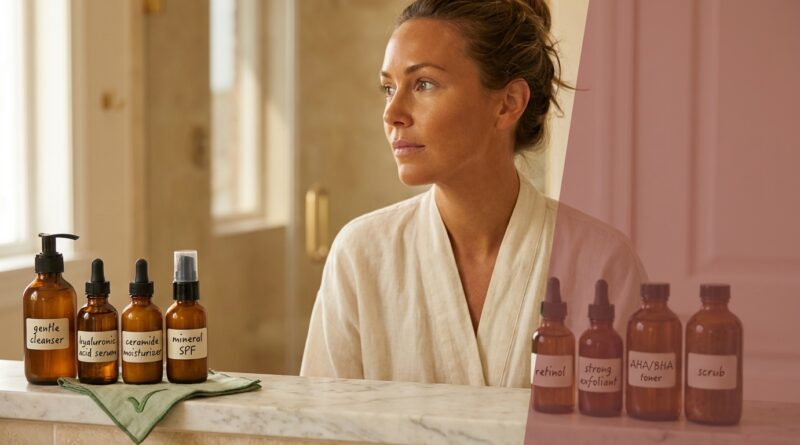
Usually safe
These are the products most people can keep using after facial self tanner, as long as they are gentle and fragrance is not irritating your skin.
- Gentle cleanser: Cream, milk, or low-foam cleansers are your friend.
- Hyaluronic acid: Fine to use. It hydrates and does not strip DHA by itself.
- Niacinamide: Usually fine. It can help with oil balance and barrier support.
- Ceramide moisturizers: Excellent choice for keeping skin smooth so the tan fades more evenly.
- Squalane or light facial oils: Fine in small amounts if they do not break you out.
- Sunscreen: Absolutely use it. Self tanner is not sun protection.
The panic around hyaluronic acid and niacinamide mostly comes from people mixing up “active” with “bad for tan.” These are not exfoliating acids. They do not work like glycolic acid or salicylic acid.
Use with caution
- Vitamin C: Many people do fine with it, but some formulas are acidic or irritating. If your skin gets stingy or dry, pause it for a day.
- Benzoyl peroxide: Can be drying and may make fading look blotchy. Use only if you really need it and spot treat when possible.
- Clay masks: Not automatic tan killers, but they can dry skin out fast.
Most likely to strip or patch your tan
- AHAs like glycolic, lactic, mandelic: These speed up exfoliation.
- BHAs like salicylic acid: Can also increase shedding, especially with frequent use.
- Retinoids: Retinol, tretinoin, adapalene, retinal. Great skincare. Rough on a fresh tan.
- Physical scrubs: These remove color fast and unevenly.
- Cleansing brushes, rough washcloths, dermaplaning: Too much friction.
- Strong peels or resurfacing pads: Best saved for when you are ready to remove the tan.
The first 24 hours matter most
Once you apply self tanner to your face, it needs time to develop evenly. Most formulas need several hours before you wash, sweat heavily, or layer lots of product. Check your product directions, but think in terms of a “hands off as much as possible” window.
Right after applying
Keep the routine minimal. No acids. No retinoids. No heavy rubbing. If your skin feels tight, a tiny amount of a simple moisturizer can be okay with some formulas, but many work best left alone until the first rinse. Follow the product instructions first.
After the first rinse or once development is complete
This is when gentle skincare can come back in. Start with a mild cleanse if needed, then a hydrating serum, moisturizer, and sunscreen in the morning.
If your self tanner stings, leaves red patches, or makes your face itchy, the issue may not be your routine at all. It could be the formula. That’s where ingredient quality matters. We covered that in Are ‘Clean’ Self‑Tanners Really Safer? New Research On Hidden Irritants In Sunless Tanning.
A simple 24-hour face routine derms would not hate
Night before tanning
Cleanse gently. If you normally use exfoliants or retinoids, this is the moment to think carefully. Many people do best stopping them at least a day before facial tanning, especially if they are strong or prescription strength. Moisturize dry areas well, but avoid leaving a greasy film right before application unless the product tells you to.
Tanning night
Apply self tanner to clean, dry skin. Use a small amount and blend into the hairline, jaw, ears, and neck. Wash hands well if you use fingers. Then leave it alone.
Next morning
If the tan has finished developing, rinse or cleanse gently according to the product directions. Pat dry. Do not scrub.
Then use:
- Hydrating serum, like hyaluronic acid
- Barrier-support moisturizer, like a ceramide cream or lotion
- Sunscreen SPF 30 or higher
That evening
Cleanse gently again. Use niacinamide or a simple hydrating serum if you like. Follow with moisturizer. Skip retinoids and exfoliating acids for at least the first 24 hours, and often 48 hours if your skin is dry or your tan is fresh.
Can you use niacinamide after self tanner?
Usually yes. Niacinamide is one of the least dramatic ingredients in skincare, and that is a compliment. It helps support the barrier, can calm redness, and does not exfoliate the way AHAs and BHAs do. If your niacinamide serum also contains strong acids, though, that changes things. Read the full ingredient list, not just the front label.
Can you use hyaluronic acid after self tanner?
Yes. Hyaluronic acid is generally tan-safe. It draws in water and helps the skin stay plump, which can actually help your tan look smoother. The only catch is practical. Put it on damp skin and seal it in with moisturizer, or it can leave you feeling drier in a dry climate.
Can you wear sunscreen over self tanner?
Please do. Self tanner gives color, not protection. Skipping sunscreen to “save” your glow is a bad trade. UV damage is one of the fastest ways to age skin, trigger pigmentation, and inflame acne-prone skin.
Choose a sunscreen you know your face tolerates well. Mineral and chemical filters can both be fine. The bigger issue is rubbing. Spread it gently instead of massaging aggressively. Reapply with a light hand.
How to make your face tan last without wrecking your skin
- Wash with lukewarm, not hot, water.
- Pat dry instead of rubbing.
- Moisturize every day, especially around the nose, mouth, and chin.
- Avoid picking at flakes.
- Pause exfoliating acids and retinoids for a short window after tanning.
- Use a gradual tanning product later to top up color instead of scrubbing and starting over.
If you break out easily, here’s the balancing act
This is where the internet gets especially unhelpful. If you are acne-prone, stopping every active for a week may keep your tan a little longer, but it can also lead to congestion and inflamed spots. On the other hand, going full speed with tretinoin, salicylic acid, and benzoyl peroxide can chew through a fresh tan.
The middle ground usually works best. Keep your essential acne care, but reduce frequency for the first day or two after tanning. Spot treat rather than applying harsh products all over. And do not skip moisturizer. Dry, irritated skin often looks both more acne-prone and more patchy.
At a Glance: Comparison
| Feature/Aspect | Details | Verdict |
|---|---|---|
| Hydrating products | Hyaluronic acid, ceramides, squalane, bland moisturizers help keep skin smooth and reduce patchy fading. | Safe and helpful |
| Barrier-friendly actives | Niacinamide is usually fine after the tan develops, as long as the formula is not mixed with strong exfoliants. | Usually safe |
| Exfoliating or resurfacing products | Retinoids, AHAs, BHAs, scrubs, and cleansing tools speed up shedding and can cause uneven fading. | Limit for the first 24 to 48 hours |
Conclusion
You do not have to choose between a believable glow and healthy skin. The calm answer to what skincare products are safe to use after self tanner on face is not “nothing.” It is gentle cleanser, hydrating serum, moisturizer, and sunscreen, with harsher exfoliants and retinoids timed more carefully. That matters because the viral advice telling people to stop niacinamide, hyaluronic acid, and even sunscreen leads to exactly the problems everyone is trying to avoid. Breakouts, dehydration, and faster fading. Keep the routine simple, protect your barrier, and your tan has a much better chance of fading evenly instead of falling apart overnight. That is the kind of routine you can actually follow tonight.