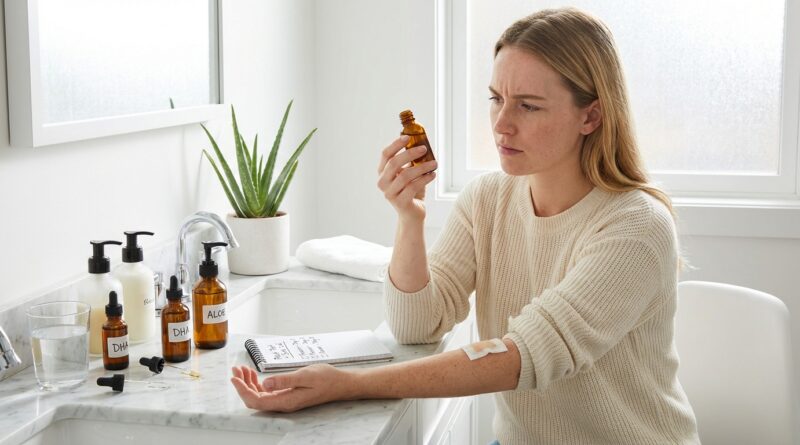
Hidden Formaldehyde In Self‑Tanners: The New Safety Red Flag No One Is Checking For
You buy a self tanner because it feels like the safer choice. Then your skin turns red, itchy, tight, or bumpy, and suddenly that “gentle” bottle does not feel gentle at all. That is frustrating, especially if you already deal with eczema, a damaged skin barrier, or mystery reactions that brands keep blaming on fragrance or sensitive skin in general.
Here is the red flag more shoppers need to know about. Some self tanners may contain hidden formaldehyde residues tied to certain raw materials, including some DHA sources, even when formaldehyde is not listed on the label. That does not mean every self tanner is dangerous, and it does not mean DHA itself is automatically the villain. But it does mean “fragrance-free” or “clean” on the front of the bottle is not the full story. If your skin keeps reacting, it is worth looking past the marketing and treating formaldehyde in self tanners safety as a real question, not a niche concern.
⚡ In a Hurry? Key Takeaways
- Hidden formaldehyde residues can show up in some self tanners without appearing on the ingredient list, and they may trigger irritation or allergy flare ups in sensitive users.
- If a tanning product keeps causing redness, itching, or rash, stop using it, patch test new products more carefully, and ask the brand about impurity testing and formaldehyde screening.
- This matters most for people with eczema, barrier damage, fragrance allergy history, or skin that is already inflamed, because a “safe” sunless product can still be a bad match.
Why this matters more than most people realize
Self tanner has become the backup plan for anyone trying to avoid UV damage. That part makes sense. A sunless glow is usually a smarter choice than baking in the sun or using tanning beds.
But “safer than UV” is not the same thing as “safe for every skin type.” Those are two different questions.
Most advice about self tanners focuses on DHA, the sugar-derived ingredient that reacts with the top layer of your skin to create color. Or it focuses on fragrance, essential oils, and preservatives. Those are still valid things to watch. The problem is that hidden impurities do not get the same attention, and they can matter a lot if your skin is reactive.
So what is actually going on?
Formaldehyde is a known irritant and a well-known contact allergen for some people. In cosmetics, it can show up in a few different ways. Sometimes it is intentionally released by certain preservative systems. Sometimes it appears as a trace impurity from manufacturing or raw materials.
That second part is where self tanners get tricky.
Some industry testing has raised concerns that certain DHA raw materials may carry trace formaldehyde residues. If those residues are present at low levels, they may not appear on the consumer label the way a standard ingredient would. Yet for someone who is already sensitized, or someone with compromised skin, even a small amount can be enough to cause a problem.
Important point
This does not mean every DHA product contains formaldehyde. It means shoppers should not assume an ingredient list tells the whole story about impurities.
Why your label may not help much
Most people do the right thing. They flip the bottle over and scan the ingredients. If they do not see “formaldehyde,” they assume they are in the clear.
Sadly, it is not that simple.
Ingredient labels are designed to list what is intentionally added under labeling rules. Trace contaminants or byproducts may not be listed in a way that helps the average shopper spot them. That is why formaldehyde in self tanners safety is becoming a smarter question than “Is formaldehyde written on the label?”
What labels can still tell you
Labels are not useless. They can still help you avoid obvious trigger stacks, such as:
- Heavy added fragrance or parfum
- Essential oils if you already know you react to them
- Known formaldehyde-releasing preservatives in some products
- Long ingredient lists packed with exfoliating acids, bronzers, shimmer, and scent in one formula
But for hidden impurities, you often need to go one step further and ask the brand direct questions.
Who should be extra careful?
Not everyone will react. Some people can use almost any self tanner and have no issue. Others are much more likely to run into trouble.
You are higher risk if you have:
- Eczema or atopic dermatitis
- A damaged skin barrier from over-exfoliating, retinoids, acids, or recent shaving
- A known formaldehyde allergy or past positive patch test
- Frequent unexplained redness, burning, or rash from “gentle” skincare
- Inflamed skin after waxing, laser, sunburn, or irritation
If that sounds like you, your skin is not being dramatic. It is telling you it needs a lower-risk routine.
How hidden formaldehyde reactions can look
The tricky part is that people often blame the wrong ingredient. A reaction may get pinned on DHA itself, fragrance, or “just sensitive skin,” when the real issue could be a residue or preservative system.
Common signs include:
- Itching that starts soon after application
- Red patches or blotchy areas
- Tiny bumps or a rash
- Burning or stinging, especially on thin skin
- Dry, tight, flaky skin that gets worse over the next day
- Eczema flare ups in places where you applied the product
If this happens repeatedly with different tanning products, there may be a pattern worth investigating.
What to ask a self-tanner brand before you buy
This is where a lot of smart shoppers can save themselves time, money, and miserable skin.
Email the brand or use their support chat. Keep it simple and direct.
Questions worth asking
- Do you test finished products for formaldehyde or formaldehyde residue?
- Do you require your DHA supplier to provide impurity specifications?
- Can you share whether your DHA raw material is screened for formaldehyde content?
- Is this product considered suitable for people with formaldehyde allergy or contact dermatitis?
- Do you have third-party lab data on common sensitizers or impurities?
If the answer is vague, overly polished, or sounds like marketing copy, take note. A serious brand should at least understand the question.
How to patch test better than you did last time
Most patch testing advice is too casual. “Try a little on your arm” is not enough if your skin has a history.
A smarter patch-test routine
- Apply a small amount behind the ear or on the inner arm.
- Leave it on as directed, just like you would in real use.
- Check the area at 24 hours, 48 hours, and 72 hours.
- If you have eczema, also test on an area that is prone to flares but not actively broken.
- Do not patch test right after shaving, exfoliating, or using strong actives.
Why wait 72 hours? Because allergic contact reactions are often delayed. Your skin can look fine the first day and still revolt later.
How to lower your risk right now
You do not need to panic and throw out every bottle you own. But if your skin is reactive, a few changes can make a big difference.
Start here
- Choose simpler formulas with fewer extras.
- Pause self tanner if your skin barrier is already angry.
- Skip applying over freshly shaved, exfoliated, waxed, or sunburned skin.
- Moisturize dry areas first, but use a plain, low-irritation moisturizer.
- Keep a reaction diary with product name, batch number, and timing of symptoms.
If you react strongly, stop using the product and consider seeing a dermatologist, especially if rashes are recurring. Formal patch testing can help identify whether formaldehyde or another allergen is involved.
What “clean” and “sensitive skin” claims do not guarantee
This is the annoying part. A product can be marketed as clean, gentle, non-toxic, or sensitive-skin friendly and still not be the right fit for you.
Those terms are not magic shields. They often say more about branding than testing.
What matters more is:
- Supplier quality
- Raw material purity
- Impurity screening
- Preservative choices
- Whether the company can answer technical safety questions clearly
When the real answer is to switch products
Sometimes the best troubleshooting step is the simplest one. If one self tanner keeps giving you trouble, stop trying to make it work just because it is popular or expensive.
Your skin does not care about hype. It cares about what it can tolerate.
Try switching to a formula with:
- A shorter ingredient list
- No added fragrance
- Fewer plant extracts and essential oils
- A brand willing to discuss impurity testing
And if every self tanner seems to cause the same reaction, that is a sign to pause and get real answers before buying another bottle.
At a Glance: Comparison
| Feature/Aspect | Details | Verdict |
|---|---|---|
| Ingredient label check | Helpful for spotting fragrance, essential oils, and some preservatives, but not always hidden impurities or trace residues. | Useful first step, not the whole safety picture. |
| Brand transparency | Brands that can discuss DHA sourcing, impurity specs, and formaldehyde screening are generally easier to trust. | A strong sign of a more careful product team. |
| Patch testing | Testing a small area for 72 hours catches more delayed reactions than a quick same-day check. | Best low-cost step for sensitive skin users. |
Conclusion
Self tanner is still a useful option for people who want color without UV exposure. But if your skin keeps reacting, you are not imagining things, and you are not failing at skincare. Hidden formaldehyde residues and other impurities deserve more attention than they get. That is especially true now, as the sunless market keeps growing and more people with eczema, allergies, or barrier damage turn to self tanner as the “safe” choice. When you learn to read labels with a little skepticism, ask better questions, and patch test like someone protecting their skin instead of gambling with it, you cut down on painful reactions and wasted money. The goal is not fear. It is confidence. A skin-first, safety-first tanning routine should actually feel safe.