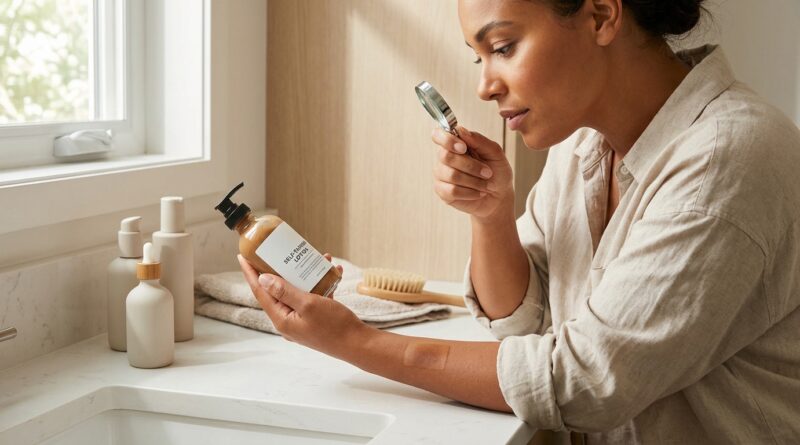
Are ‘Clean’ Self‑Tanners Really Safer? New Research On Hidden Irritants In Sunless Tanning
You did the “good” thing. You ditched tanning beds, bought a bottle labeled clean, non-toxic, and dermatologist tested, and still ended up with stinging skin, tiny bumps, or a full-on rash. That is maddening. It also is not your fault. A lot of newer self-tanners are being sold as safer simply because they avoid a few scary-sounding ingredients, while quietly packing in fragrance blends, essential oils, exfoliating acids, color boosters, and preservatives that can be rough on sensitive skin. Early 2026 research is making that picture clearer. For many people, the main problem is not DHA, the ingredient that creates the tan color. It is the extras mixed around it. If you want better sunless tanning safety ingredients clean self tanner shoppers can actually use, the goal is simple. Stop trusting front-label buzzwords. Start reading the ingredient list like it tells the real story, because it does.
⚡ In a Hurry? Key Takeaways
- “Clean” self-tanners are not automatically safer. DHA is often not the main irritant. Fragrance, essential oils, acids, and certain preservatives are common troublemakers.
- Patch test every new tanner for 2 to 3 days, and avoid formulas loaded with perfume, citrus oils, scrubs, or acne “booster” actives if your skin is reactive.
- The safest pick is usually a simple, fragrance-free formula with a short ingredient list, plus a slow introduction so you do not wreck your skin barrier.
Why “clean” can be misleading
“Clean” is a marketing word, not a medical standard. There is no universal rule that says a clean self-tanner must be less irritating, less allergenic, or better for acne-prone skin.
That is where many people get burned, just not by the sun.
A product can skip parabens or certain synthetic fragrances and still contain a long list of plant extracts, essential oils, tanning accelerators, shimmer additives, and exfoliating ingredients that bother your skin. For some people, those extras are worse than the ingredients the brand is bragging about avoiding.
So if you are shopping for sunless tanning safety ingredients clean self tanner claims should be treated as background noise. The ingredient list matters more than the front label.
What the new research is pointing to in early 2026
The growing pattern in dermatology write-ups and ingredient safety discussions is pretty consistent. DHA itself is still considered the standard active for most sunless tanners. It reacts with dead skin cells on the surface to create that temporary bronze color. That part is not new.
What is getting more attention now is the “supporting cast” around DHA.
Researchers and skin specialists are seeing more cases where users report:
- Contact dermatitis, including itchy red patches
- Stinging or burning after application
- Breakouts in acne-prone areas
- Melasma looking darker or more uneven
- Barrier damage after repeated use of “glow boosting” formulas
That does not mean self-tanners are unsafe overall. It means the details matter. A plain formula and a trendy formula can behave very differently on real skin.
The ingredient list matters more than the marketing
Ingredients that often cause trouble
If your skin reacts easily, these are the red flags worth watching:
- Fragrance or parfum. This is one of the biggest reasons a product that smells nice can still irritate skin.
- Essential oils. Citrus, lavender, peppermint, eucalyptus, tea tree, bergamot, and similar oils can be sensitizing, especially on freshly exfoliated skin.
- AHAs and BHAs. Glycolic acid, lactic acid, salicylic acid, and fruit acid blends may be added for “smoother glow,” but they can sting and weaken a stressed barrier.
- High-alcohol formulas. Some quick-dry mousses and sprays use more alcohol, which can feel lightweight but leave skin tight and irritated.
- Preservatives that some people react to. Phenoxyethanol is usually tolerated by many users, but some still react. Methylisothiazolinone and related preservatives are more common allergy concerns if they show up.
- Heavy oils and occlusives. Coconut oil and richer butters are not bad by default, but they can clog pores for some acne-prone users.
- Color boosters and actives. Niacinamide, vitamin C derivatives, retinoid-like actives, and “bronzing enhancers” are not always bad, but they add complexity and increase the chance that one ingredient will not agree with your skin.
Ingredients that are often better tolerated
No ingredient is perfect for everyone, but these tend to be easier starting points:
- DHA as the main active in a straightforward formula
- Erythrulose as a secondary tanning sugar in some blends, which can help color develop more gradually
- Glycerin for hydration
- Hyaluronic acid in simple formulas
- Panthenol and allantoin for soothing support
- Aloe can be fine for many users, though not every skin type loves botanical extracts
- Fragrance-free bases with shorter ingredient lists
In other words, boring is often better.
Why some self-tanners trigger acne or melasma issues
Breakouts after self-tanner are common enough that people often blame DHA. Sometimes DHA is not the real problem at all.
Acne flare-ups can happen when a formula is too occlusive, too fragranced, or layered over skin that was just shaved, scrubbed, or treated with active skincare. Add sweat, tight clothing, and repeated applications, and pores can get angry fast.
Melasma is a little different. Self-tanner does not cause melasma the way UV exposure can, but irritating formulas can inflame the skin. Inflammation can make uneven pigment look darker or more obvious. If you already battle melasma, a stinging, perfumed tanning lotion is not doing you any favors.
How to shop smarter for a self-tanner
A simple shopping filter can save you a lot of grief.
Look for this
- Fragrance-free or no added fragrance
- Shorter ingredient list
- Moisturizing ingredients like glycerin
- Clear labeling on active ingredients
- A formula made for sensitive skin, if available
Be cautious with this
- “Clean” with no ingredient transparency
- Strong scent, even if it is “natural”
- Added exfoliating acids
- Peppermint, citrus, lavender, or lots of essential oils
- Products promising tanning plus acne treatment plus brightening plus anti-aging all at once
If you want a broader primer on safer DHA use, this guide on How to Get a Safe, Sunless Glow in 2026: The Best Way to Use DHA Self-Tanners Without Hurting Your Skin is a smart next read.
How to patch test without overthinking it
This is the step most people skip. Then they regret it.
A simple patch test routine
- Apply a small amount behind the ear, along the jaw, or on the inner arm.
- Repeat once daily for 2 to 3 days.
- Watch for itching, stinging, warmth, redness, tiny bumps, or delayed dryness.
- If that area stays calm, test a slightly larger spot before using it all over.
This matters because some reactions are delayed. You may feel fine right away and still wake up irritated the next day.
Best practices if your skin is sensitive
Before application
Do not apply self-tanner right after shaving, waxing, using retinoids, or doing a strong exfoliation session. Give your skin a little breathing room. If your barrier already feels tight, flaky, or stingy, wait until it settles down.
During application
Use a thin, even layer. More product does not mean safer color. It often means more chance of irritation and patchiness. Skip broken skin, active eczema patches, and freshly picked blemishes.
After application
Keep the rest of your routine simple for the next day or so. This is not the time to pile on acids, scrubs, or strong actives. Let the tan develop. Let your skin stay calm.
What to do if a self-tanner stings or causes a rash
Stop using it. Wash it off if the reaction is active and intense. Go back to a bland moisturizer and a very simple routine. If you have swelling, significant burning, facial rash, or symptoms that keep getting worse, check in with a clinician or dermatologist.
And yes, take a photo of the ingredient list before you toss the bottle. That makes it much easier to spot patterns later.
At a Glance: Comparison
| Feature/Aspect | Details | Verdict |
|---|---|---|
| DHA | Main tanning active in most sunless products. Usually not the biggest issue unless your skin is already very irritated. | Generally acceptable for most users |
| Fragrance, essential oils, and booster actives | Often added for scent, texture, exfoliation, or “skincare benefits,” but more likely to trigger stinging, rash, acne, or pigment issues. | Main red flags for sensitive skin |
| Simple fragrance-free formulas | Usually contain fewer possible irritants and are easier to patch test and troubleshoot. | Best starting point for safer use |
Conclusion
Switching from UV tanning to sunless products is still a much smarter move for your long-term skin health. That part has not changed. What has changed is that more people are realizing a “clean” label does not guarantee a calm, barrier-friendly formula. Early 2026 research is helping separate the real issue from the marketing. In many cases, DHA is not the villain. The bigger problem is the mix of fragrance, preservatives, essential oils, and extra actives wrapped around it. Once you know that, shopping gets easier. Look for simpler formulas, patch test before going all in, and treat front-label claims as advertising, not proof. That gives the I Love Tanning community something much more useful than hype. It gives you a safer, more informed way to keep the glow and avoid the rash, the breakouts, and the regret.